
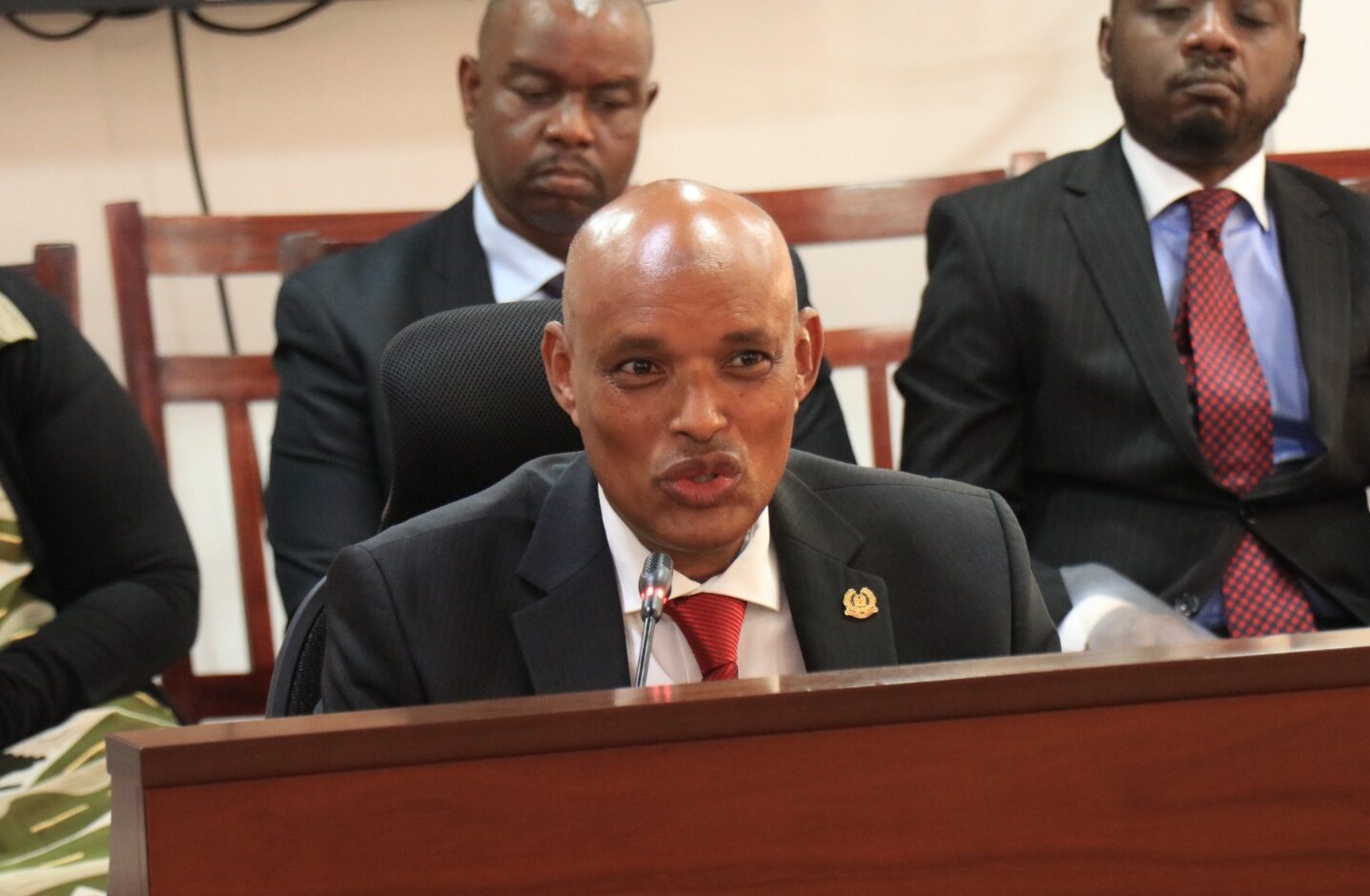
The Directorate of Criminal Investigations (DCI) is seeking an additional Sh3.2 billion to complete its National Police Service forensic laboratory, a project launched nearly nine years ago but which remains unfinished, with only 54 per cent of the work completed.
DCI Director Mohamed Amin told MPs that the outstanding funds are needed to equip 13 specialised forensic units and install modern investigative systems to help detectives handle increasingly complex crimes.
The project, which started in the 2017/2018 financial year, was initially estimated to cost Sh7 billion. However, by June 30, 2026, the government had spent only Sh3.7 billion, leaving a funding deficit of approximately Sh3.2 billion.
Appearing before the National Assembly Committee on Administration and Internal Security during the 2027 Budget Policy Statement hearings on Tuesday, November 25, Amin said completing the facility would strengthen the police service's ability to detect, examine and build evidence in complex criminal cases.
He identified the full equipping of the laboratory as one of the directorate's key priorities, noting that specialised equipment and modern systems were required across all 13 forensic units.
“As a directorate, we have identified the following key priority areas. One is the full equipping of the National Police Service Forensic Laboratory with specialised equipment and systems for all the 13 forensic units,” he said.
Amin called on the government to speed up the implementation of the project, warning that further delays could weaken the DCI's ability to use forensic science in investigations and criminal prosecutions.
“There is therefore need, Honourable Chair, to fast-track this project implementation,” Amin said.
Beyond the laboratory project, the directorate raised concerns over inadequate allocations for specialised forensic materials, supplies, consumables and reagents needed to support its daily operations.
The DCI also wants more funding for the training of investigators, revealing that more than 3,000 serving and newly recruited officers have yet to complete the mandatory basic crime investigation course.
Amin told the committee that the training is a fundamental requirement for every officer serving in the directorate, adding that the growing backlog has affected the agency's ability to build investigative capacity.
“At the moment, the directorate has over 3,000 officers, both the existing and the new, who have not undergone the basic crime investigation course, which is a primary requirement for each and every DCI officer,” Amin told MPs.
He attributed the backlog to limited resources over several financial years, which have affected the provision of both basic and specialised training programmes locally and internationally.
The DCI boss further warned that criminal activities were becoming more sophisticated as offenders increasingly relied on technology and operated across national borders, creating new challenges for investigators.
He said detectives needed continuous training to equip them with the skills required to investigate emerging forms of crime, including cybercrime, financial fraud and offences involving digital assets.
“Crimes keep on evolving on a daily basis, and we need to bring our officers up to speed on contemporary crimes, specialised investigations, counterterrorism, cybercrimes, blockchains, cryptocurrencies, virtual assets, financial investigations and transnational organised crimes,” he said.
Amin cautioned that failing to address the training gaps could affect the quality of investigations and undermine the professionalism of officers expected to handle increasingly technical cases.
Meanwhile, the directorate reported progress in modernising its identification services following the upgrade of the Automated Palm and Fingerprint Identification System (AFIS) to a Multi-Biometric Identification System (MBIS).
Amin credited Parliament's support for the investment, which is expected to strengthen the agency's capacity to identify individuals through improved biometric technology.