Kenya faces Sh55.8bn higher education funding gap, 689,000 students at risk of partial support
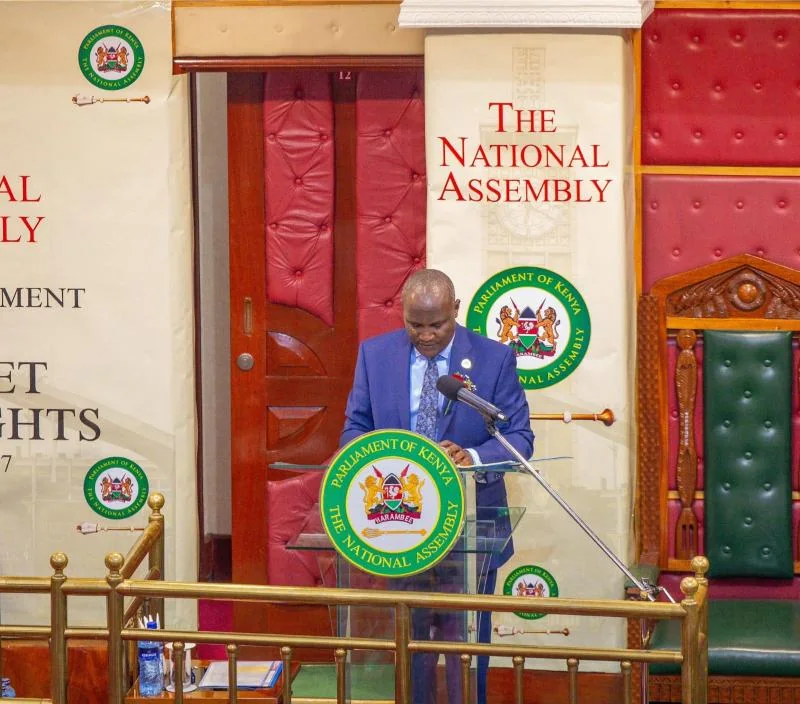
According to the 2026/27 Budget Estimates presented last week by National Treasury Cabinet Secretary John Mbadi, the Higher Education Loans Board has been allocated Sh56.3 billion against a required Sh112.1 billion to support about 1.38 million students.
A sharp funding squeeze in Kenya’s higher education sector is set to leave a large number of university and TVET students struggling to stay in school, after the government failed to fully finance the rising cost of loans and scholarships in the coming financial year.
Budget figures now show a wide gap between what has been requested and what has been allocated, putting the student-centred funding system under fresh pressure.
According to the 2026/27 Budget Estimates presented last week by National Treasury Cabinet Secretary John Mbadi, the Higher Education Loans Board has been allocated Sh56.3 billion against a required Sh112.1 billion to support about 1.38 million students.
This leaves a deficit of Sh55.8 billion, raising concern over how institutions will sustain student financing.
The figures further show that the allocation translates to Sh40,694 per student, far below the required Sh81,020 per student. This leaves an average shortfall of Sh40,327 for each beneficiary.
Based on the available funding, only about 695,000 students can be fully supported, meaning nearly 689,000 students may not receive full assistance under the programme.
The pressure is coming at a time when universities and TVET institutions are already dealing with higher enrolment and rising operational demands. The gap between student numbers and available resources continues to widen, straining the government’s ability to sustain access to higher education.
The Universities Fund is also facing a similar strain, with an allocation of Sh31.1 billion against a requirement of Sh47.36 billion meant for scholarships. This leaves a funding gap of Sh16.26 billion, adding to concerns over continuity of support for needy students.
Under the current estimates, each beneficiary under the fund requires about Sh216,072, but the allocation provides only about Sh141,827 per student. This results in a shortfall of roughly Sh74,245 for each of the projected 219,279 new students expected to benefit in the next financial year.
The deficit is expected to deepen existing obligations, with pending scholarship commitments projected to rise from Sh22.26 billion to Sh38.52 billion in the 2026/27 financial year.
“The Universities Fund has been implementing the Student-Centred Funding Model which adopts a need-based approach to student financing, offering scholarships and loans based on individual students’ financial capability,” Higher Education Principal Secretary Beatrice Inyangala recently told the National Assembly’s Departmental Committee on Education.
The model is designed to prioritize support based on financial need, with students from low-income backgrounds receiving higher levels of assistance.
Official data shows that student numbers have expanded rapidly, rising from about 70,000 in 2017 to roughly 258,000 in 2025, marking a growth of more than 300 per cent within less than a decade.
At present, 437,648 students are covered under the student-centred funding system, including 122,634 admitted in 2023, 134,889 in 2024, and 180,125 in 2025.
With demand climbing and funding lagging behind, the higher education financing system is now facing increased strain that could reshape access to universities and TVET institutions in the coming years.



Comments
Sign in with Google to comment, reply, and like comments.
Continue with Google