
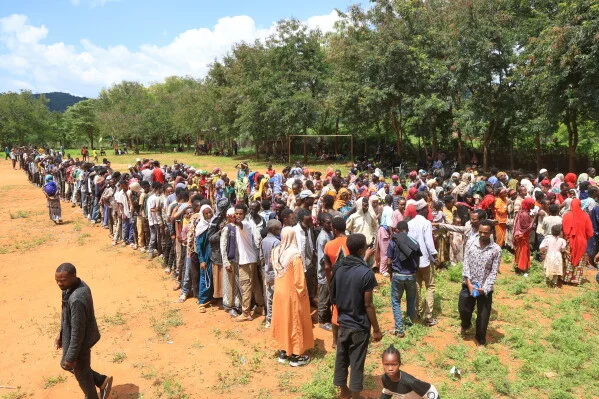
Thousands of Ethiopians who escaped violent confrontations in their home areas and sought refuge in Kenya are set to receive emergency assistance after the European Union announced Sh80 million in humanitarian funding to support those affected by the crisis.
The financial package, worth €550,000, will go towards helping families uprooted by clashes around Moyale, which have been linked to prolonged tensions between Ethiopia’s Somali and Oromia regions.
The fighting has forced tens of thousands of residents to abandon their homes, creating an urgent need for humanitarian support as displaced families struggle to access food, safe drinking water, temporary shelter and medical services.
The EU said the relief programme would be implemented through the United Nations High Commissioner for Refugees (UNHCR) and the Kenya Red Cross Society, which will coordinate assistance to communities affected by the violence.
“Clashes linked to longstanding tensions between Ethiopia’s Somali & Oromia regions have driven tens of thousands from their homes. The EU's partners UNHCR, Kenya and the Kenya Red Cross are helping provide food, water, shelter & healthcare,” the bloc said via its Central, East and Southern Africa humanitarian projects' social media pages.
The latest commitment comes as Kenya continues to receive people fleeing insecurity across the border, with an estimated 30,000 individuals having entered the country following intercommunal fighting last month.
Many of the new arrivals have found accommodation with relatives and host families, while others are staying in schools and communal facilities as humanitarian agencies work to meet their needs.
The United Nations attributed the violence to unresolved local disputes involving land ownership, governance, ethnic differences and political disagreements.
“Reports indicate that the root cause of clashes between rival forces is long-standing local disputes related to land ownership, governance, ethnic differences and political disagreements,” the UN said on Tuesday.
Relief operations are already underway, with the World Food Programme (WFP) starting emergency food distribution on November 11 in partnership with the Kenyan government, the Kenya Red Cross and other humanitarian organisations.
Under the programme, displaced households living with host communities are receiving dry food packages containing sorghum, yellow split peas and vegetables.
Humanitarian teams are also supplying food for the preparation of hot meals for people accommodated in communal centres, where many families continue to depend on outside assistance.
The EU's latest contribution is expected to strengthen these ongoing operations by providing additional resources to address the immediate needs of people forced to flee their homes.