
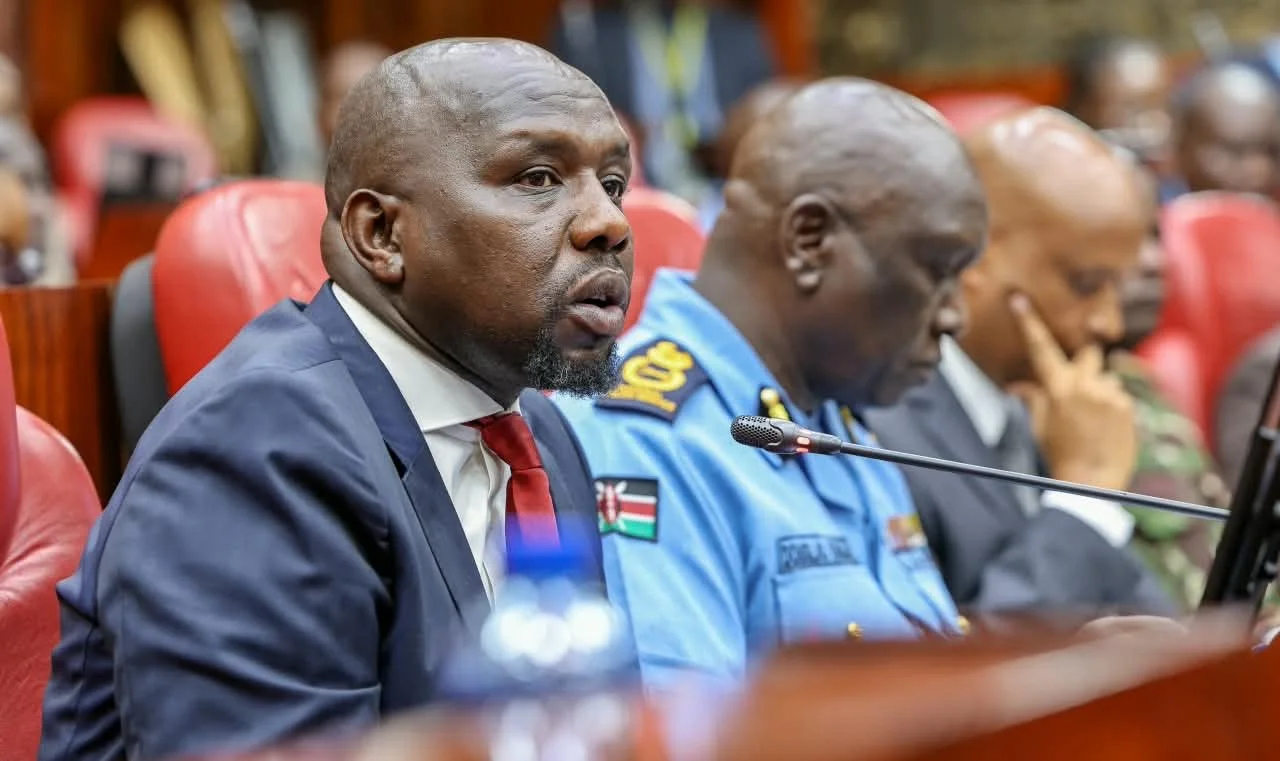
Cabinet Secretary for Interior and National Administration Kipchumba Murkomen came under intense questioning from MPs over the government’s response to persistent bandit attacks in Samburu, with lawmakers demanding to know why residents continue to lose lives and livestock despite years of security operations.
Appearing before a National Assembly committee, Murkomen linked the continued violence to years of marginalisation and lack of development, saying security operations on their own could not end the problem.
"People are marginalized. Bandits are very small boys because society has left them to be what they are. Some of the equalization funds what is it really doing?"
He further argued that underdevelopment had played a major role in creating conditions that allowed banditry to persist.
"Because of development there is banditry in those areas. Why is there no banditry in other areas? The bigger problem is underdevelopment. The issue stands out to be marginalized."
The explanation, however, failed to convince lawmakers, who said residents facing armed attacks could not be asked to wait for development before receiving adequate security.
Mutunga put the question bluntly: "So were you waiting for the senior securities to be killed to take action"
The exchange came against the backdrop of a September 16 attack in which five people were killed after security officers responding to suspected banditry were ambushed. Those killed included two police officers, a National Police Reservist and two civilians.
Samburu West MP Naisuula Lesuuda challenged the continued focus on marginalisation, saying government programmes and infrastructure funds were already meant to address inequalities affecting the region.
"We cannot always talk about marginalisation. We have infrastructure funds what will it be because now we are talking about development."
Lesuuda also questioned whether security agencies were receiving accurate and timely information from communities, warning that continued attacks could weaken residents’ confidence in the government.
"When people lose trust in the government they look for ways to provide security for themselves. We need to separate issues. The issue of generalizing security is wrong."
MPs also raised concerns over the deaths of livestock in Samburu East, with the government reporting that police had recorded 237 cattle and nine donkeys as dead.
The government said the circumstances surrounding the deaths were still being investigated, while photographs circulating publicly appeared to show about a dozen animals.
The continued loss of lives and property prompted Igembe North MP Julius Taitumu to demand a clear explanation for why the insecurity had gone on for so long.
"When you're talking about marginalisation it's just a scholarly argument. We need a serious answer. So people continue to suffer telling us to continue waiting for development? How long must we wait for the action?"
MP Haji, chairman of the National Assembly Committee on Cohesion and Equal Opportunities, also questioned the effectiveness of the government’s response.
"This is just a good response on the paper but there is no solution."
Samburu East MP Jackson Lekumontare turned his attention to intelligence gathering, asking whether information provided to security agencies was being acted upon before attacks occurred.
"Are you using the information you're given or you wait until the act takes place then you take action?"
Lekumontare also questioned the source of ammunition being used by armed groups in the region.
"I have been thinking of the ammunition, where do you think where they are getting these ammunition? Even the cartridges."
In his response, Murkomen said the government had deployed a number of security units to deal with the situation, including the Anti-Stock Theft Unit, Rapid Deployment Unit, General Service Unit and National Police Reservists.
He, however, admitted that the security operation faced major challenges because of Samburu’s size, difficult terrain, poor roads and weak communication networks.
“The effectiveness of operations is constrained by the size of the county, difficult terrain, poor communication network, poor road connectivity and the long distances between security installations.”
Murkomen also acknowledged that the government did not have enough personnel and equipment to maintain security coverage over a prolonged period.
“Current resources in terms of personnel and equipment are not adequate for sustained security coverage.”
The Cabinet Secretary further disclosed that the government did not have a formal policy or legal framework for compensating people whose property is destroyed or lost during security operations or conflicts.
"We have no policy for compensation as the ministry unfortunately. There is no legal framework policy for carrying out compensation."
Murkomen apologised to residents affected by the insecurity in Samburu and Isiolo over the loss of property.
"I apologize here for both Samburu West and East and Isiolo for the loss of property."
The apology did not end the lawmakers’ demand for immediate action, as MPs continued to push the government to address the security threat facing communities.
The government maintains that lasting peace in the affected areas will require a combination of security operations, peacebuilding and development.
The hearing highlighted a clear difference in the positions presented before the committee, with the government pointing to historical marginalisation and underdevelopment as key causes of banditry, while lawmakers pressed for stronger immediate security measures to protect communities already facing attacks and loss of property.