
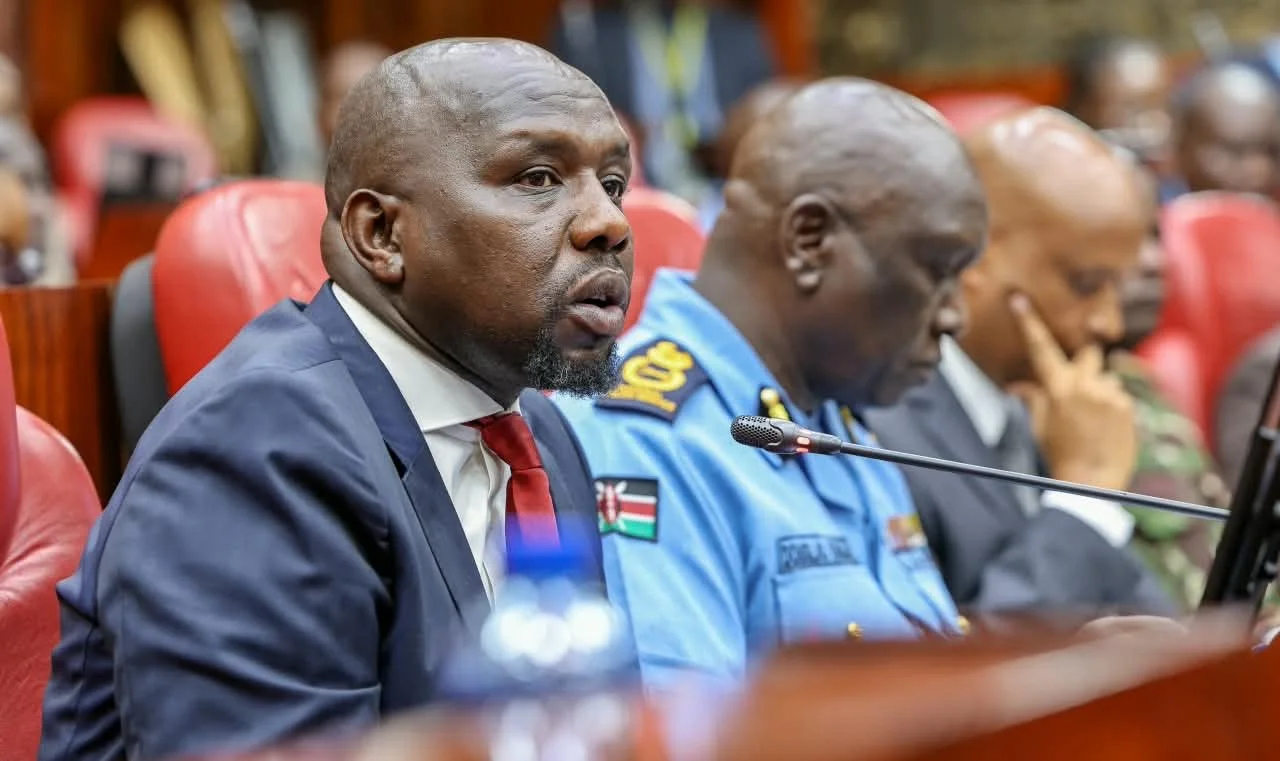
The government has intensified security operations in Samburu, Meru and Isiolo counties to curb banditry, cattle rustling and illegal possession of firearms, Interior Cabinet Secretary Kipchumba Murkomen has said.
Appearing before the Departmental Committee on Administration and Internal Security, Murkomen said the security situation in the affected areas had improved, although challenges persisted, particularly in areas experiencing inter-community conflicts and livestock theft.
“Overall, the security situation in the affected areas has improved compared with previous periods,” Murkomen said.
He, however, noted that insecurity continued to threaten lives, livelihoods and economic activities in the region.
Between June and September 2026, security agencies recovered 3,221 livestock out of 4,306 reported stolen. The government also recovered 2,395 illegal firearms in the affected areas between September 2025 and September 2026.
Murkomen said the government had strengthened security operations through the deployment of specialised units, establishment of security camps and recruitment and training of National Police Reservists.
In Meru, he said the government had established the Lii and Magado security camps to help contain banditry and cattle rustling.
The CS attributed persistent insecurity to several factors, including the proliferation of illegal firearms, retaliatory attacks, competition over water and pasture, and the availability of markets for stolen livestock.
He also cited poor road and communication networks, historical marginalisation and limited economic opportunities as factors complicating efforts to achieve lasting peace.
The impact of insecurity remained evident, with 14 fatalities and 17 injuries reported across the affected region between June and September 2026.
Murkomen also addressed a September 16 attack in Samburu that left five people dead. The victims included two police officers, a National Police Reservist and two civilians.
He said security agencies had intensified follow-up operations following the incident and were pursuing efforts to recover government equipment stolen during the attack.
On reports that livestock had been killed or injured in Samburu, Murkomen said investigations had been ordered to establish what happened. He stressed that the reported figures and circumstances remained allegations pending verification.
Beyond security operations, the government is relying on peacebuilding initiatives involving community elders, religious leaders, elected leaders and local peace committees to resolve disputes before they escalate into violence.
“Security operations alone cannot provide a permanent solution to inter-community conflict,” Murkomen said, emphasising the need for dialogue and cooperation between communities and security agencies.
He acknowledged that difficult terrain, inadequate roads, poor communication networks and limited resources continued to hamper security operations in the affected areas.
To address the challenges, Murkomen said the government was seeking additional budgetary support from Parliament to open and improve security roads.
He also announced plans to recruit additional National Police Reservists over the next six months as part of efforts to strengthen security presence in the affected communities.
Murkomen reaffirmed the government’s commitment to combining security operations with peacebuilding and development interventions, saying the approach was intended to address the root causes of insecurity and promote lasting stability in Samburu, Meru and Isiolo.