Analyst: Roads and stadiums alone cannot solve North Eastern Kenya's challenges
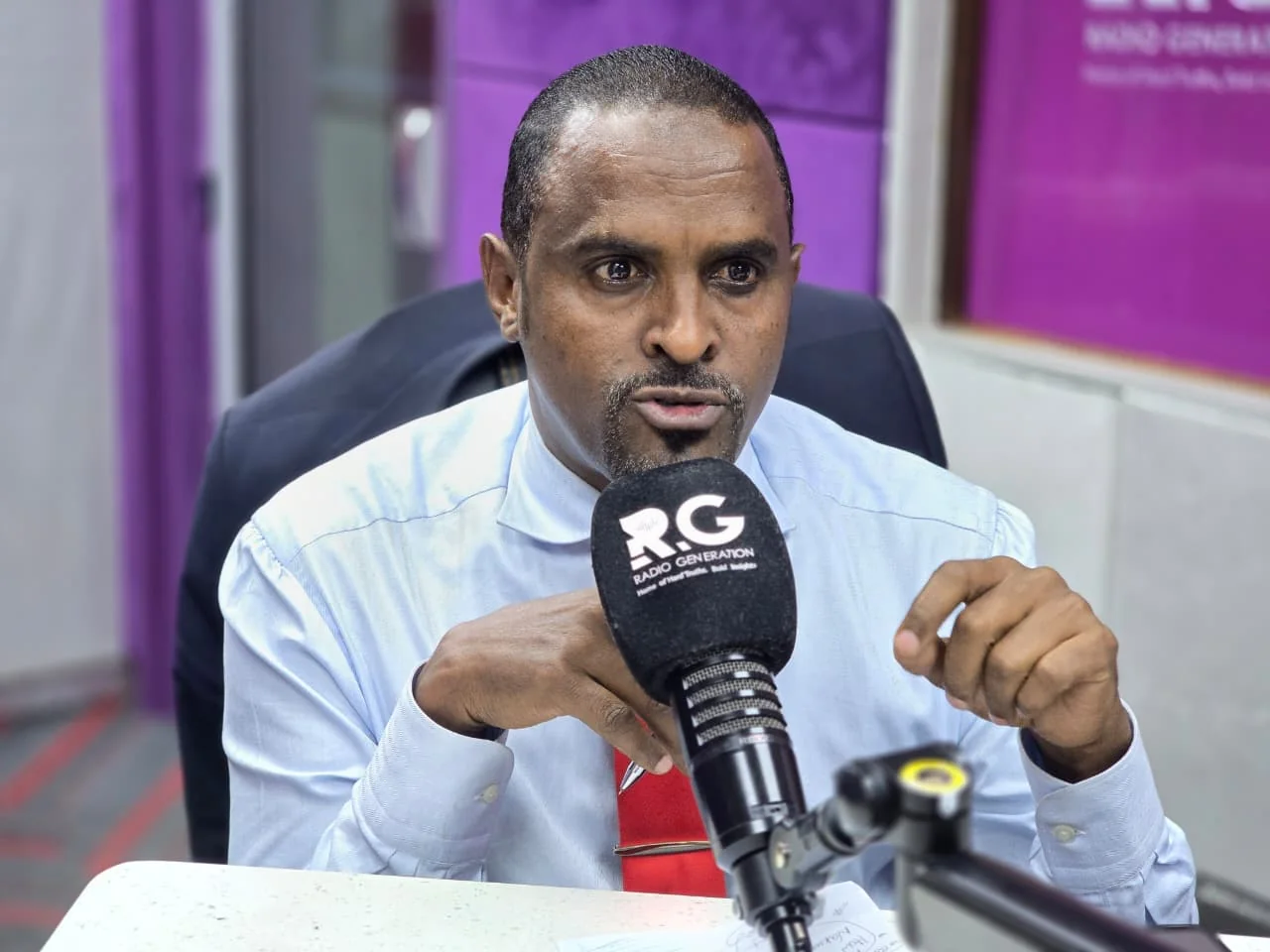
The political commentator also criticized delays in salary payments in several counties, saying the situation was hurting local economies and households
Political commentator Abdullahi Alas has challenged the government's development agenda in northeastern Kenya, arguing that infrastructure projects alone cannot address poverty, food insecurity, and historical injustices.
He questioned budget priorities, highlighted delayed salaries and malnutrition concerns, and called for greater focus on agriculture, healthcare, food security, and economic empowerment.
Speaking during a Radio Generation interview on Monday, Alas explained that President William Ruto's recent visits to the region and the rollout of infrastructure projects should be viewed alongside unresolved historical injustices and ongoing economic hardships affecting residents.
Referring to the construction of a stadium in Wajir, Alas acknowledged the investment but questioned whether it addressed deeper concerns in the region.
"There were stadiums everywhere in this country, so Wajir is only getting it for the first time," he said. "But not far from that stadium was the Wagala massacre, where thousands of Kenyans were killed. The compensation has never been paid to date. An apology is one thing, but nobody paid the price."
Abdullahi's remarks come two weeks after President William Ruto visited Wajir County and the wider North Eastern region on June 1, 2026, to preside over the 63rd Madaraka Day celebrations at the newly constructed 10,000-seat Wajir Stadium—the first time a national celebration had been hosted in the region since independence.
During the visit, he commissioned development projects including electricity connectivity programmes, infrastructure upgrades, the expansion of Wajir International Airport, and a Sh5 billion livestock investment initiative targeting 21 ASAL counties.
The President highlighted that the investments would correct decades of marginalisation and ensure inclusive development.
Government officials noted road upgrades, water connections, airport renovations, and the stadium would boost trade, jobs, and economic activity, while supporters viewed the event as a historic recognition of North Eastern Kenya's place in the national development agenda.
Moving forward, the political commentator argued that while government officials frequently cite infrastructure development as evidence of progress, communities in northeastern Kenya continue to face challenges linked to poverty, food insecurity, and limited industrial investment.
"If you look at the budget, it's more of a political statement than an economic portrait," he explained. "The infrastructure budget is four times that of agriculture. There is a lot of infrastructure, but infrastructure is where contracts and subcontracts are."
Kenya’s North Eastern counties have seen rising infrastructure allocations between FY2022/23 and FY2026/27, largely under the road transport and ASAL development programmes.
National data shows road construction funding rising from about Sh221 billion in FY2022/23 to Sh245 billion in FY2023/24 before fluctuating to Sh184 billion in FY2024/25 and Sh195 billion in FY2025/26.
Key flagship projects include the Horn of Africa Gateway corridor and low-volume seal roads targeting ASAL regions such as Wajir, Garissa and Mandera.
Government budget statements emphasise connectivity, trade, and integration. However, critics argue benefits remain uneven, citing delays in water access, health funding gaps, and limited industrial investment in the region.
The political commentator also criticized delays in salary payments in several counties, saying the situation was hurting local economies and households.
"When you don't get salary, you don't spend. Shops don't give you credit, school fees have to be paid, and money is not circulating," he highlighted, describing the delays as a failure by both national and county governments to plan effectively.
Abdullahi further rejected suggestions that improved roads and air travel alone represented meaningful development in the region. He argued that while transport infrastructure was important, it should not take precedence over food security and economic production.
The commentator pointed to rising malnutrition levels in parts of northeastern Kenya, claiming that several children had died in recent weeks due to food shortages.
He also lamented the absence of major processing industries despite the region's significant livestock resources.
"We have the largest meat, cattle and milk resources, but there is no processing factory."
According to Abdullahi, perceptions of development differ across Kenya because regions have experienced varying levels of historical investment and marginalisation.



Comments
Sign in with Google to comment, reply, and like comments.
Continue with Google