
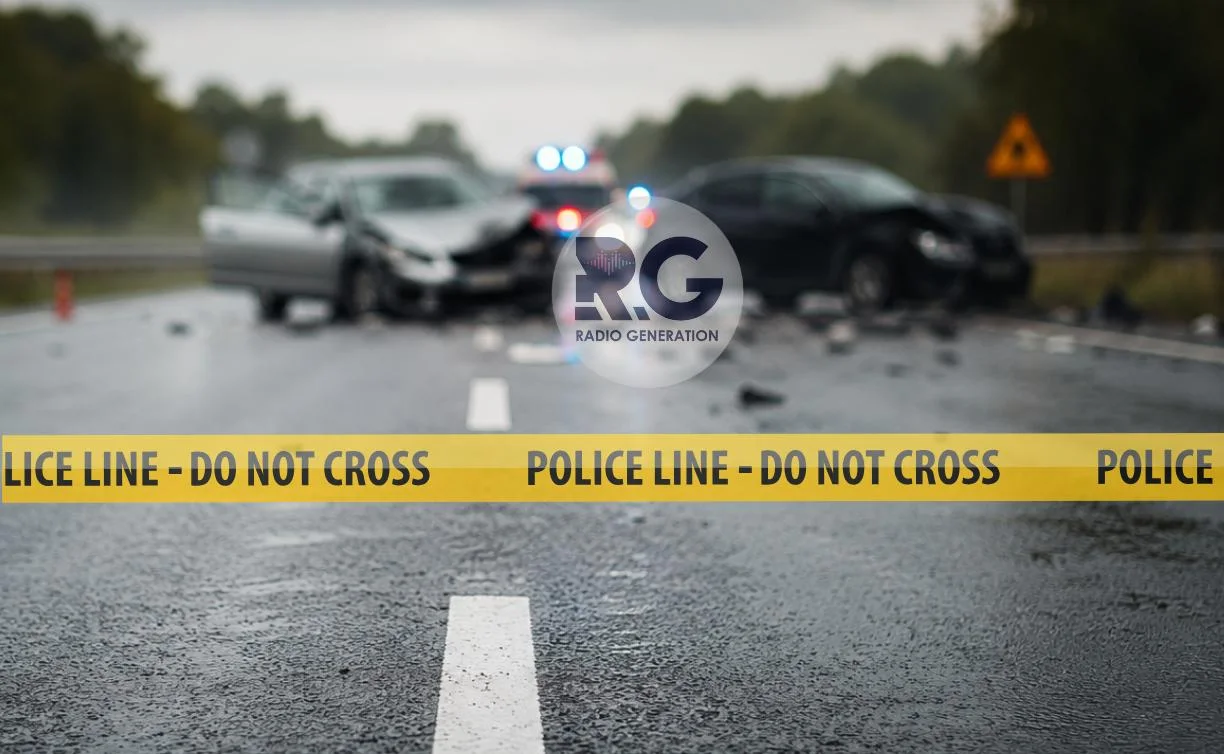
Nearly 4,000 people could lose their lives on Kenyan roads this year, with the National Transport and Safety Authority (NTSA) warning that dangerous road sections, driver conduct and vehicle faults continue to expose motorists and passengers to deadly crashes.
The authority has mapped more than 270 road crash black spots countrywide, including 199 along the Mombasa-Malaba Northern Corridor, as fatalities remain high despite repeated safety campaigns and enforcement operations.
NTSA Director of Road Safety Dr. Andrew Kipalgat said the continued deaths are a source of concern for the authority, whose mandate includes implementing policies aimed at improving road transport and safety.
“The question you're asking is the question that is keeping us on our toes every day. NTSA exists to bring the numbers down,” Kipalgat said.
“My job as NTSA Director of Road Safety is, so long as the numbers are going up, we are actually not at peace, and our job every day is what do we do to bring this number down.”
Kipalgat said road crashes should not be viewed only through the condition of vehicles, arguing that several issues can combine to cause a fatal incident.
NTSA estimates that vehicle-related factors contribute to about 17 per cent of road crashes. The authority says investigations into crashes should consider the vehicle involved, the road, the behaviour of road users and the help available after an accident.
“When a crash happens, then you ask yourselves these questions: What was the issue with the vehicle? What was the issue with the road? What was the issue with the road user? And what was the issue with the post-crash?” Kipalgat said.
“If you're able to answer those questions, then I think this question of responsibility will come out clear.”
More than 3,000 Kenyans have continued to die in road crashes each year, despite measures such as vehicle inspections, traffic enforcement and public education.
The NTSA road safety director cited the state and layout of some roads as another area requiring attention. He pointed to the Salama stretch of the Nairobi-Mombasa Highway, where a recent crash left several people dead.
According to Kipalgat, separating traffic moving in opposite directions by turning the highway into a dual carriageway would help protect motorists from head-on collisions.
“Salama, for example, if the road was dualled, then the vehicles on the other side would have been safer, because actually the people who suffered are the people who were on the other side of the road,” he said.
Alongside calls for improvements to road infrastructure, NTSA has intensified its crackdown on traffic offences, particularly those connected to crashes reported at night.
In the last three months, the authority has suspended 25 drivers from driving. It has also summoned 20 matatu SACCOs after vehicles under their operations were found breaching traffic regulations.
NTSA further reports that more than 2,400 vehicles have been impounded during the same period.
Despite these measures, the authority says dangerous driving practices, including speeding and overlapping, remain widespread. Unroadworthy vehicles and drivers operating without licences have also continued to pose a threat to road users.
NTSA says tackling the country’s road deaths therefore requires action across several areas, including safer roads, responsible road use, properly maintained vehicles and effective response after crashes.