DCP Party rejects Finance Bill 2026, warns of rising tax burden on citizens
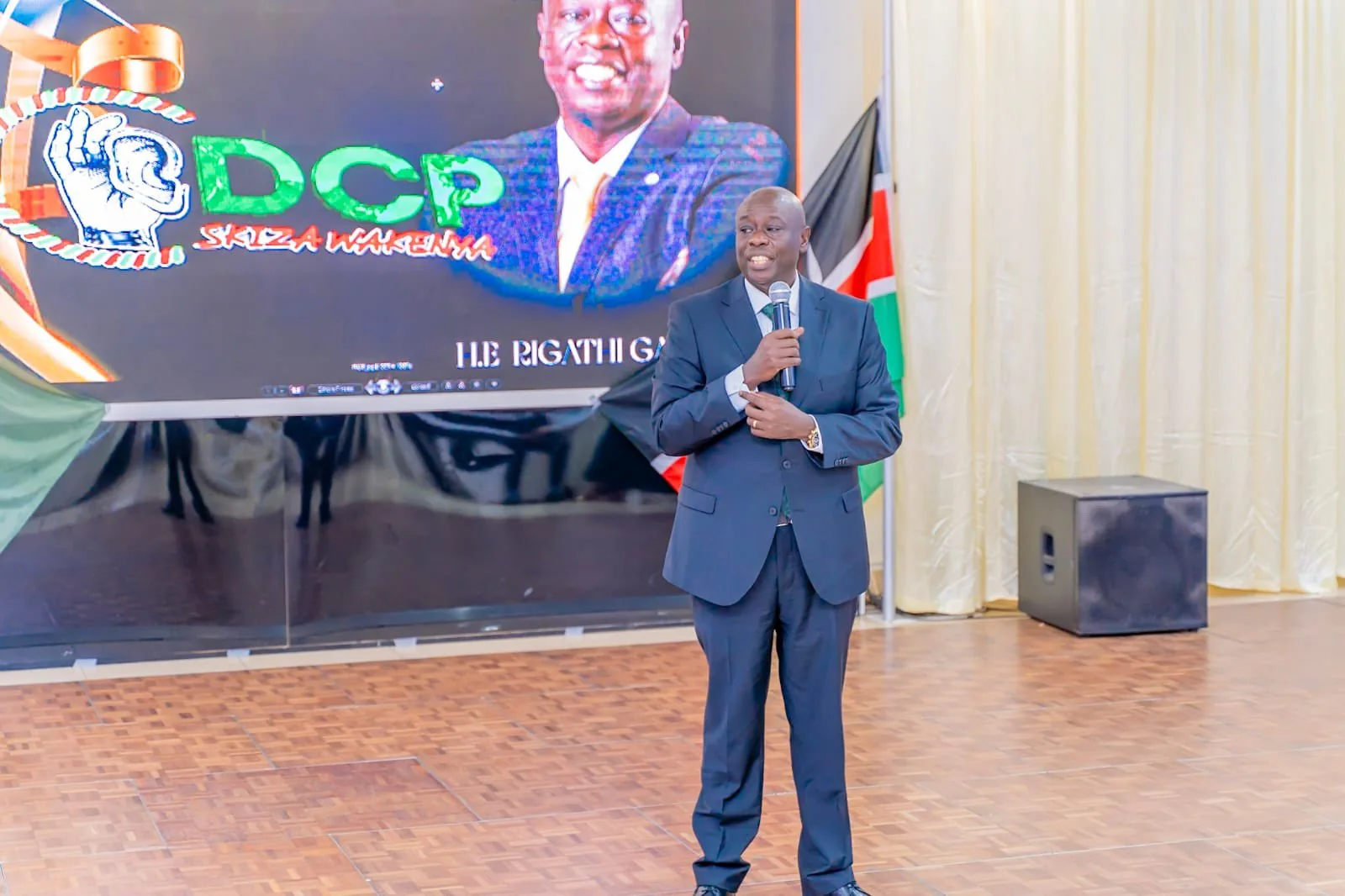
Rigathi Gachgua argued that the government's projected expenditure of Sh4.82 trillion was disconnected from the realities facing ordinary citizens
The DCP Party has rejected the 2026/27 budget estimates and Finance Bill 2026, accusing the government of relying on heavy borrowing and new taxes that it says will deepen economic pressure on Kenyans.
Speaking on Friday at the party headquarters, DCP Party leader Rigathi Gachagua said the proposed fiscal plan is unfair to households, workers, and businesses, arguing that it ignores the economic struggles facing ordinary citizens.
"The Finance Bill 2026 is taxing Kenyans into poverty. It is a killer and a threat to the common mwananchi. It will break households and stifle the freedom of Kenyans while violating the very soul of our nation," the former Deputy President highlighted.
He said the Sh4.82 trillion expenditure plan is not aligned with current economic realities, noting that projected revenue of Sh3.67 trillion leaves a Sh1.14 trillion deficit that will be covered through borrowing.
Gachagua claimed this means the country will be borrowing more than Sh3 billion every day.
"They are presenting to us, the people of Kenya, a budget with an intention to borrow Kenya shillings 3.13 billion per day. This translates to an average borrowing spree of Sh125 million per hour," he highlighted.
He also pointed to wider projections showing annual borrowing of about Sh1 trillion, translating to roughly Sh2.7 billion daily.
The Finance Bill 2026 proposes new taxes targeting digital services, gambling, imports, mobile money services, solar products, and electric mobility equipment as part of efforts to raise revenue for a Sh4.78 trillion budget.
Treasury estimates show expected revenue of about Sh3.53 trillion, leaving a gap that will require additional borrowing, which the DCP Party says is unsustainable.
Gachagua questioned whether increased taxation and borrowing have translated into visible development outcomes.
"Over the last four years, the Ruto regime has taxed and illegally levied hardworking Kenyans a whopping Sh8.7 trillion. Further, they have borrowed a whole Sh4.2 trillion. Please show us the corresponding development projects. Where is the impact on Wanjiku?" he questioned, referring to ordinary citizens.
The party further said the government has repeatedly missed revenue targets, forcing it to introduce new taxes instead of addressing inefficiencies or expanding the economy.
"The government revenue collections have consistently fallen short of targets. Yet the response has been to introduce new taxes and illegal levies rather than addressing inefficiencies, broadening the tax base, or stimulating economic growth," the party noted.
It opposed the proposed 16% VAT on digital payment service provider commissions, saying it will increase costs for traders, SMEs, schools, and hospitals that depend on mobile payments.
"The proposed 16% VAT on digital payment service provider commissions is another regressive measure. Taxing these services will increase costs for traders, SMEs, schools, hospitals, and ordinary citizens who rely on mobile payments," he added.
The party also criticized plans to raise excise duty on mobile phones, saying it would hurt young people and low-income households.
"Mobile phones are no longer luxury goods. They are essential tools for education, business, communication, financial services, content creation, and job searching."
He concluded that the country cannot rely on higher taxation to fix its economic challenges.
"Kenya cannot tax its way to prosperity. The current Bill leans too heavily toward extracting more from an already strained economy while doing too little to address the structural weaknesses that continue to undermine growth and prosperity," he explained.




Comments
Sign in with Google to comment, reply, and like comments.
Continue with Google