
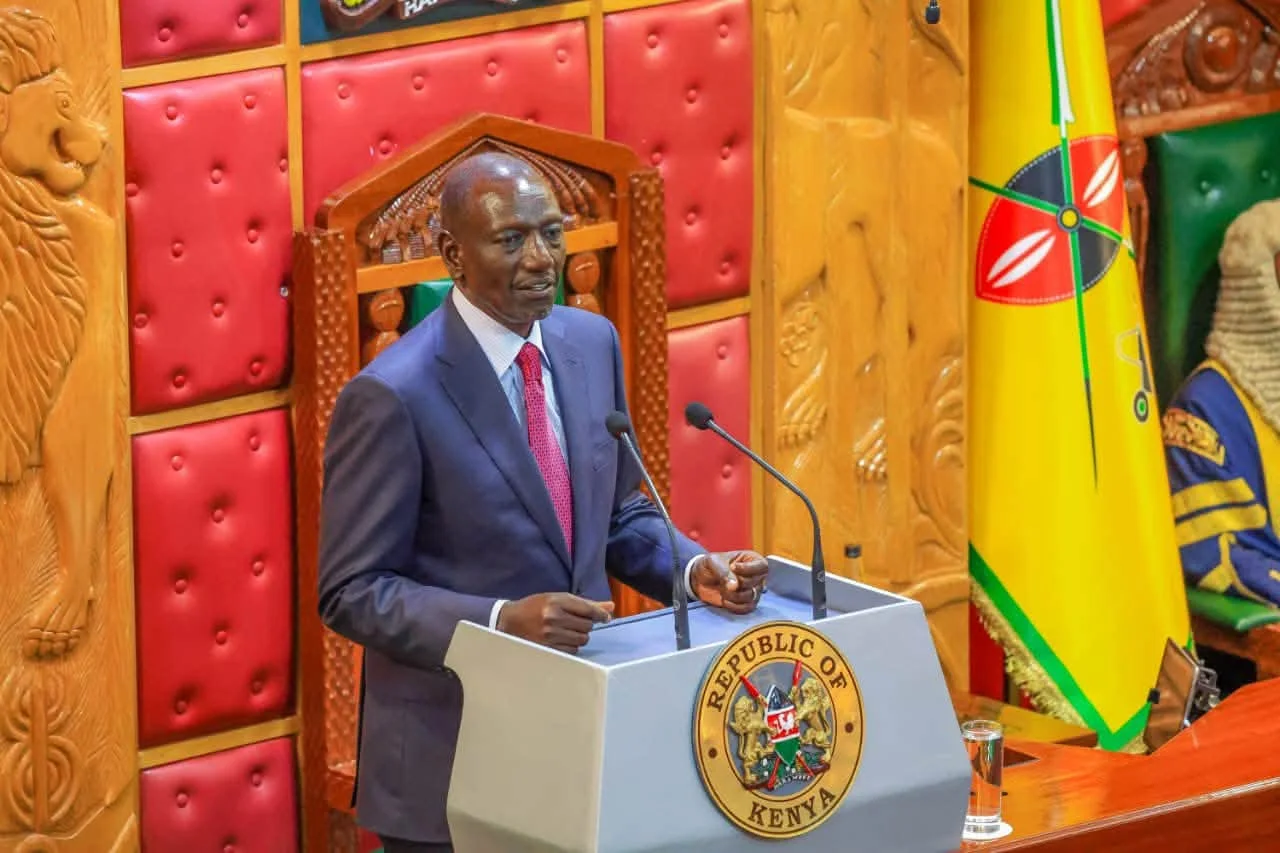
President William Ruto has set out a 10-year economic transformation plan estimated at Sh5 trillion, seeking to accelerate infrastructure development, create millions of jobs and raise Kenya's living standards to First World levels.
Speaking during his fourth State of the Nation Address before a joint sitting of Parliament, Ruto said the country had made progress in stabilising the economy and expanding opportunities, but now needed to shift its focus towards building a globally competitive economy.
He said the ambitious programme would require innovative financing mechanisms and increased domestic savings rather than relying solely on ordinary government expenditure.
"Our transformation programme is estimated to require KSh 5 trillion over the next 10 years. We must therefore mobilise long-term capital in ways that protect debt sustainability, safeguard public resources and avoid placing an unsustainable burden on taxpayers," he said.
The President identified the National Social Security Fund (NSSF) as a key source of domestic capital, noting that increased contributions from workers and employers had significantly strengthened the Fund's financial position.
According to Ruto, monthly NSSF contributions have risen sixfold since 2023, from Sh1.4 billion to more than Sh8.5 billion.
The Fund's value has also grown from Sh288 billion in 2022 to Sh850 billion as of November 2026, with the government projecting that it will reach Sh1 trillion by June 2027.
He added that NSSF members earned 17 per cent interest on their savings during the 2024/2025 financial year.
Ruto further said digitisation had reduced the processing time for benefits from 82 days to seven days, with the government targeting a further reduction to 24 hours.
Over the past three years, the Fund has disbursed Sh40.1 billion to approximately 400,000 beneficiaries.
The Head of State also highlighted the National Infrastructure Fund (NIF), which he said would help finance major development projects through proceeds from the divestiture of mature public assets.
He recalled proposing the establishment of the Fund during his previous State of the Nation Address, commending Parliament for passing the enabling legislation, which he signed into law on March 9, 2026.
The Fund is expected to be capitalised with Sh340 billion and attract additional investments from pension funds, institutional investors and development finance institutions.
The resources will support infrastructure projects across key sectors, including roads, airports, railways, energy, water and irrigation.
Ruto also announced plans for a Sovereign Wealth Fund to provide a framework for saving and investing national wealth for future generations.
He said both funds would operate under strict transparency and accountability measures to ensure investments deliver tangible economic and social benefits.
"These financing instruments must operate under transparent governance, rigorous project appraisal and clear accountability. Every investment must be justified by the economic and social value it creates," he said.
Ruto maintained that the Sh5 trillion programme would be pursued without compromising fiscal responsibility, insisting that the country must build productive assets while ensuring future generations are not burdened with unsustainable debt.