
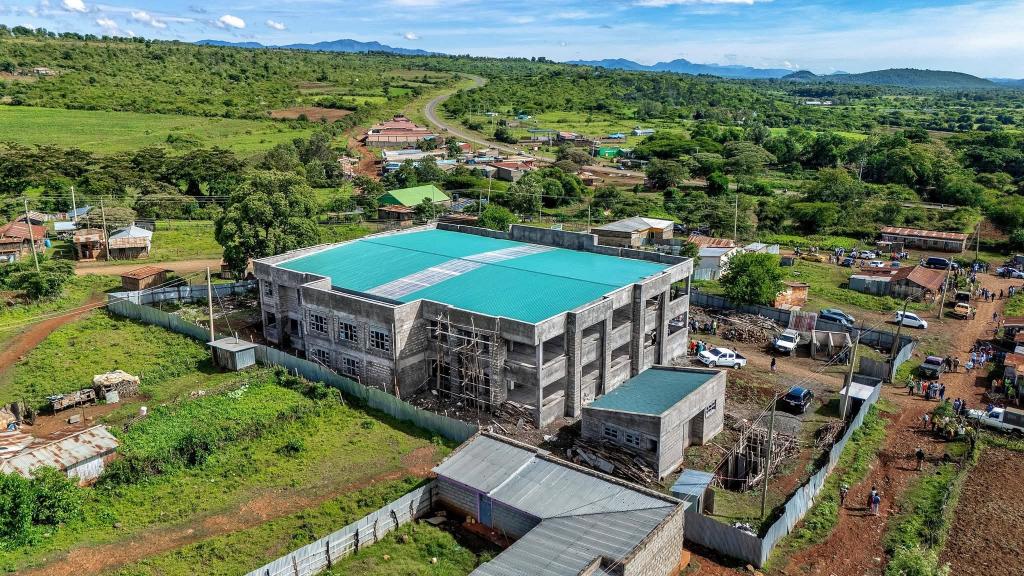
Kenya is set for a major expansion of its trading infrastructure, with President William Ruto announcing a Sh57 billion investment to establish 600 modern markets as the government seeks to address poor trading conditions, agricultural wastage and limited opportunities for farmers to sell their produce.
Ruto made the announcement during his 4th State of the Nation Address at Parliament Buildings on Wednesday, November 18, 2026, saying the new facilities would offer traders better working spaces while providing storage units and cold rooms to preserve perishable goods.
“We are developing 600 modern markets across Kenya at a cost of 57 billion to provide additional trading space, storage, and cold rooms,” Ruto said.
The initiative is expected to strengthen the country's agricultural supply chain by improving how produce is stored, handled and sold. It also forms part of the administration's broader push to promote local manufacturing and ensure farmers benefit from processing their produce instead of relying mainly on raw commodity sales.
Alongside the market construction programme, Ruto said the government had spent Sh8.5 billion on county aggregation and industrial parks across 34 counties, with 15 facilities already completed.
He said further funding had been provided for the purchase of shared manufacturing equipment that will enable businesses and producers to undertake processing activities within the counties.
The facilities are designed to bring agricultural producers, processors and manufacturers together, creating a more direct link between farms and industries. By reducing the distance between production and processing centres, the government hopes to lower transport expenses and encourage the growth of businesses dealing in locally manufactured goods.
Ruto said the infrastructure would give farmers an opportunity to move into higher-value markets by processing their commodities rather than selling them raw.
Ruto points to Kisii market, avocado project
To demonstrate the progress of the programme, the President cited developments in Kisii County, where he recently presided over the opening of a modern market and the launch of a county aggregation and industrial park targeting avocado processing.
He said the market had revealed the scale of demand for improved trading facilities, noting that traders had waited for years for better infrastructure.
“I was last week inaugurating one of those markets in a place called Fortoto in KC, and I could see what the fact, what the traders had been expecting for many years,” he said.
The avocado facility is expected to support processing and value addition in the horticultural industry, allowing farmers to tap into opportunities beyond the sale of fresh produce.
The two projects illustrate the government's plan to develop county economies by linking agricultural production with storage, processing, and market access.
Farmers to benefit from reduced losses, new jobs
Ruto said the investments would also address the losses farmers suffer when they lack adequate storage facilities or cannot find buyers for their produce in time.
He argued that expanding local processing capacity would help retain more agricultural value within communities while opening up employment opportunities in rural areas.
“These investments will enable farmers to sell processed products rather than raw produce, reduce post-harvest losses, support local manufacturing, and create employment within our counties,” he said.
The President said the strategy would benefit different groups across the agricultural sector, including maize farmers, coffee growers, dairy cooperatives and fishing communities.
He maintained that the government's approach was to tackle production challenges while ensuring farmers could access better markets and earn more from their work.
“From the maize farmer to the coffee grower, from the dairy cooperative to the fishing community, our approach has been consistent: lower production costs, increase productivity, improve market access, and enable producers to retain more of the value they create,” Ruto said.
The proposed markets and industrial parks are expected to provide facilities for collecting, preserving and processing agricultural goods while bringing farmers closer to buyers and manufacturers.
However, the benefits will depend on whether the projects are completed as planned, the facilities are properly managed, and farmers and traders can afford to use them. Access to dependable buyers will also be important in ensuring the infrastructure translates into better incomes and sustainable business opportunities.