
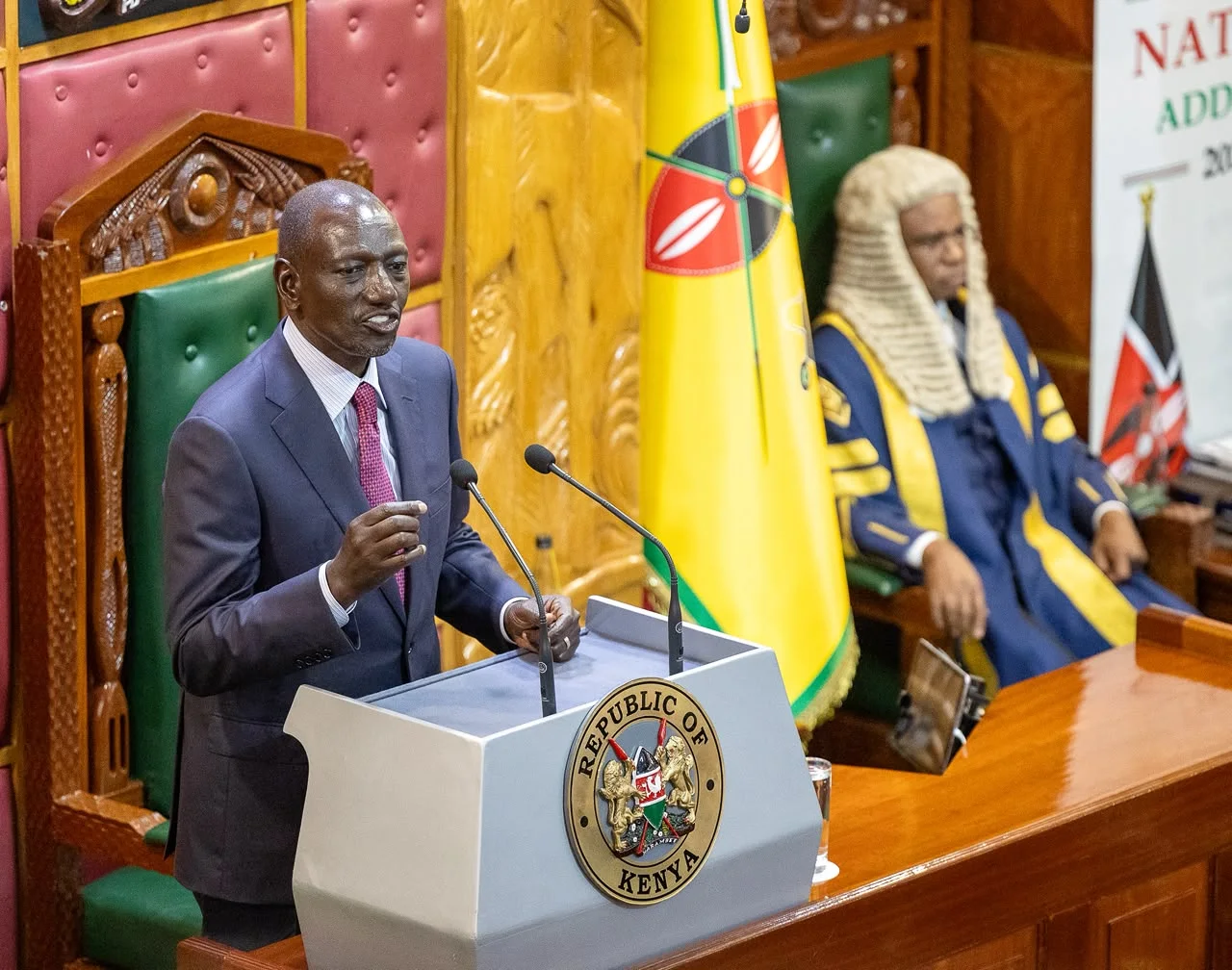
President William Ruto has challenged Kenya's decades-long reliance on foreign firms to print national examination papers, revealing that the decision to produce the 2026 examination materials locally has saved the country close to Sh1.5 billion.
Addressing a joint sitting of Parliament during his 14th State of the Nation Address on Wednesday, November 18, Ruto said Kenya had successfully printed its national examinations locally for the first time in 65 years, ending a long-standing practice of outsourcing the exercise.
The President questioned why the country had continued paying foreign facilities to print examination papers despite having the capacity to produce sensitive documents such as currency within its borders.
“The question I asked our ministry officials is this: If we are printing currency in Kenya, why can't we print exams? And in this single undertaking, we have taken off close to a billion and a half shillings that would have been wasted,” Ruto said.
He said the move had prevented nearly Sh1.5 billion from being spent on foreign printing services, allowing the money to remain within the local economy.
The 2026 exercise marked a departure from a system that had been in place for more than six decades, with the government taking charge of producing examination papers locally.
Ruto also highlighted the management of this year's national examinations, which involved approximately 3.6 million learners undertaking different assessments, including the Kenya Primary School Education Assessment (KPSEA), Kenya Junior School Education Assessment (KJSEA) and Kenya Certificate of Secondary Education (KCSE).
He praised the examination process for being conducted without police officers being deployed to oversee candidates, saying the government wanted to move away from the fear and tension that had previously characterised national examinations.
“In short, we have undertaken exams without the presence of a single policeman. This is how it should be. Examinations are a normal part of learning, not a security operation or a matter of life and death. Examinations should assess our children's progress, not instill fear about their future,” he stated.
The President said examinations should serve their intended purpose of measuring learners' academic progress rather than becoming intimidating events that leave candidates anxious about their future.
Beyond the examination process, Ruto outlined the government's efforts to address teacher shortages and improve learning conditions in public schools.
He said his administration had employed 100,000 teachers over the past four years and was planning to recruit another 20,000 in December.
According to the President, Kenya had an estimated shortage of 116,000 teachers when he took office in 2022, forcing some parents to contribute money through school boards of management to hire additional teaching staff.
He said the recruitment programme was aimed at reducing the staffing gap while easing the financial pressure on families who had been required to support schools in meeting their teaching needs.
The government has also built 23,000 classrooms and is working on the construction and equipping of 1,600 laboratories to improve the learning environment.
The projects are intended to provide more space and facilities for learners as the country continues implementing the Competency-Based Education (CBE) system.
On education financing, Ruto said the government's allocation to the sector had grown from Sh521 billion in the 2022/2023 financial year to Sh784 billion in the current financial year.
This represents an increase of Sh263 billion in funding since the administration took office.
He called for the timely release and proper management of the funds allocated to schools, cautioning against imposing additional charges on parents without authorisation.
The President said increased government spending on education should help reduce the amount households spend on services that ought to be supported through public funding.
He linked the investment in teachers, classrooms and learning facilities to the broader objective of lowering the cost of living and giving more children access to quality education.
“Every child who remains in school to learn, trains to acquire useful skills, and enters productive employment strengthens both the household and the nation,” he said.
Ruto maintained that education was a key part of his administration's economic transformation agenda, arguing that keeping children in school and equipping them with relevant skills would strengthen families and contribute to national development.
The government is continuing to expand education infrastructure and increase teacher numbers as it rolls out CBE and accommodates learners across the different levels of the education system.