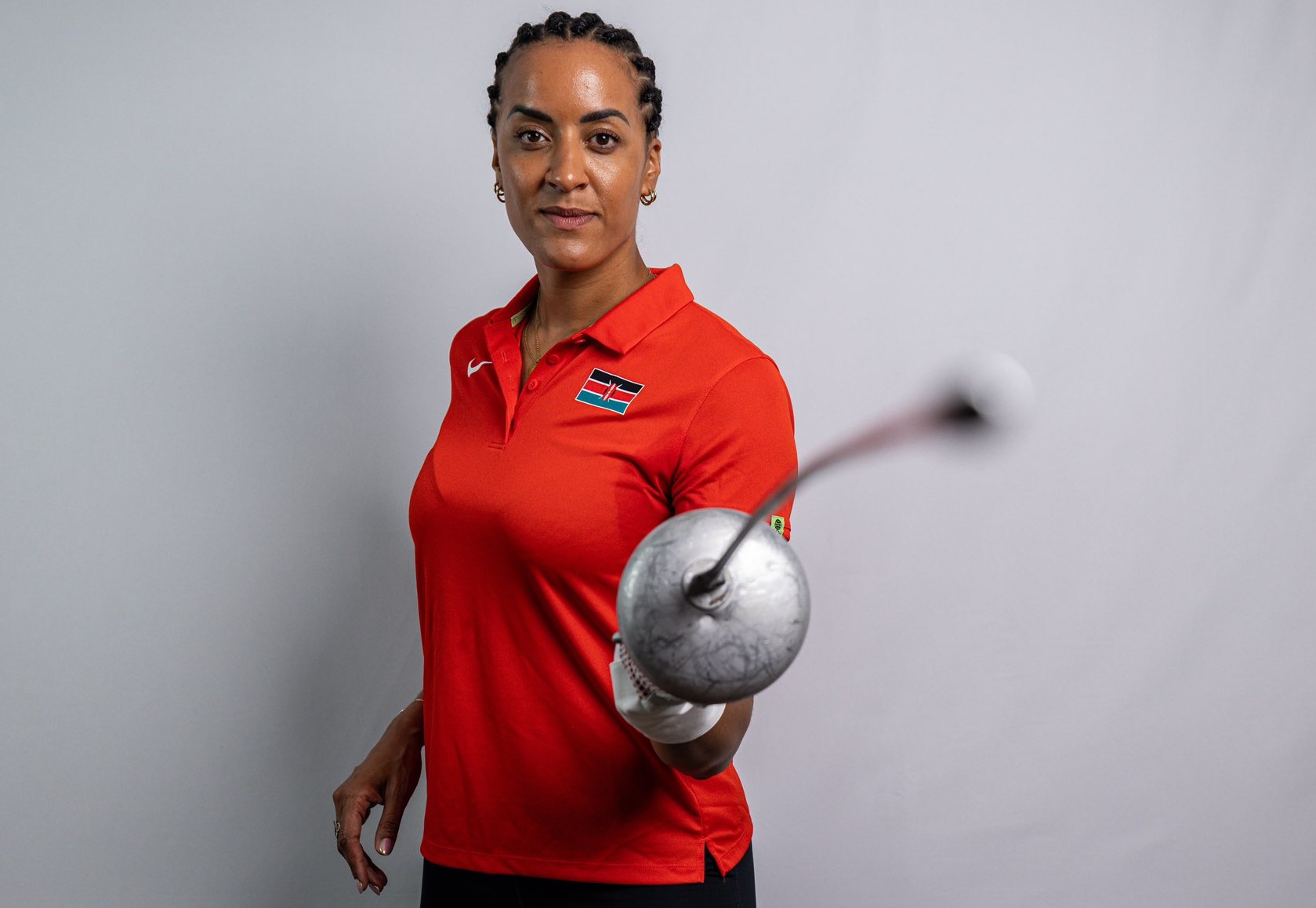
A whisper of steel has become a roar. Once a curiosity confined to niche clubs and quiet halls, fencing is slicing into Kenya’s sporting consciousness — and the moment arrived with a flourish at the 2024 Paris Olympics when Alexandra Ndolo thrust the nation into the spotlight. What many Kenyans had only glimpsed in films and history books is now a live, crackling spectacle: a sport of speed, strategy, and split-second daring.
The Duel Defined
Fencing is a ballet of blades and brains. Two athletes face off on a narrow 14-metre strip called the piste, trading lightning-fast attacks and deceptive feints with blunted, flexible weapons. Each touch is a conversation in motion — a question posed by a lunge, an answer returned by a parry — and victory often belongs to the fencer who thinks two moves ahead.
Three Weapons, Three Worlds
The sport unfolds across three distinct disciplines, each with its own tempo and temperament:
• Foil — the classic, elegant weapon; points land only with the tip to the torso, and bouts are governed by the tactical rule of right of way.
• Épée — heavier and more democratic; the entire body is a target, and simultaneous touches can score for both fencers.
• Sabre — explosive and razor-sharp in pace; hits count with the edge or tip above the waist, rewarding bold, aggressive intent.
Each weapon demands a different mindset: foil’s chess-like patience, épée’s cold calculation, sabre’s fearless tempo.
Precision, Protection, and the Pulse of the Game
Fencers don white protective gear, donning reinforced masks and conductive jackets that register electronic touches with an instant flash. Matches are short, intense bursts — pool bouts to five points or knockout duels to fifteen — and the scoring lights leave little room for argument. Beneath the gleam of technology, the sport remains a duel of nerves: timing, distance, and composure decide outcomes as much as physical strength.
From Swordplay to Sport
Fencing’s lineage stretches back millennia, from ancient combat drills to Renaissance duels. The modern sport crystallised in Europe between the 15th and 18th centuries as swords grew lighter and safety equipment transformed lethal practice into an athletic contest. The International Fencing Federation codified the rules in 1913, and fencing has been a constant at the Olympic Games since 1896 — a living bridge between history and high-performance sport.
Kenya’s Blade Awakens
At home, fencing is young but hungry. Structured programmes that began to take shape around 2017 have steadily nurtured talent and introduced the sport to schools and communities. By the early 2020s, the blades were no longer idle: clubs multiplied, coaches emerged, and athletes like Alexandra Ndolo carried Kenya’s colours onto the world stage. Momentum is building not just in competition but in imagination — a new generation seeing fencing as a path to discipline, travel, and international acclaim.
Fencing in Kenya is more than a novelty; it is a quiet revolution. As pistes are laid and masks polished, the country is discovering that beneath the measured footwork and flashing steel lies a sport that rewards cunning, courage, and the kind of artistry that turns a single touch into a story.































Comments
Sign in with Google to comment, reply, and like comments.
Continue with Google