Church urges anti-corruption measures in Finance Bill, 2026 to protect low-income Kenyans
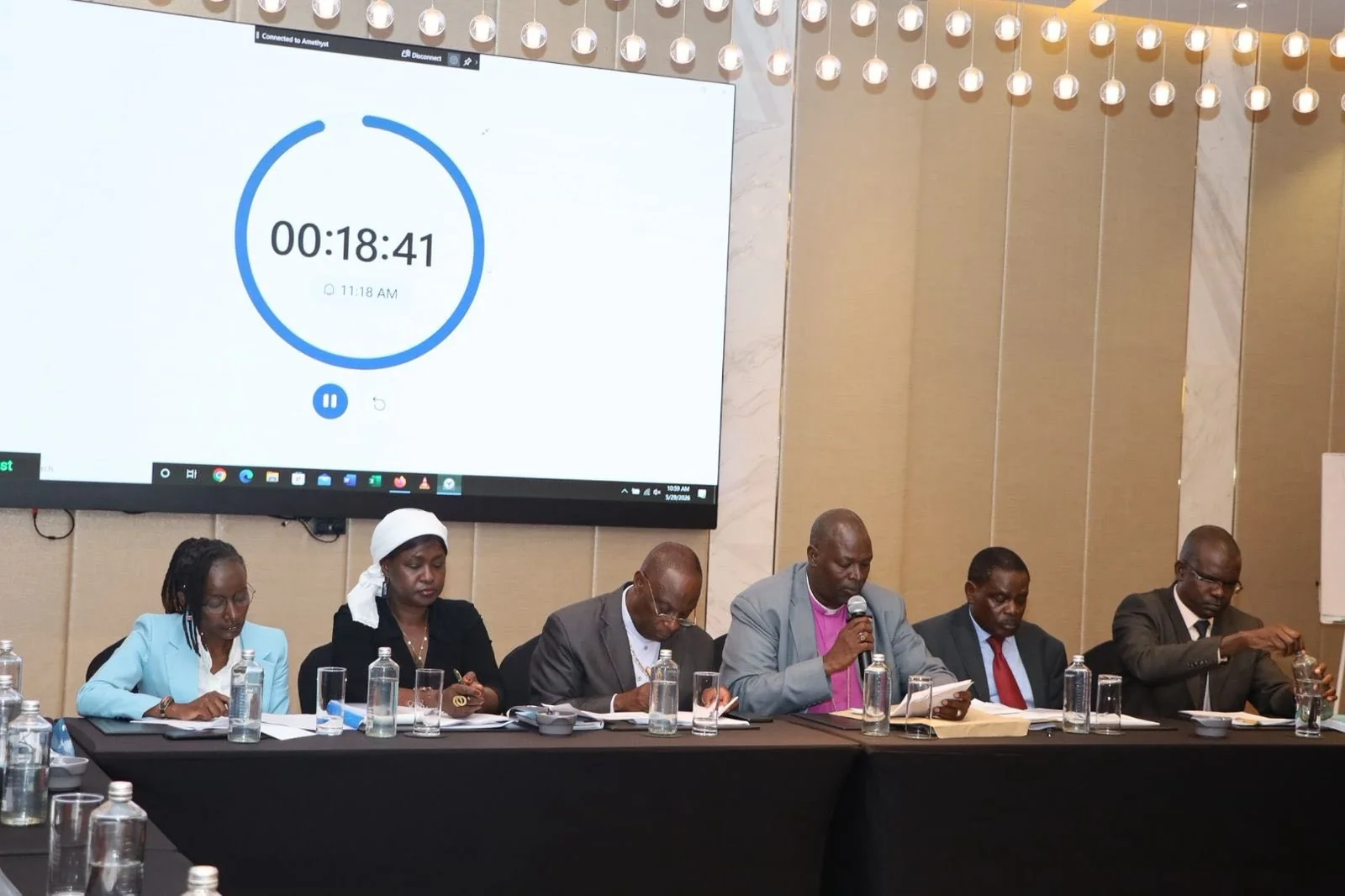
Rather than introducing additional taxes, the Church proposed stronger enforcement and anti-corruption interventions aimed at maximizing existing revenues and curbing financial leakages.
The Church has called for a major shift in the government’s fiscal approach, urging Parliament to prioritise anti-corruption measures and seal tax leakages instead of imposing heavier tax burdens on ordinary Kenyans through the Finance Bill, 2026.
Speaking before the National Assembly Departmental Committee on Finance and National Planning in Kiambu County on Friday, Archbishop Jackson Ole Sapit said taxation should not only be treated as a technical exercise but also as a moral and social issue affecting the dignity and livelihoods of citizens.
Leading a delegation from the Anglican Church of Kenya (ACK), the National Council of Churches of Kenya (NCCK), and the Evangelical Alliance,
Archbishop Ole Sapit acknowledged the government’s need to raise revenue amid growing debt obligations and budget deficits.
However, he warned against policies likely to overburden struggling households while corruption and tax evasion continue to drain public resources.
“The Church recognizes that the Finance Bill 2026 seeks to strengthen domestic revenue mobilization at a time when Kenya is facing increasing fiscal pressure arising from high public debt, widening budget deficits, and rising expenditure demands,” he said.
“However, taxation must be viewed as a moral and social issue that directly impacts the dignity and livelihoods of Kenyans,” the Archbishop added.
Rather than introducing additional taxes, the Church proposed stronger enforcement and anti-corruption interventions aimed at maximizing existing revenues and curbing financial leakages.
Among the recommendations presented to the committee were the full digitization of cargo tracking systems, integration of Kenya Revenue Authority systems with shipping lines, and deployment of artificial intelligence to detect under-invoicing and smuggling.
The clergy also pushed for the full implementation of e-procurement systems, mandatory disclosure of awarded tenders and beneficial ownership information, tougher lifestyle audits, and enhanced multi-agency cooperation to combat procurement fraud and tax evasion.
“Ordinary citizens should not continue carrying disproportionate tax burdens while billions of shillings are reportedly lost annually through leakages and tax evasion,” the Church stated.
The Church further raised concerns that some provisions in the Bill could trigger inflationary pressure by increasing supply chain costs, ultimately affecting consumers through higher prices of goods and services.
To cushion low-income households, the ACK recommended maintaining the proposal to exempt individuals earning below Ksh30,000 from Pay As You Earn (PAYE) taxation and called for reduced taxes on essential services.
The clergy also opposed the proposed increase in excise duty on mobile phones from 10 percent to 25 percent, arguing that smartphones are now essential tools for communication, online business, banking, and youth employment.
“Excessive taxation on smartphones risks deepening digital exclusion, especially among young people and low-income earners,” Ole Sapit warned.
Responding to the concerns, Kuria Kimani, who chairs the Finance and National Planning Committee, clarified that the proposal seeks to harmonise taxes on imported phones and would actually reduce the overall tax burden from 55 percent to 50 percent after removing the Import Declaration Fee and Railway Development Levy.
“There is misinformation going round that this provision will end up raising the cost of imported phones. However, the exclusion of the levies results in a five percent overall reduction,” said Kimani.
The MP also cautioned stakeholders against relying on fake versions of the Finance Bill circulating online, emphasising that only the official “green Bill” should be referenced during public participation.
In their concluding remarks, the Church emphasised that public trust remains the most sustainable source of government revenue.
“Citizens are more willing to comply with taxation when they see fairness, transparency, visible development outcomes, and responsible use of public resources,” Archbishop Ole Sapit said.
The clergy urged lawmakers to ensure the final Finance Bill protects vulnerable households, supports innovation and employment, and prioritises accountability over punitive taxation.



Comments
Sign in with Google to comment, reply, and like comments.
Continue with Google