Kenya not fit to host Afcon 2027, CAF report says
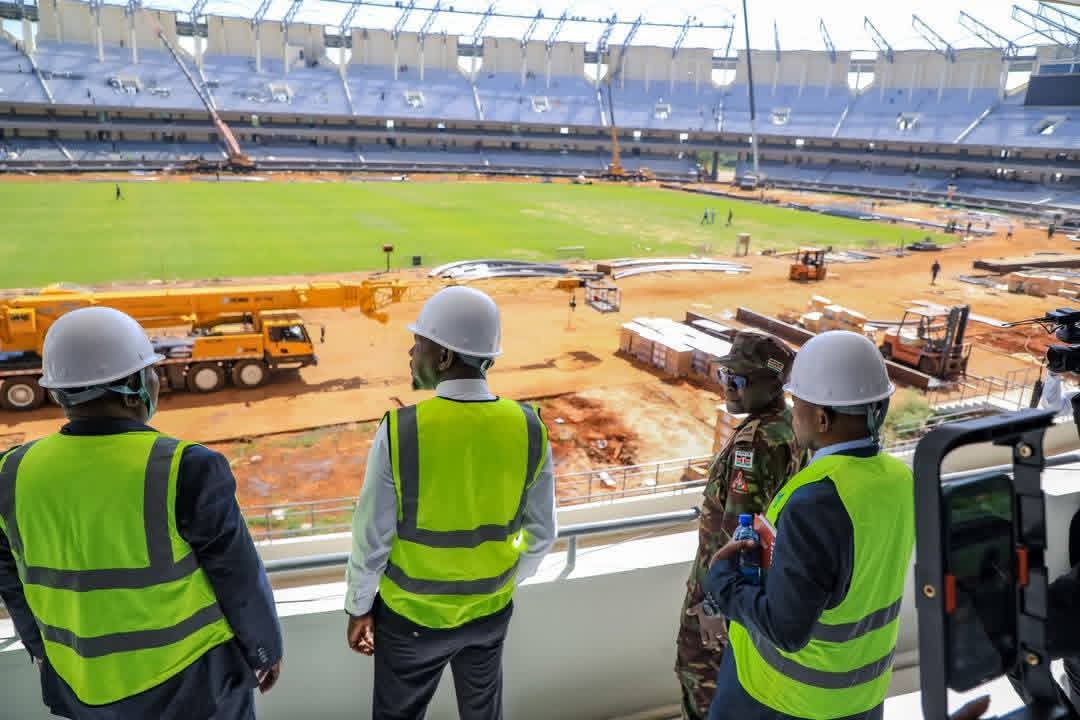
During a CAF inspection in February, Kenya presented three key stadium projects, all located in Nairobi, as the report revealed on Thursday evening, highlighting critical gaps even as Kenya prepares to co-host the 2027 tournament with Tanzania and Uganda.
Kenya is not yet fit to host the upcoming 2027 Africa Cup of Nations, a Confederation of African Football (CAF) report has revealed, insisting that none of Kenya’s proposed stadiums fully meet CAF Category 4 standards.
During a CAF inspection in February, Kenya presented three key stadium projects, all located in Nairobi, as the report revealed on Thursday evening, highlighting critical gaps even as Kenya prepares to co-host the 2027 tournament with Tanzania and Uganda.
“While Kenya benefits from a strong metropolitan environment in Nairobi, the delivery programme remains exposed due to the scale of structural upgrades required, dependency on new construction and uneven readiness of training infrastructure,” CAF's February report noted partly.
The report continued that Kasarani is an existing stadium undergoing major upgrading works, Talanta is a new stadium currently under construction, and Nyayo is an existing stadium with limited feasibility as a competition venue.
For Kasarani Stadium to comply with AFCON Category 4 requirements, CAF has recommended “extensive intervention” into the upgrade works that have already commenced.
The several upgrades required for Kasarani according to CAF are Reconfiguration of spectator circulation and segregation, development of hospitality areas (VVIP, VIP, and skyboxes), relocation and restructuring of the Venue Operations Centre (VOC), reconstruction of the competition pitch, including drainage and irrigation systems, Installation of a new lighting system compliant with 3000 lux broadcast standards, Improvement of safety and security systems, including CCTV, access control, and fire detection and upgrading of media facilities, including the press conference room and media centre
CAF also noted that Talanta Sports Complex, which is currently under construction, represented a key component of Kenya’s AFCON hosting strategy, with the report additionally stating that the stadium remained exposed to risks typically associated with large new-build projects, including.
“Early validation of the stadium’s operational design will be essential to avoid late structural modifications during construction,” CAF warned.
CAF's recommendation for Talanta is that final validation of spectator circulation and segregation plans, confirmation of the Venue Operations Centre (VOC) location, Integration of operational zoning for teams, officials, and media, coordination of critical systems installation, including lighting, power redundancy and safety systems.
For Nyayo National Stadium, CAF notes that it was an existing facility with ageing infrastructure, and also one for which no detailed renovation master plan which has been formally submitted and thus Africa's football governing body has resorted to “realistically consider” the stadium as a training venue, given its limited remaining delivery timeframe, and the feasibility of its upgrading to a competition venue.
These revelations comes days after Permanent Secretary Elijah Mwangi went before a parliamentary committee, seeking more funds to construct the three stadia into the required CAF standards, not forgetting the Sh3.9 billion required for hosting rights.
This begs the question: At what cost will Kenya satisfy CAF, and how far will the taxpayer chip to meet the demands of hosting Africa's holy grail of football?




Comments
Sign in with Google to comment, reply, and like comments.
Continue with Google