Governance commentator says wealth creation in Kenya not tied to formal education
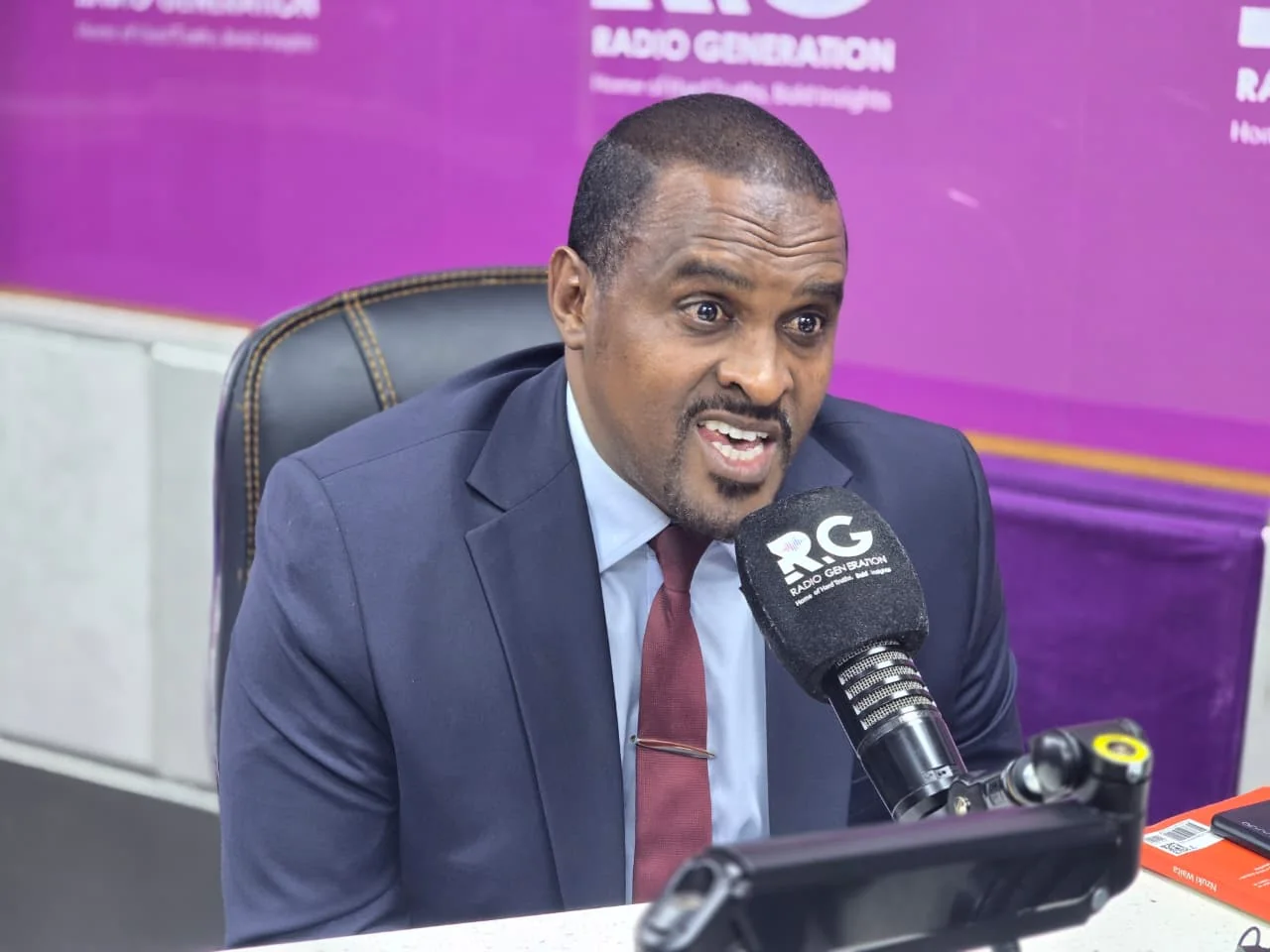
Governance commentator Abdulahi Alas further stated that some political systems operate through “anointment by hired elders” rather than open competition, saying this has strengthened elite control while limiting opportunities for qualified leaders.
Governance commentator, Abdulahi Alas has criticised Kenya’s political and economic systems, saying patronage networks, weak institutions and elite interests continue to block democratic growth and meaningful development across the country.
Speaking during a Radio Generation interview on Monday, Abdullahi argued that political parties have abandoned ideology and instead operate as tools of loyalty and control, with informal power brokers and patronage networks heavily influencing decision-making both nationally and at county level.
He claimed that political endorsement systems in some regions are no longer based on merit or public participation, but on financial influence and manipulation through community structures.
“These elders are given money after which they take,” he said, while criticising what he described as “elders for hire” who influence political outcomes for personal gain.
According to Abdullahi, the growing use of hired elders and informal political arrangements has weakened accountability and distorted democratic processes.
The governance analyst further stated that some political systems operate through “anointment by hired elders” rather than open competition, saying this has strengthened elite control while limiting opportunities for qualified leaders.
On education and economic empowerment, Abdullahi challenged the long-held belief that formal schooling is the main path to wealth creation.
“Accessing wealth has nothing to do with going to school,” he said.
He argued that education should focus on developing people’s ability to think critically and solve problems rather than being viewed purely as a route to financial success.
“We went to school so that we can think and help humanity,” he added.
Abdullahi pointed to Nairobi’s business sector to support his claims, saying many successful traders have built wealth outside formal academic systems.
https://twitter.com/RadioGenKe/status/2053717058114695624
“The majority of the Somalis who have business in Nairobi have never gone to school,” he said.
He further claimed that some business people still use stamps and fingerprints instead of written signatures even when handling high-value transactions, using the example to show what he termed as the disconnect between schooling and wealth accumulation.
The commentator also criticised Nairobi’s urban management and public infrastructure, saying the city continues to face poor environmental and sanitary conditions despite its position as the country’s capital and economic centre.
On regional inequality, Abdullahi raised concerns over continued poverty and underdevelopment in Northern Kenya, particularly in Mandera, Wajir and Garissa counties.
He said the three counties continue to struggle with hardship despite years of independence and government spending.
According to him, poor planning and failure to invest in productive sectors have contributed to long-standing economic problems in the region.
Abdullahi argued that governments have focused more on short-term political interests instead of building sustainable economic systems capable of creating jobs and improving livelihoods.
He also questioned national spending priorities, especially in health and infrastructure, arguing that more focus should be placed on production systems and food security.
“Why are you investing 2 billion in health?” he asked.
The analyst said many health challenges are linked to hunger and poor diets, insisting that stronger agricultural systems would reduce some of the pressure on the healthcare sector.
“You’ll see a five-year-old with big head, big stomach, skinny legs,” he said while describing the effects of malnutrition in some communities.
He attributed the situation to food insecurity, poverty and weak government investment in agricultural production.
Abdullahi contrasted Northern Kenya with counties he said have adopted stronger production-based economic models.
“That’s why Makueni County is doing better than us,” he said.
He credited such counties with investing in production, resilience and market systems that support long-term growth.
On county governance, Abdullahi argued that some offices within devolved governments lack meaningful authority despite being created to support leadership structures.
He said deputy governors and similar positions often remain ceremonial because they have little control over hiring, policy direction or executive decisions.
Despite the criticism, Abdullahi said solutions remain possible if governments adopt structural reforms focused on agriculture, manufacturing and local industries.
He proposed investment in sectors such as textiles, cement production and agriculture in Northern Kenya as a way of building sustainable economic growth and reducing dependence on political patronage.
Abdullahi concluded by saying Kenya’s biggest challenge is not the lack of resources, but poor economic thinking and weak policy implementation.
He warned that unless structural reforms are introduced, inequality and underdevelopment will continue affecting generations to come.




Comments
Sign in with Google to comment, reply, and like comments.
Continue with Google