Israel and Lebanon agree US-backed ceasefire, Hezbollah to halt attacks
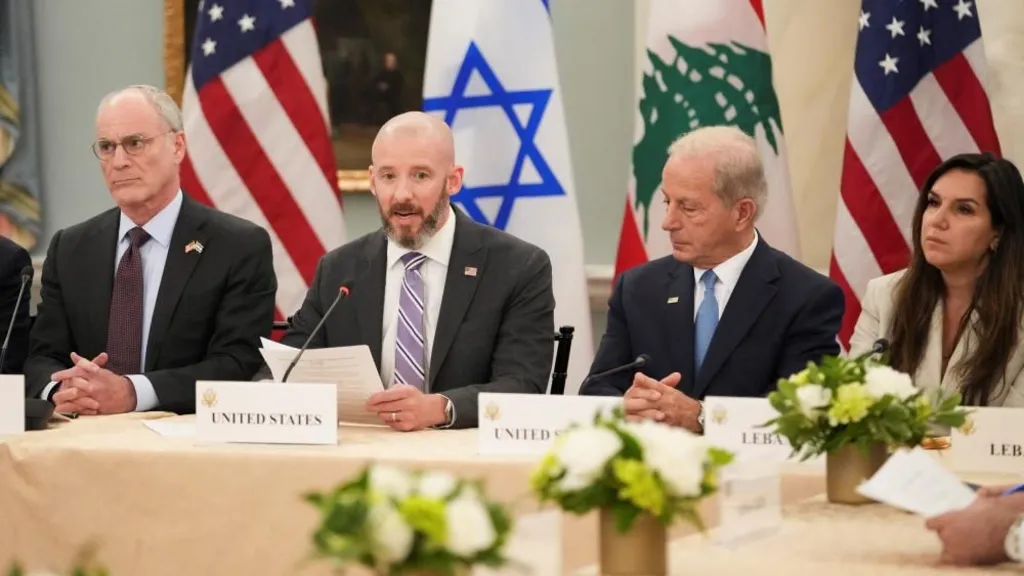
According to the US State Department, the agreement is "contingent on a complete cessation" of attacks by the Iran-backed Hezbollah movement, alongside several other conditions agreed upon during discussions involving the two countries.
Israel and Lebanon have agreed to move forward with a ceasefire arrangement aimed at ending months of fighting, with the deal hinging on Hezbollah completely stopping attacks against Israel and withdrawing its fighters from parts of southern Lebanon, according to a statement released by the United States.
The announcement comes despite renewed violence this week that left several people dead in Lebanon and saw Hezbollah launch rockets toward northern Israel, highlighting the fragile nature of efforts to end the conflict.
According to the US State Department, the agreement is "contingent on a complete cessation" of attacks by the Iran-backed Hezbollah movement, alongside several other conditions agreed upon during discussions involving the two countries.
Under the proposed arrangement, all Hezbollah operatives are expected to leave the area between the Litani River and the Israeli border currently controlled by Israel. The US also said it would support the creation of pilot zones where the Lebanese Armed Forces would exercise sole authority.
The statement stressed that Lebanon's future should be determined by its government and that of Israel alone.
"All countries reaffirmed that the future of the relationship between Israel and Lebanon must be decided by the two sovereign governments. They rejected any attempt, by any state or non-state actor, to hold Lebanon's future hostage," the statement said.
The latest development follows a limited ceasefire announced earlier this week. Lebanon said the arrangement would see Israel refrain from carrying out strikes on Beirut while Hezbollah would halt attacks on Israel.
The two sides are expected to meet again on June 22 for further discussions aimed at securing a broader agreement. Hezbollah had not publicly responded to Wednesday's announcement by the time of publication.
Before the ceasefire announcement, US Secretary of State Marco Rubio expressed hope that the talks would create a pathway toward greater security in Lebanon.
He told reporters that he hoped the discussions would produce "an action plan on a track for security in [Lebanon], independent from Hezbollah".
Fighting nevertheless continued in the days leading up to the agreement.
Lebanon's health ministry reported that at least nine people were killed in Israeli strikes across southern Lebanon on Wednesday. Among the dead were two paramedics whose ambulance was hit in the Chehour area. Another strike targeted a vehicle south of Beirut.
On the Israeli side, the military said it intercepted a drone and two projectiles that crossed from Lebanon. Hezbollah later said it had targeted a gathering of Israeli troops.
Israeli leaders had earlier warned that military operations could expand to Beirut's southern suburbs, known as Dahieh, if Hezbollah continued launching attacks on northern Israeli communities.
While Lebanon described Monday's arrangement as a ceasefire, Hezbollah officials disputed that characterization.
Mahmoud Qamati, a member of Hezbollah's political council, told the BBC on Tuesday: "There was no ceasefire agreement, just the protection of Dahieh."
He also dismissed the talks between Lebanon and Israel taking place in Washington.
"We think these negotiations do not concern us, nor do we recognise their findings or decisions, because we have rejected them on principle," he said.
The conflict expanded on March 2 when Hezbollah launched rockets into Israel following an Israeli strike that killed Iran's supreme leader. Israel responded with air strikes across Lebanon and later launched a ground operation in the country's south.
Hezbollah, a Shia Muslim political and military movement based in Lebanon, has fought several conflicts with Israel over the years and is designated a terrorist organisation by Israel, the United Kingdom and the United States, among others.
Previous attempts to end the fighting have failed. A US-brokered ceasefire reached on April 16 did not stop hostilities, and Israeli Prime Minister Benjamin Netanyahu last week ordered an escalation of military operations following continued drone and rocket attacks on northern Israel.
Lebanon's health ministry says at least 3,516 people have been killed since the war began, although it does not separate civilian and military casualties in its figures.
The United Nations estimates that more than one million people have been displaced, while Israeli evacuation orders now affect more than one-eighth of Lebanese territory.
Israel says 26 soldiers and four civilians have been killed during the conflict.
Lebanese media reported further Israeli strikes across the south on Wednesday.
The health ministry said four Syrians and two Palestinians died in an attack in the al-Housh area near the city of Tyre.
In a separate incident, the ministry said two paramedics were killed and another seriously injured when Israeli forces "directly targeted an ambulance" belonging to the Risala Scouts Association, a group linked to the Amal movement, which is allied with Hezbollah.
The ministry accused Israel of "demonstrating contempt for international humanitarian law" and said at least 128 paramedics and healthcare workers had been killed in attacks on ambulances and medical facilities over the past three months.
Israel's military did not immediately comment on the incidents. It has previously claimed that some ambulances have been used for military purposes, though it has not publicly provided evidence.
The Lebanese army also reported casualties among its ranks. One soldier was killed in an Israeli strike on the road between Nabatieh and Kfar Tebnit after a drone reportedly targeted his motorcycle.
Two other soldiers were injured in a separate strike on an army vehicle near Deir Zahrani and Nabatieh.
The army condemned what it described as "a pattern of deliberate strikes targeting army personnel, vehicles and positions" by Israeli forces.
Among those affected by the conflict are thousands of displaced families now living in tents along Beirut's waterfront.
Speaking to the BBC, 23-year-old student Mariam Hessa said she hoped any ceasefire would apply to the entire country.
"I don't think it's fair, because always the south is being bombed, and the houses [are] being damaged, destroyed, people are dying," she said.
"I want the ceasefire to be for all Lebanon, not just for an area like Dahieh or even the south. No, it's for all Lebanon. We need this."
The ceasefire effort has also highlighted tensions between Washington and Netanyahu's government.
US President Donald Trump, who announced the earlier partial ceasefire, appeared to confirm reports that he had urged Netanyahu to halt attacks on Beirut.
"I was a little bit perturbed at his constantly fighting with Lebanon," Trump told the New York Post's Pod Force One podcast. "At some point, I said: 'Bibi [Netanyahu], we've got to stop this.'"
Netanyahu later agreed to suspend strikes on Beirut while maintaining military operations elsewhere in Lebanon.
Speaking to CNBC, he said: "Sometimes, like the best families, we have these tactical disagreements. We always find a way to resolve them."
Trump is reportedly concerned that a wider escalation in Lebanon could undermine efforts to secure a broader agreement involving the United States, Israel and Iran.
Iran has maintained that any regional ceasefire arrangement should include Lebanon.
Iranian Foreign Minister Abbas Araghchi warned on Wednesday that if attacks on Beirut continued, Iran's armed forces were "fully prepared" to resume the war, according to Iranian media.
Later in the day, however, Trump indicated that negotiations involving Iran should remain separate from efforts to end the fighting between Israel and Hezbollah.
"I'd like to separate it, I'd like to have a separate thing, because it is... separate," he told reporters.




Comments
Sign in with Google to comment, reply, and like comments.
Continue with Google