
A glaring mismatch in textbook distribution has put the government’s learning materials programme under scrutiny, with MPs questioning how some schools can receive thousands of books they do not need while others struggle to get supplies, even as publishers wait for billions of shillings owed for delivered materials.
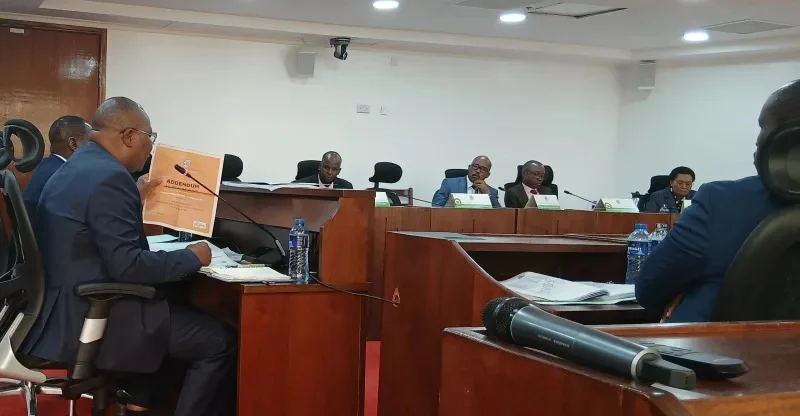
The National Assembly Public Investments Committee on Governance and Education on Wednesday interrogated officials from the Kenya Institute of Curriculum Development (KICD) over the distribution discrepancies, seeking answers on the data used to allocate textbooks, the oversight of deliveries and the handling of excess stock in schools.
KICD Chief Executive Officer Charles Ong’ondo told the committee that the mismatch largely stems from inaccurate enrolment figures and subject-selection records supplied by the Ministry of Education, which the institute relies on when arranging textbook distribution.
“The gist of all the questions that have been raised by this committee is the lack of accurate data,” Ong’ondo told the lawmakers.
He explained that KICD works with the distribution lists provided by the ministry and does not independently establish the number of learners enrolled in individual schools, meaning changes in enrolment after the records are submitted can disrupt the allocation process.
Ong’ondo cited instances where schools expected to receive about 350 Grade 10 learners but ended up enrolling more than 600, creating demand for books beyond the quantities initially planned.
He also pointed to institutions that introduced subjects they had not declared during the initial planning, leaving them without the required textbooks.
“There are schools which started offering subjects that they had not indicated, subjects like theatre and venue, music, media technology, marine and fisheries. So they are now asking us for books when the lists are indicated zero,” he said.
The explanation drew further questions from lawmakers, who expressed concern that schools were being left to deal with the fallout of discrepancies in the data used to plan deliveries.
Committee chair Dick Oyugi cited a school reportedly holding more than 43,000 excess books, questioning how such a large surplus could have accumulated at a single institution.
Kithua MP Thuddeus Nzambia raised the possibility of cartels operating within the textbook supply chain, questioning the uneven distribution of learning materials and how some schools end up with far more books than they require.
Peris Tonkei also questioned why institutions were being asked to surrender excess books when they were struggling with inadequate capitation to meet their operational expenses.
“You've gotten excess books, and you don't have computation. So why would you surrender the books and say that these books are excess?” she posed.
The lawmakers called on the Ministry of Education to account for the distribution process and explain how schools receiving unnecessary supplies could be identified before deliveries are made.
Ong’ondo said principals should channel complaints about excess or missing books through Sub-County Directors of Education, adding that materials delivered for subjects not taught in a particular institution should be returned for redistribution to schools that require them.
He dismissed concerns that the excess books could be outdated, insisting that the materials supplied remain relevant to the curriculum.
“From where we stand, there are no obsolete books,” he said.
The Auditor General's representative told the committee that enrolment and textbook allocation figures should be verified through the National Education Management Information System (NEMIS), which is also used to determine capitation allocations to schools.
The representative argued that the figures should be reconciled to ensure the same data is used when determining both the financial support schools receive and the learning materials they require.
The committee was also informed that publishers are owed approximately Sh7 billion for textbooks already supplied, with KICD warning that the outstanding payments have affected publishers' ability to finance printing and distribution.
The debt comes as the government prepares for the Grade 11 transition in January 2027, with publishers warning that delays in settling their bills are slowing production. By mid-November, only 30 per cent of the required Grade 11 textbook stock had been printed.