
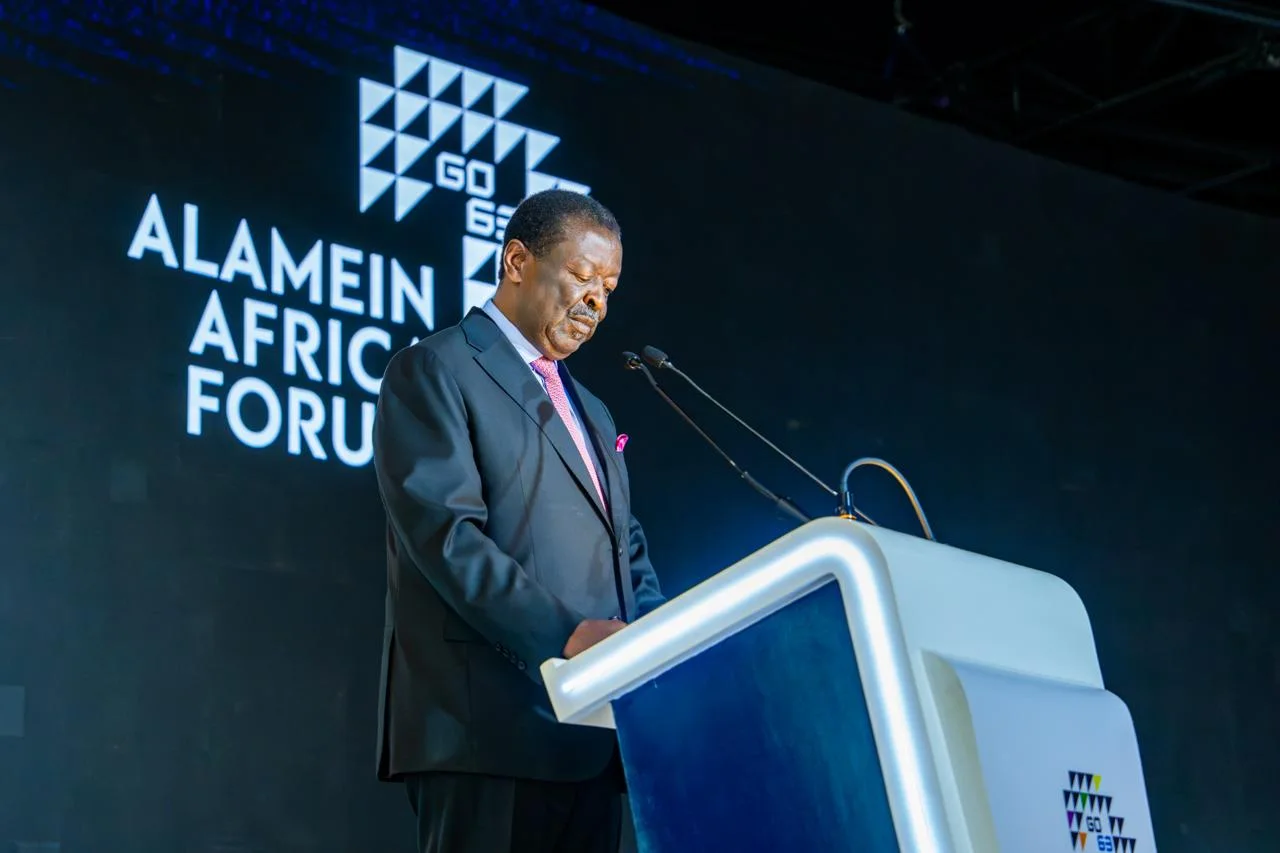
Prime Cabinet Secretary Musalia Mudavadi has called for stronger economic cooperation and integration among African countries, saying collective action is needed to help the continent navigate growing geopolitical and economic pressures.
Mudavadi said Africa must develop partnerships, policies and projects capable of translating the African Union’s Agenda 2063 into tangible economic outcomes for its people.
He spoke on Saturday while delivering a keynote address at the inaugural Alamein Africa Forum in El Alamein, Egypt, held on the sidelines of the 8th Mid-Year Coordination Meeting of the African Union.
“It is a great pleasure and honour to join you for the Inaugural Alamein Africa Forum,” Mudavadi said, commending Egypt, the African Union Commission, Afreximbank, AUDA-NEPAD and the African Development Bank for convening the continental business forum.
The forum brings together political leaders and private sector representatives to discuss Africa’s economic trajectory and strengthen cooperation between AU institutions and businesses.
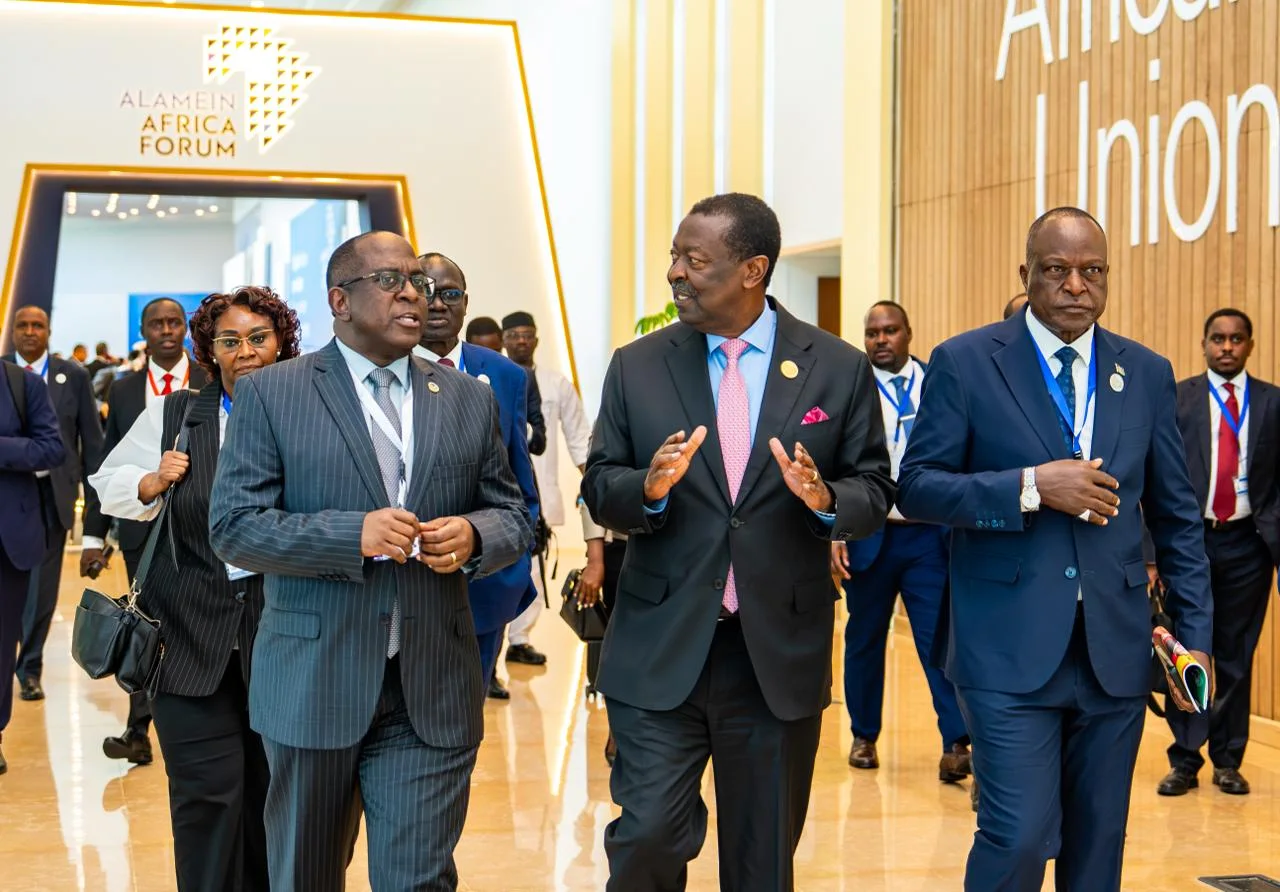
Mudavadi said the global economy was undergoing structural changes, with the Middle East crisis, conflicts on the continent, disruptions at key trade chokepoints, rising protectionism and trade tensions creating challenges for African economies.
“These heightened trade and geopolitical tensions call for collective economic response, with partnerships, policies and projects that translate the vision of Agenda 2063 into tangible economic outcomes that transform the lives of African people,” he said.
The Prime Cabinet Secretary identified financial fragmentation as one of the challenges limiting Africa’s economic potential.
He said Africa continues to have a fragmented and geographically concentrated financial system, which constrains efficient cross-border capital flows.
“Regional financial integration is therefore essential to unlock capital flows, strengthen economic linkages and reduce disparities,” Mudavadi said.
He called on the private sector to work closely with governments to expand trade and deepen economic integration.
Mudavadi said Kenya remains committed to regional and continental integration, particularly through the implementation of the African Continental Free Trade Area (AfCFTA).
He noted that President William Ruto’s role as Chair of the Assembly Committee on AfCFTA Implementation demonstrates Kenya’s commitment to advancing continental trade integration.
According to Mudavadi, AfCFTA offers an opportunity to accelerate industrialisation, strengthen regional value chains and attract investment, with the private sector playing a key role.
He also identified infrastructure and logistics as major constraints to efficient trade across Africa.
“The active participation of the private sector is therefore also essential to advancing regional and continental infrastructure and logistics connectivity,” he said.
Mudavadi cited the September 30 groundbreaking of the East Africa Oil Refinery in Lamu as an example of an African-led project aimed at addressing regional economic needs.
He said the refinery, backed by the Dangote Group, would accelerate implementation of the Lamu Port-South Sudan-Ethiopia Transport corridor, commonly known as LAPSSET.
“This legacy project, backed by the Dangote Group, a private enterprise, demonstrates our objective and growing capacity to provide African solutions to African needs,” Mudavadi said.
He said the project could contribute to regional energy security, value addition, industrialisation and job creation.
Beyond the refinery, Mudavadi called for greater investment in regional transport corridors, cross-border digital payment systems, integrated energy grids and shared infrastructure to support intra-African trade.
“Our continent is competing globally, and attaining the necessary scale requires holistic approach by Governments, private sector and development partners,” he said.
Mudavadi urged African countries to remove physical and regulatory barriers to trade while supporting continental companies and projects capable of competing globally.
He also called for institutional reforms to maximise Africa’s resources and capabilities in infrastructure, trade, critical minerals, digital innovation, the creative economy and its youthful population.
“With this team here today, we can attain Africa’s desired development goals. We have the capabilities, the human resource, the natural resources and the strategic intent,” he said.
Mudavadi expressed hope that the forum’s outcomes would contribute to deliberations at the AU Mid-Year Coordination Meeting and advance Africa’s broader economic integration agenda.