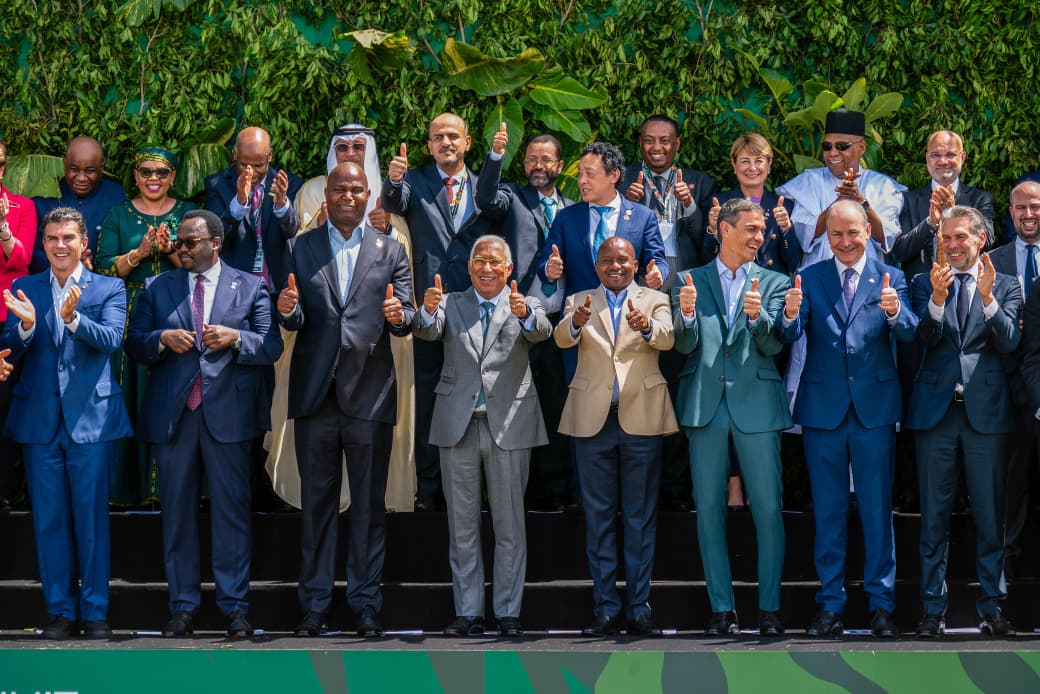
Deputy President Kithure Kindiki has urged the world to recognise Africa as a critical player in the global clean energy transition, pointing to the continent’s rich renewable resources, essential minerals, and youthful workforce as major advantages.
Speaking at the Leaders’ Summit ahead of the 30th UN Climate Change Conference (COP30) in Belem, Brazil, Kindiki said that while Africa holds immense potential to lead global green growth, its resources remain underexploited.
He highlighted that Africa has the largest renewable energy reserves and abundant minerals crucial for the green transition, yet it continues to attract less than two percent of the world’s investments in renewable energy.
“Of the three trillion dollars invested in renewable energy over the last two decades, Africa has received a negligible share, leaving over 600 million people without access to energy,” he said.
Kindiki pointed to Kenya as an example of what the continent can achieve. “Our energy grid is now 93 percent green and will reach 100 percent in the next four years,” he said, adding that Kenya has submitted a bold Nationally Determined Contribution (NDC 3.0) targeting greener energy and industrial sectors.
He tied these national efforts to the outcomes of the 2023 and 2024 African Climate Summits in Nairobi and Addis Ababa, which positioned Africa as a hub for global green growth.
The Deputy President said the world must change its perception of Africa from a risky investment region to a vital partner offering affordable and clean energy for global industries.
“The world must stop viewing Africa as an investment risk and instead see it as a partner offering abundant, affordable, and clean energy for global manufacturing,” he said.
He criticised the slow pace of climate financing, pointing out the human cost of unfulfilled promises. “Kenya alone needs 62 billion dollars by 2030 to implement its climate commitments. So far, we have secured only 50 million — a mere 0.08 percent,” he revealed.
Kindiki called on global leaders to make COP30 a milestone event by restructuring the climate finance system. “We must shift from incremental pledges in billions to the trillions required to match the scale of the crisis,” he said.
He also stressed the need to fully implement the Baku-to-Belem Roadmap, which aims to mobilise 1.3 trillion dollars by 2035 for developing nations, and to introduce reforms making global finance more accessible and inclusive.
He urged policies that empower women, youth, and farmers to ensure the benefits of the green economy are shared widely.
“The benefits of the green economy must be shared equitably across communities and generations,” he said.
In conclusion, Kindiki stressed that climate justice requires urgent, coordinated action, with Africa positioned at the heart of the global clean energy movement.































Comments
Sign in with Google to comment, reply, and like comments.
Continue with Google