Mudavadi defends Nairobi Cooperation Framework, says it’s not a takeover
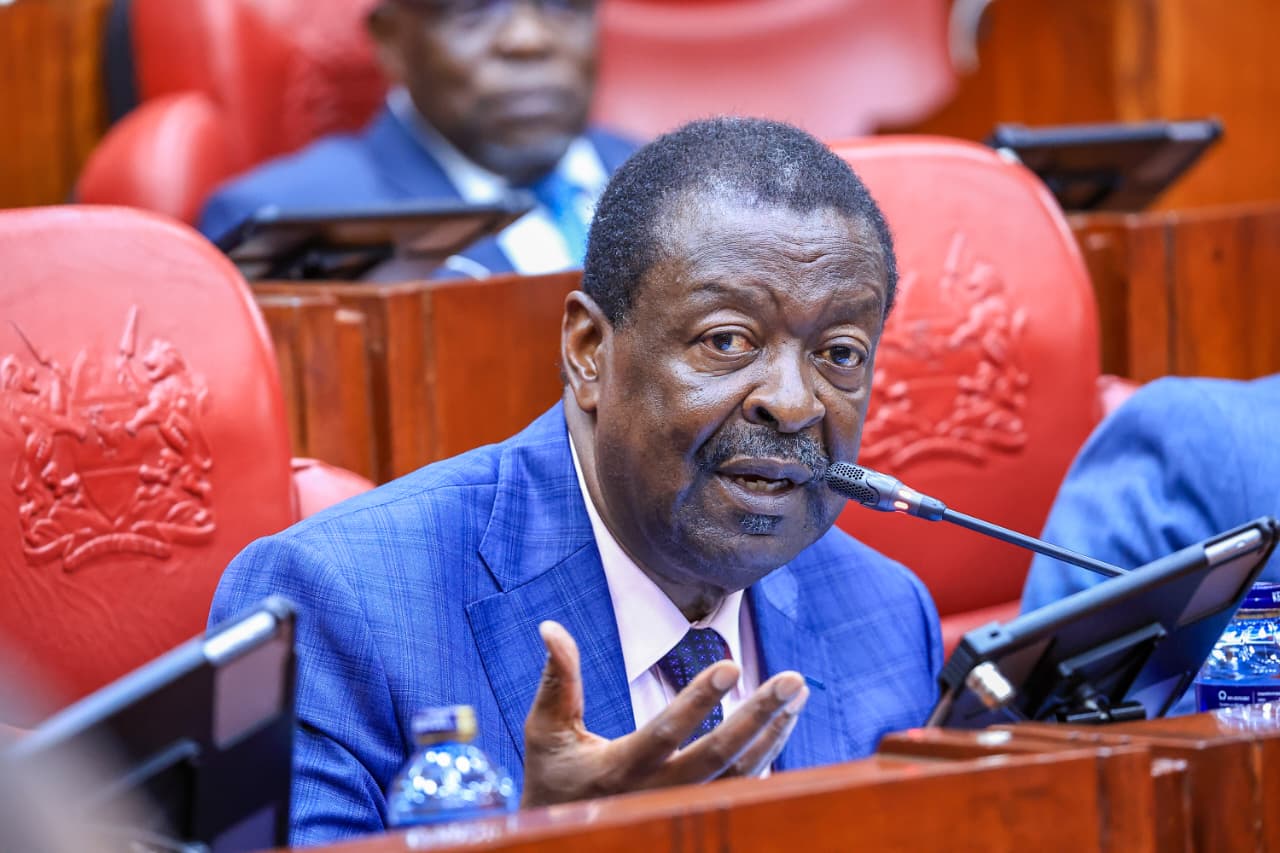
Prime CS Musalia Mudavadi has defended the Nairobi–National Government Cooperation Framework before senators, insisting it is constitutional, not a takeover, and aims to improve key services in the capital.
Prime Cabinet Secretary Musalia Mudavadi has defended the Cooperation Framework between the National Government and Nairobi City County, framing it as a constitutionally grounded partnership designed to address the capital’s unique demands.
Appearing before the Senate Committee on Devolution and Intergovernmental Relations on Monday, Mudavadi said the agreement responds to Nairobi’s dual role as both a county and the country’s political, economic, and diplomatic hub.
The Prime CS said the framework is a collaborative partnership and not a government takeover, emphasizing the city’s special status as Kenya’s capital.
“This is not a takeover… the implementation committee, which is the most political, is chaired by the county government. The county assemblies must have oversight, and this framework agreement was debated and approved by the county assembly,” Mudavadi told senators.
He added that the Cooperation Framework is a broad plan designed to guide interventions, not a detailed blueprint for implementation, which is the responsibility of Nairobi’s governor and technical teams.
He emphasized that Nairobi is “far more than an ordinary County,” noting it contributes 27.5% of Kenya’s Gross Value Added and generates over Sh4.1 trillion annually, while hosting key global institutions such as the United Nations Office at Nairobi and major multinational corporations.
This, he said, places obligations on the capital that go beyond what the current county financing framework was designed to handle.
Mudavadi clarified that the agreement “does not constitute a transfer of functions,” but instead operationalizes Article 189 of the Constitution, which provides for cooperation between the two levels of government.
“It provides a structured framework for cooperation in the performance of constitutionally assigned functions,” he said, adding that the National Government’s role is facilitative offering technical, financial, and institutional support while Nairobi County retains its mandate.
Mudavadi noted that all financing arrangements will comply with the Public Finance Management Act and remain within existing constitutional structures, ensuring no fiscal control shifts between governments.
He further highlighted that the agreement emerged from public participation conducted by the Nairobi County Assembly, which recommended stronger accountability, transparency, and stakeholder engagement.
On service delivery, Mudavadi said the framework is already improving coordination and reducing duplication across agencies, enabling faster implementation of projects.
“A functional, world-class capital is not a county luxury; it is a national and regional imperative,” he stated.
Mudavadi positioned the Cooperation Framework as a necessary intervention to align Nairobi’s development with national priorities while safeguarding devolution.
“By making Nairobi truly work, we uplift every Kenyan,” he said, underscoring the city’s special status and the need for sustained national support.
The framework outlines collaboration in critical sectors, including waste management, roads and street lighting, housing, markets, water and sanitation, and urban security. Implementation is guided by a two-tier structure: a Joint Steering Committee chaired by Mudavadi for policy oversight, and an Implementation Committee chaired by the Nairobi Governor to handle day-to-day execution.
Central to the framework is the “Nairobi Rising Programme,” a Sh80 billion initiative targeting transformative urban projects such as 50,000 streetlights, expanded water supply, sewer infrastructure, road development, and solid waste management systems.




Comments
Sign in with Google to comment, reply, and like comments.
Continue with Google