El Niño likely to hit by July as experts warn of heavy rains in Kenya
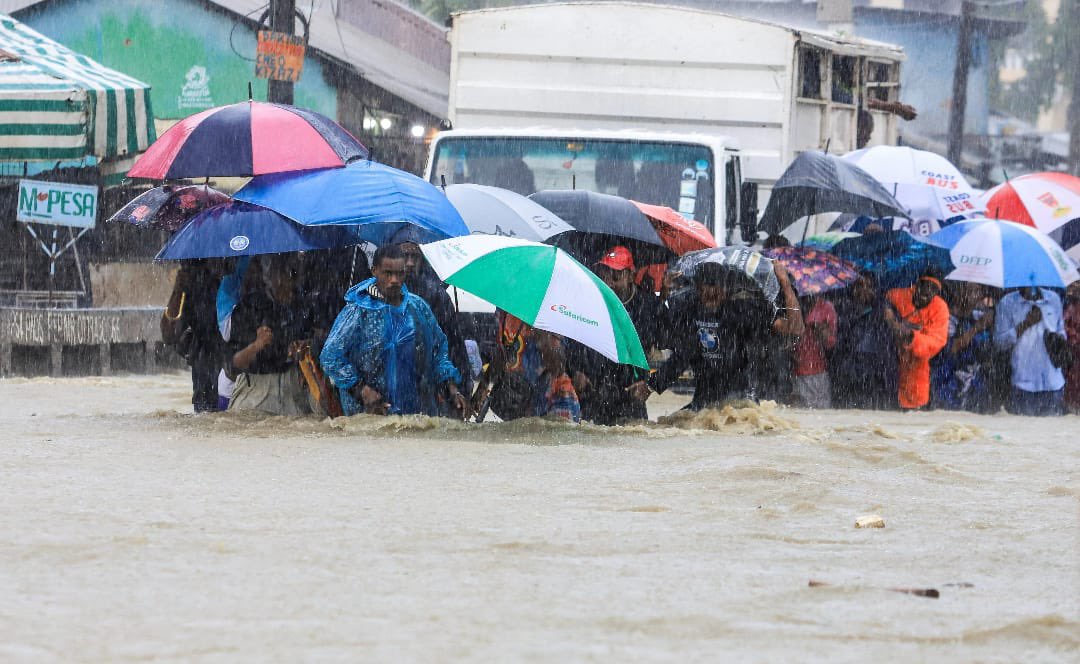
The US Climate Prediction Center said there is now an 82 per cent chance that El Niño conditions will develop during the May to July period.
Scientists are warning that Kenya could once again face months of heavy rainfall and flooding after new climate forecasts pointed to the likely return of El Niño later this year.
The latest outlooks show rising confidence among global weather experts that the climate pattern will form between now and July before continuing into early 2027, raising fears of another season of destructive floods in parts of the country.
The US Climate Prediction Center said there is now an 82 per cent chance that El Niño conditions will develop during the May to July period. Forecasts also indicate a 96 per cent likelihood that the phenomenon will persist through the Northern Hemisphere winter between December 2026 and February 2027.
“El Niño is likely to emerge soon (82 per cent chance in May–July 2026) and continue through Northern Hemisphere winter 2026–27 (96 per cent chance in December 2026–February 2027),” the centre said in a statement.
The agency noted that scientists are still monitoring how powerful the event may become in the coming months.
“While confidence in the occurrence of El Niño has increased since last month, there is still substantial uncertainty about the peak strength of El Niño, with no strength categorisation exceeding a 37 per cent chance.”
El Niño develops when temperatures in parts of the Pacific Ocean become warmer than usual, affecting wind and rainfall systems across different parts of the world.
For Kenya and other countries within the Horn of Africa, the phenomenon is commonly associated with above-normal rainfall, flooding and warmer conditions. In other regions, it often triggers drought, heatwaves and widespread wildfires.
The World Meteorological Organization (WMO) has already cautioned that the expected El Niño could alter global weather patterns, including increasing rainfall across East Africa.
“After a period of neutral conditions at the start of the year, climate models are now strongly aligned. There is high confidence in the onset of El Niño, followed by further intensification in the months that follow,” said Wilfran Moufouma Okia, Chief of Climate Prediction at the WMO, in a statement.
Recent scientific observations and climate reports have suggested that rapidly rising ocean temperatures may create conditions for what experts often call a “super El Niño”, referring to unusually intense events.
Still, researchers from the University of Colorado believe the coming El Niño may not reach the levels recorded during the most severe episodes in recent decades.
“Since 1982, when satellite measurements of ocean temperature began, there have been at least four very strong El Niño events: 1982–83, 1997–98, 2015–16 and 2023–24. Based on current forecasts, if an El Niño develops this year, it will be the fifth strongest since 1982,” the analysis said.
Past El Niño seasons have caused major destruction across Kenya.
The 1997–1998 event remains one of the worst weather disasters ever experienced in the country after severe floods hit regions including Nyanza, Coast, Rift Valley and North Eastern.
Roads and bridges were washed away, entire communities were cut off and thousands of people were displaced from their homes. Health officials also reported outbreaks of cholera, malaria and Rift Valley fever in several affected areas.
Studies on the impact of the 1997–1998 rains in the Mount Kenya region described the period as one of “extraordinarily heavy rainfall” that lasted for close to 10 months and caused widespread damage to infrastructure and agriculture.
Kenya also experienced widespread flooding during the 2015–2016 El Niño season.
Counties such as Nairobi, Kisumu, Busia, Narok, Garissa and Tana River recorded major destruction as homes were swept away, roads became impassable and learning in some schools was disrupted.
In Nairobi, floodwaters repeatedly paralysed transport and affected informal settlements located near rivers and drainage channels.
Even as concern grows over the forecasts, the government has not yet announced an El Niño preparedness or response plan for this year.
Disaster experts say the early warning should give authorities and communities enough time to put measures in place before the expected October-to-December short rains season.
Scientists also continue to warn that climate change could make future El Niño events more extreme and less predictable.



Comments
Sign in with Google to comment, reply, and like comments.
Continue with Google