Why rig owners rejected Sh8 fuel cut offer from the Government
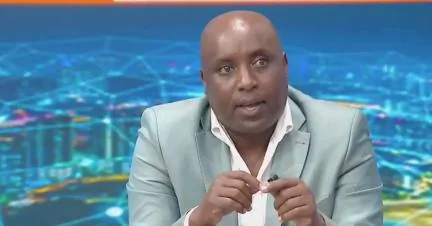
According to Chepsoi, one of the proposals tabled was for the government to use funds from the petroleum levy to cushion consumers, especially diesel users who have been most affected by the recent price changes.
Fuel sector stakeholders have explained why they rejected a government proposal to cut pump prices by Sh8, saying the offer was far below their demand for a full reversal of a Sh46 increase in the latest pricing cycle.
Rig Owners Association chair Cornelius Chepsoi said the decision was made during negotiations with government representatives, where stakeholders maintained that only a complete rollback of the increase would address their concerns.
“The minister came back with an offer from the state of Sh8 and something which our members refused. The original proposal is that they take out the entire Sh46 that they increased in the last cycle.”
Chepsoi said the ongoing industrial action has been wrongly framed as a matatu issue, insisting it affects several sectors and ordinary Kenyans across the country.
“There is a lot of talk that this is a matatu strike, it is not a matatu strike. This is a nationwide strike by Kenyans. We drill boreholes and foundations. We are not matatu owners, but when the matatu strikes, the nation comes to a standstill," he said.
He added that discussions between stakeholders and government officials did not yield an agreement, forcing both sides to pause talks to allow further consultation.
“We were not reading from different scripts. We agreed to disagree and postpone the meeting until a later time to allow everyone to consult and come up with numbers.”
According to Chepsoi, one of the proposals tabled was for the government to use funds from the petroleum levy to cushion consumers, especially diesel users who have been most affected by the recent price changes.
“One of the solutions was to use the petroleum levy, as per government statistics, which they have Sh5 billion. We agreed to rescue the diesel because most people are affected by the diesel.”
However, he said the government maintained its Sh8 reduction proposal, which stakeholders rejected as insufficient to ease pressure on transport costs and the wider economy.
“The state stuck with Sh8, and we said it is not tenable after everything that has happened,” Chepsoi said.
He confirmed that stakeholders agreed to continue with the strike until a more acceptable agreement is reached.
“The agreement was that we maintain the strike until the solution is found,” he said.
The Energy and Petroleum Regulatory Authority (EPRA) has since announced revised maximum retail pump prices for petroleum products covering the period from May 19, 2026 to June 14, 2026.
EPRA said the adjustment followed a petition from public transport operators who raised concerns over widening price gaps that could encourage fuel adulteration, especially between diesel and kerosene.
“The Energy and Petroleum Regulatory Authority (EPRA) has recalculated the maximum retail pump prices that will be in force from 19th May 2026 to 14th June 2026 following a petition by public transport sector operators on the need to minimize the risk of motor fuel adulteration that may arise due to the big price differential between Diesel and Kerosene.”
Under the new review, diesel prices in Nairobi will reduce by Sh10.06 per litre while kerosene will rise by Sh38.60 per litre. Super petrol prices remain unchanged.


Comments
Sign in with Google to comment, reply, and like comments.
Continue with Google