Ruto assents to Forest, Disaster Management and Equalisation Fund Bills
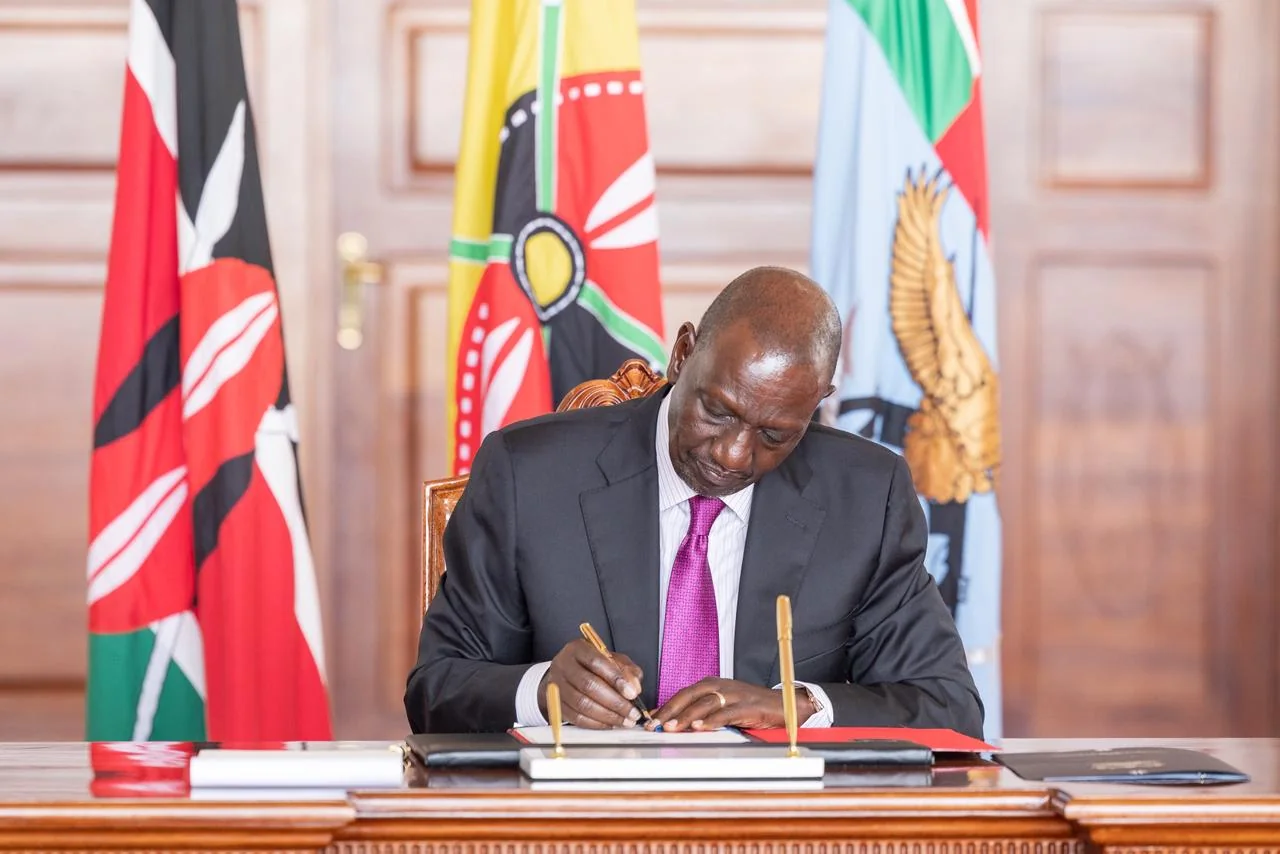
President Ruto also signed the Equalisation Fund Appropriation Bill, 2025, which authorizes the withdrawal and use of Sh16.8 billion from the Equalisation Fund for the financial year ending June 30, 2026.
President William Ruto on Friday assented to three major Bills at State House, Nairobi, paving the way for new laws aimed at strengthening forest conservation, improving disaster preparedness and channeling billions of shillings to marginalized areas across the country.
The President signed into law the Forest Conservation and Management (Amendment) Bill, 2025, the Equalisation Fund Appropriation Bill, 2025 and the National Disaster Risk Management Bill, 2023 after both the National Assembly and Senate concluded consideration of the proposed laws.
The Forest Conservation and Management (Amendment) Bill seeks to strengthen the legal and institutional framework in the forestry sector to support forest conservation, sustainable forest management, climate-responsive forestry and research.
The Bill, sponsored by National Assembly Majority Leader Kimani Ichung’wah, was introduced in the National Assembly on November 13, 2025 and passed with amendments on April 29, 2026 before the Senate approved it without changes on May 14, 2026.
Under the new law, the Kenya Forest Service headquarters will officially be based in Nairobi, with powers to establish regional offices across the country. The law also expands the functions of the Service to include collection of revenue and charges linked to forest resources and services.
The law further allows KFS to provide forest security and technical support to county governments in the development of commercial forestry on community land.
It also gives powers to the Cabinet Secretary responsible for internal security to designate a specific cadre of KFS staff as uniformed and disciplined officers on the advice of the Service.
Where such designation is made, the officers will undergo law enforcement and security training and will be placed under the oversight of the Independent Policing Oversight Authority.
The amendments also establish the Directorate of Forest Regulation to oversee compliance in the forestry sector, license forestry professionals, maintain a national forestry registry and regulate ecosystem service payments.
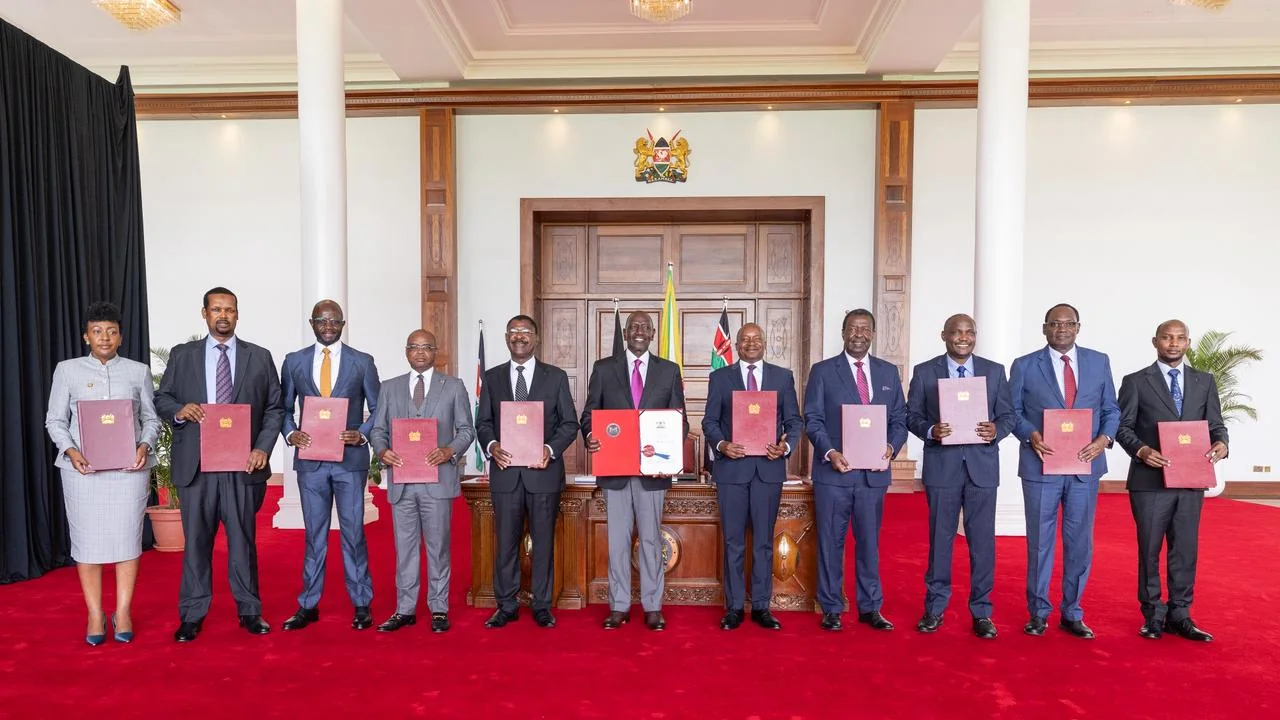 President William Ruto together with his Deputy, Kithure Kindiki and State Officials at State House, Nairobi on May 29, 2026.PHOTO/PCS
The law further re-establishes the Kenya Forestry Research Institute as the lead government agency on forestry research and development.
KEFRI will also develop protocols for Payment for Ecosystem Services schemes in public, community and private forests, including valuation of forest ecosystem goods and services and development of incentives for conservation.
The law introduces new measures on sustainable management of dryland forests and designation of forest buffer zones.
It also strengthens enforcement by expanding prohibited activities in forests to include transporting forest produce without authority from a forest owner and raises penalties for illegal activities to a fine not exceeding Sh1 million, imprisonment for up to 12 months, or both.
“The amendments are intended to enhance sustainable forest management, promote climate-resilient forestry, strengthen governance and institutional coordination within the forestry sector, promote the conservation and rehabilitation of forest resources, and improve the participation of communities and other stakeholders in forest management,” the brief on the Bill states.
President Ruto also signed the Equalisation Fund Appropriation Bill, 2025, which authorizes the withdrawal and use of Sh16.8 billion from the Equalisation Fund for the financial year ending June 30, 2026.
The Bill was introduced in the National Assembly on June 17, 2025 by Budget and Appropriations Committee Chairperson Samuel Atandi and later passed with amendments before the Senate approved it without changes on May 12, 2026.
The funds are meant to support provision of basic services including water, roads, health facilities and electricity in marginalized areas in line with Article 204 of the Constitution.
Out of the Sh16.8 billion allocation, Sh16.296 billion has been earmarked for projects in 34 counties identified as marginalized under the Commission on Revenue Allocation’s Second Marginalisation Policy.
The projects will be implemented in various constituencies within the beneficiary counties.
Another Sh504 million has been allocated for Secretariat and Board expenses, which the Bill states should not exceed three per cent of the approved annual allocation.
The law further provides that the funds will not be deposited into County Revenue Funds but instead transferred to special purpose accounts opened by beneficiary counties at the Central Bank of Kenya.
The move is aimed at protecting the money from being diverted to other county expenditure.
“The application of the Fund is limited to the provision of basic services, including water, roads, health facilities, and electricity, to marginalised areas to bring the quality of these services to the standards enjoyed by the rest of the nation,” the brief states.
Ruto also assented to the National Disaster Risk Management Bill, 2023, which establishes the National Disaster Risk Management Authority and County Disaster Risk Management Committees.
The Bill, also sponsored by Ichung’wah, had earlier been passed by both Houses before proceeding to mediation. The mediated version was approved by the National Assembly on April 29, 2026 and by the Senate on May 12, 2026.
The law creates a legal framework for coordination of disaster risk management activities in the country.
It defines a disaster as a sudden or progressive, widespread natural or human-caused occurrence that causes or threatens death, injury, disease and disruption of community life beyond the ability of affected populations to cope using their own resources.
The law categorizes disasters into county disasters and national disasters.
County disasters are those affecting a single county and manageable at county level, while national disasters are those affecting more than one county or overwhelming the ability of a county government to respond.
The newly created National Disaster Risk Management Authority will coordinate and implement disaster risk management activities, advise both levels of government and work with regional and international agencies involved in disaster response.
The Authority’s Board will include representatives from the national government, the Council of Governors, the Kenya Red Cross Society and the Kenya Private Sector Alliance.
At the county level, the law establishes County Disaster Risk Management Committees jointly chaired by governors and county commissioners.
The committees will coordinate disaster response, advise county governments and promote public awareness, training and disaster preparedness, including in schools.
The law also provides for development of national and county disaster risk management plans and establishment of an integrated early warning system to improve preparedness and emergency response.
In addition, the President is now empowered to declare a National State of Disaster where a disaster reaches national magnitude and issue directives on evacuation, mobilization of resources and coordination of emergency services.




Comments
Sign in with Google to comment, reply, and like comments.
Continue with Google