State advances Sh27bn water project to expand supply across Mombasa and Kilifi
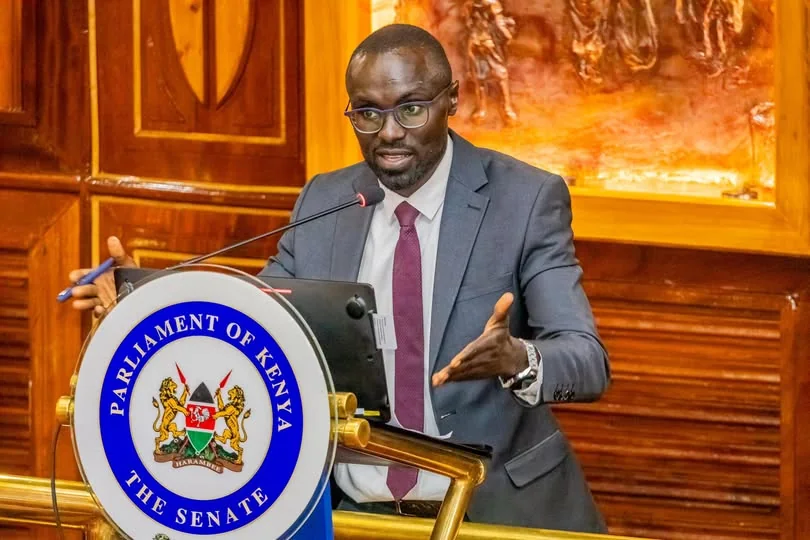
In a statement to the Senate, Water, Sanitation and Irrigation Cabinet Secretary Eric Muriithi Mugaa said the project, developed under a Public-Private Partnership framework, is currently at the negotiation stage ahead of a final project agreement.
The national government has defended the proposed Sh27 billion Sabaki Water Carrier and Sanitation Project, saying it is poised to ease chronic water shortages in Kilifi and Mombasa counties as negotiations on the deal near completion.
In a statement to the Senate, Water, Sanitation and Irrigation Cabinet Secretary Eric Muriithi Mugaa said the project, developed under a Public-Private Partnership framework, is currently at the negotiation stage ahead of a final project agreement.
Responding to concerns raised by Kilifi Senator Stewart Madzayo, Mugaa said the government received a privately initiated proposal in October 2024 from a consortium comprising Utility Partners One LLP Ltd, Climate Fund Managers of the Netherlands, and Nafasi Ltd of South Africa.
He said: “The Project is currently at the negotiation stage with discussions ongoing towards the signing of a Project Agreement,” adding that talks are expected to conclude within the month.
According to the Cabinet Secretary, the project is designed to abstract and supply approximately 80,000 cubic metres of potable water daily to Watamu, Mtwapa, Nyali and Kisauni North, significantly expanding access to water in the coastal region.
He further noted that the infrastructure will include wastewater treatment facilities with a capacity of between 25,000 and 35,000 cubic metres per day, as well as a 7–10 megawatts solar power plant to support energy needs.
Mugaa said the arrangement will run under a 20-year concession, with the private consortium responsible for investment, operations and last-mile service delivery in collaboration with local water service providers.
On financing, he said the estimated cost of the project stands at Sh27 billion, to be raised through a mix of debt and equity under the PPP model.
The Cabinet Secretary added that the government is also implementing complementary interventions to address drought and water scarcity in Kilifi County, including water harvesting, groundwater development and water trucking in areas such as Ganze, Rabai, Kaloleni and Magarini.
“These interventions are aimed at increasing water availability, reducing reliance on seasonal sources and improving supply reliability in underserved and water-scarce areas,” he said.
He also highlighted ongoing rehabilitation of ageing water infrastructure in Malindi, Watamu and Kilifi towns, aimed at strengthening service delivery and expanding access to clean water.
Mugaa said the Sabaki Water Project and associated interventions are expected to significantly enhance existing systems through expansion of supply networks and improved distribution capacity across the coastal region.
The government said the PPP model is intended to accelerate infrastructure delivery while reducing direct fiscal pressure on the national budget.
It further told the Senate that parliamentary oversight remains central to the approval and finalisation of the agreement. The consortium includes international and regional partners bringing together financing and technical expertise.
The 80,000 cubic metres per day supply target is expected to serve key urban centres along the coastal corridor.
Wastewater treatment and solar energy components are integrated to enhance sustainability and operational efficiency of the project.
The complementary drought response measures are aimed at supporting vulnerable communities facing recurrent water shortages.
Overall, the government maintains the Sabaki Water Project will significantly transform water access in the region once completed.




Comments
Sign in with Google to comment, reply, and like comments.
Continue with Google