
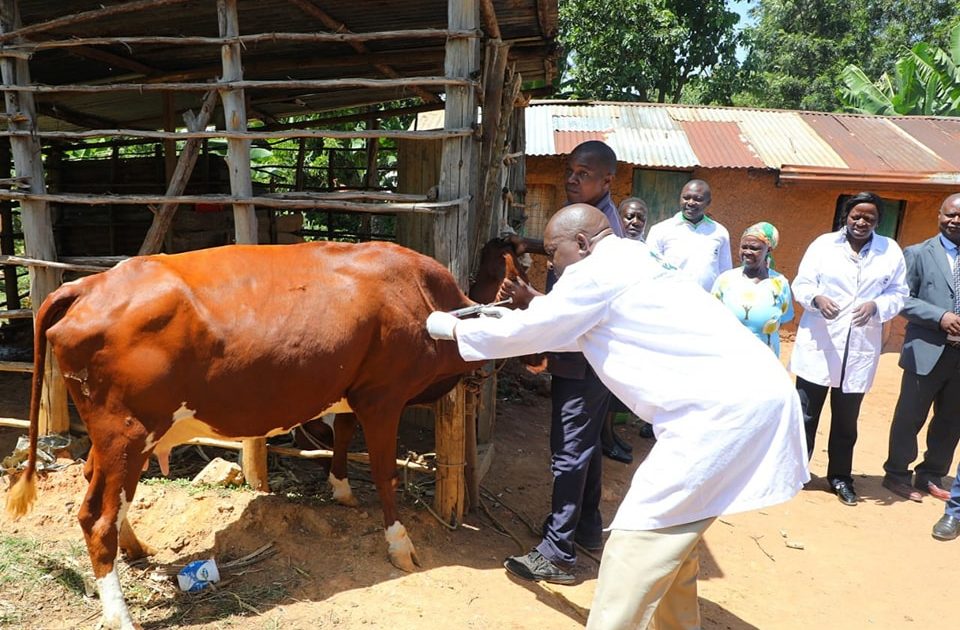
The government has vaccinated more than 500,000 cattle across 36 counties in an ongoing effort to control Foot and Mouth Disease (FMD).
The campaign, launched last month under a presidential directive, aims to immunize 22 million cattle and 50 million goats over two years, according to the Directorate of Veterinary Services (DVS).
Dr. Allan Azegele, the Director of Veterinary Services, emphasized that the vaccination drive is crucial for protecting livestock from FMD, which has led to quarantine measures in several counties.
“The government intends to implement the vaccination programme to protect livestock in line with national, regional, and global control and eradication strategies against FMD,” he said.
Foot and Mouth Disease causes painful blisters in animals’ mouths and feet, leading to production losses.
Its highly contagious nature makes it difficult to control and limits Kenya’s access to international livestock markets, as it is considered a trade-sensitive disease by the World Organisation for Animal Health.
According to official data, Uasin Gishu County has recorded the highest number of vaccinated cattle, with 69,360 immunized, followed by Nakuru (52,320), Trans Nzoia (46,240), and Turkana (42,000).
Other counties with notable vaccination figures include Kakamega (30,000), Taita Taveta (27,280), and Meru (26,960).
“These diseases cause significant losses in livestock production and productivity, threatening food security, food safety, and economic stability due to market closures, increased treatment costs, and high mortality rates,” Azegele said.
The urgency of the vaccination drive increased following outbreaks that led to quarantine measures in four counties: West Pokot, Nandi, Trans Nzoia, and Kakamega.
The government prioritized these regions, with West Pokot receiving over 9,120 vaccine doses.
However, Nandi has yet to begin vaccinations, as it was not listed among the counties that have received doses in the DVS data.
While the DVS report does not specify immunity levels for FMD, surveys conducted in Embu, Tharaka Nithi, and Kitui indicate improved herd immunity for targeted diseases.
“In monitored counties, immunity rates rose from single-digit or low double-digit percentages to over 80 percent after vaccination," Azegele said.
The World Organisation for Animal Health recommends a vaccination coverage of at least 80 percent to effectively control these diseases, a threshold these counties have now surpassed. The results indicate herd immunity in line with international standards."
Before the campaign began, some politicians and the Kenya Veterinary Association (KVA) raised concerns, questioning the government’s intentions and whether the Kenya Veterinary Vaccine Production Institute (KEVEVAPI) could meet the vaccine demand.
“KEVEVAPI has sufficient capacity to supply vaccines as and when required for the programme,” Azegele assured.