Gachagua rallies DCP allied MPs to reject Finance Bill 2026 ahead of crucial vote
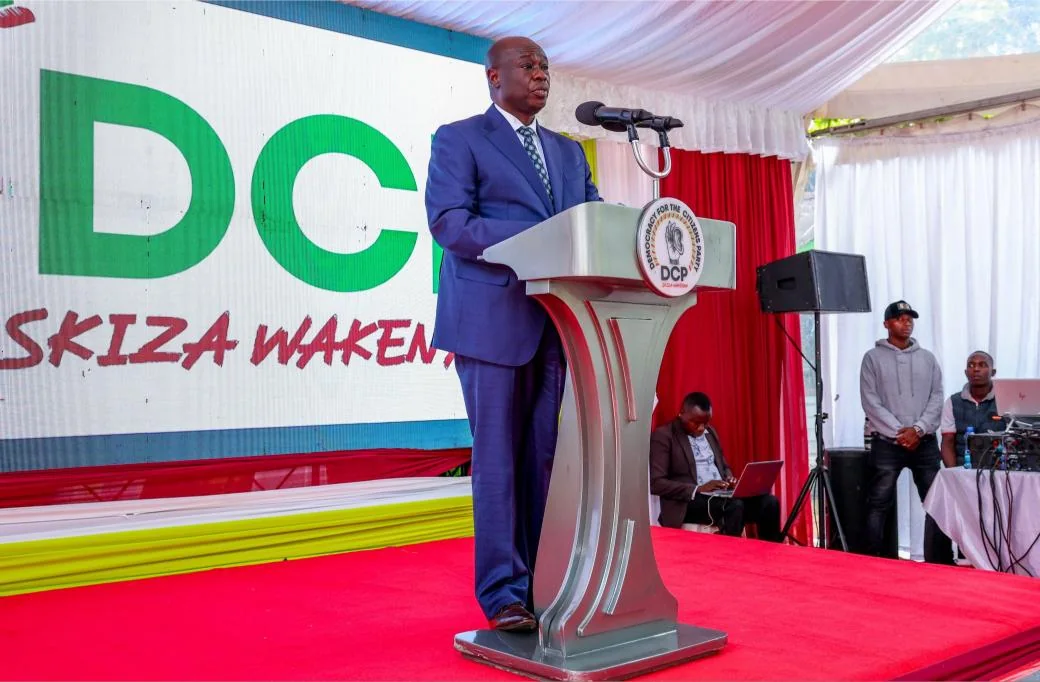
Gachagua also cautioned that MPs who skip the vote would be seen as taking a position against the interests of ordinary citizens, arguing that absence in such a decision cannot be neutral
A political showdown is shaping up in Parliament as Democracy for Citizens Party leader Rigathi Gachagua mobilises his allies in the National Assembly to shoot down the Finance Bill, 2026, setting the stage for a tightly contested vote on June 18. He has also pushed for a recorded roll call vote, insisting that every MP’s stand must be publicly known.
Gachagua told MPs aligned to his party and the United Opposition to reject the Bill during the Third Reading and remain inside the chamber to trigger a Division, a procedure that forces lawmakers’ votes to be individually recorded.
“Today’s vote at the National Assembly for or against the 2026 Finance Bill is a defining moment for the people of the Republic of Kenya,” stated Gachagua.
“Our DCP_Democracy allied members have instructions to vote against the Finance Bill 2026 and stay in the House to force a Division. The People of Kenya must know who is for or against them.”
He also cautioned that MPs who skip the vote would be seen as taking a position against the interests of ordinary citizens, arguing that absence in such a decision cannot be neutral.
His opposition to the Bill is anchored on claims that the government is relying too heavily on taxation at a time when households are already under financial pressure. He argues that increasing levies will worsen the cost of living rather than strengthen the economy.
He specifically raised concern over proposed charges on digital payments and financial transactions, saying they would disproportionately affect small traders and push up prices of basic goods and services.
Gachagua further questioned the government’s revenue assumptions, pointing out that Kenya Revenue Authority collections have repeatedly fallen short of targets by about 20 per cent over the past three years, yet new tax proposals continue to be justified using those same projections.
On public health funding, he said the sector’s allocation of about 3.5 per cent of the national budget falls far below the 15 per cent benchmark under the Abuja Declaration, calling for what he described as a fairer distribution of resources.
He proposed that the government first reduce non-essential spending, including travel and consultancy costs, by at least 30 per cent before introducing any new financial burden on citizens and businesses.
On the government side, National Assembly Majority Leader Kimani Ichung’wah maintained that the Finance Bill 2026 does not introduce new taxes, dismissing claims of additional levies.
At the same time, the Bill is facing legal scrutiny after the Consumers Federation of Kenya moved to court seeking to block several of its provisions. The lobby group argues that the proposed changes would reshape taxation on everyday transactions without adequate safeguards on consumer rights, privacy, public participation, and fair administrative action as required by the Constitution.
The Finance Bill 2026 cleared the Second Reading stage in the National Assembly on June 17, moving it closer to a decisive vote that has now drawn both political and legal pressure.



Comments
Sign in with Google to comment, reply, and like comments.
Continue with Google