
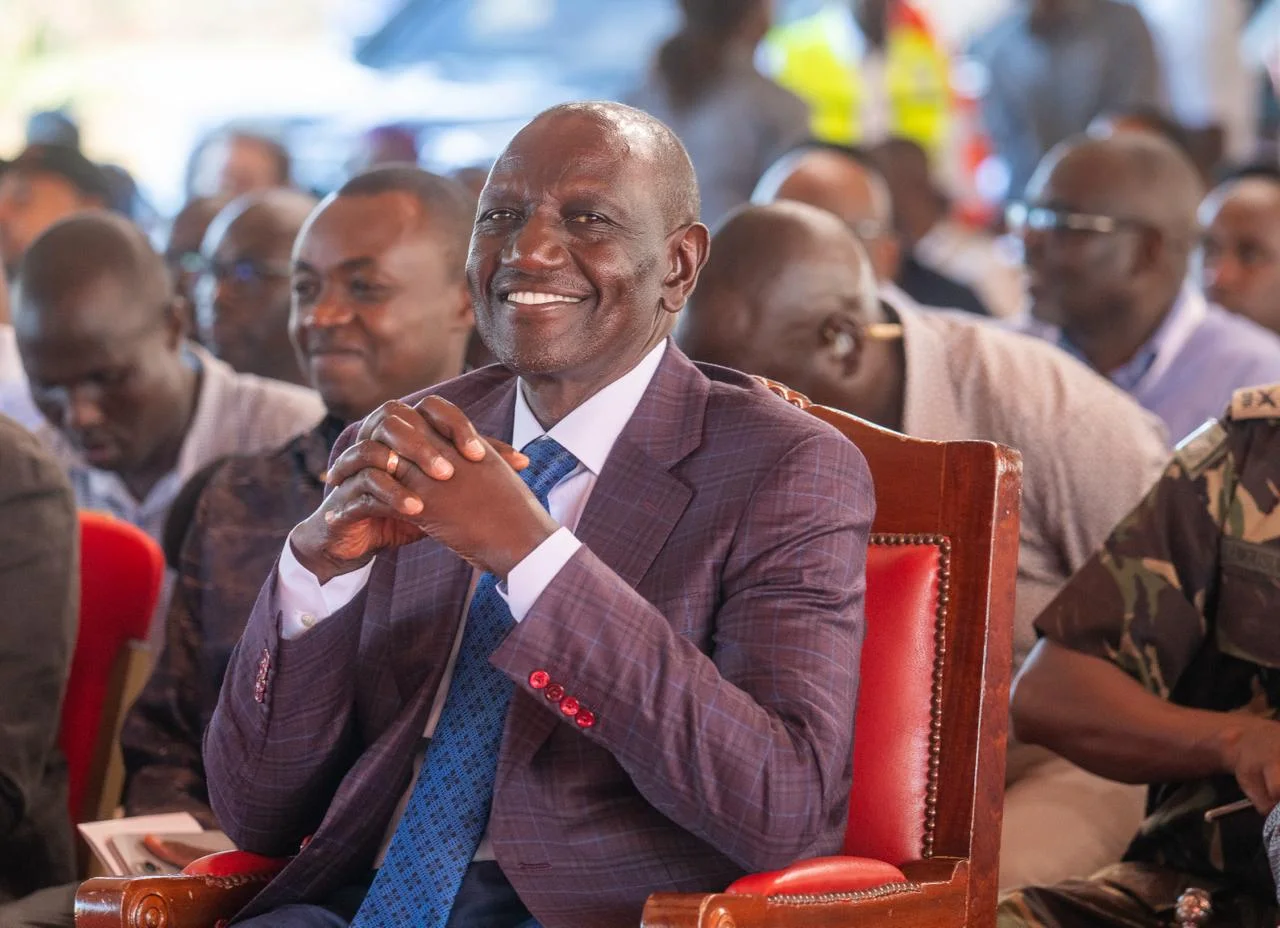
President William Ruto has defended the Social Health Authority (SHA) insurance model, explaining how Kenyans making relatively small contributions can access medical treatment worth significantly more than the amount they contribute.
Ruto said the system pools resources by combining members' contributions to finance healthcare services for those who need medical attention, including expensive treatment.
Speaking during an interdenominational church service in Malava, Kakamega County, on Sunday, November 29, 2026, the President questioned critics who expressed surprise that a person contributing Sh2,000 could receive medical cover worth up to Sh1 million through SHA.
According to Ruto, such an arrangement was the fundamental principle of social health insurance, where members contribute according to the applicable rates while benefiting from a shared pool of resources when they need healthcare services.
"That's what you call pooling in insurance. That's how social insurance works," Ruto said.
He added that the arrangement was designed to ensure ordinary Kenyans could access medical services without having to personally raise the full amount required for expensive treatment.
The President questioned why critics expected individuals making relatively small contributions to receive benefits only equal the what they had paid into the system.
He maintained that social health insurance was intended to protect households from the financial burden of medical emergencies by distributing healthcare costs across a wider pool of contributors.
Ruto also used the opportunity to challenge his political opponents, accusing them of failing to appreciate policies targeting ordinary citizens and their everyday challenges.
"You are surprised that an ordinary person has a social insurance just to show the emptiness of your plan, if you have any," he said.
The President maintained that national development should be measured by how government policies address the needs of ordinary citizens, rather than by issues disconnected from their daily lives.
His remarks come amid continued public debate over the implementation of SHA, which replaced the National Health Insurance Fund (NHIF) under the government's Universal Health Coverage agenda.
Ruto's defense centered on the principle of risk-sharing, which allows contributions collected from members to finance healthcare for those who require services, including individuals whose treatment costs exceed their personal contributions.
Under this arrangement, the financial responsibility for healthcare is shared across the insurance pool rather than resting entirely on individual patients.