LSK chief raises alarm over East Africa plans touching on civic freedoms
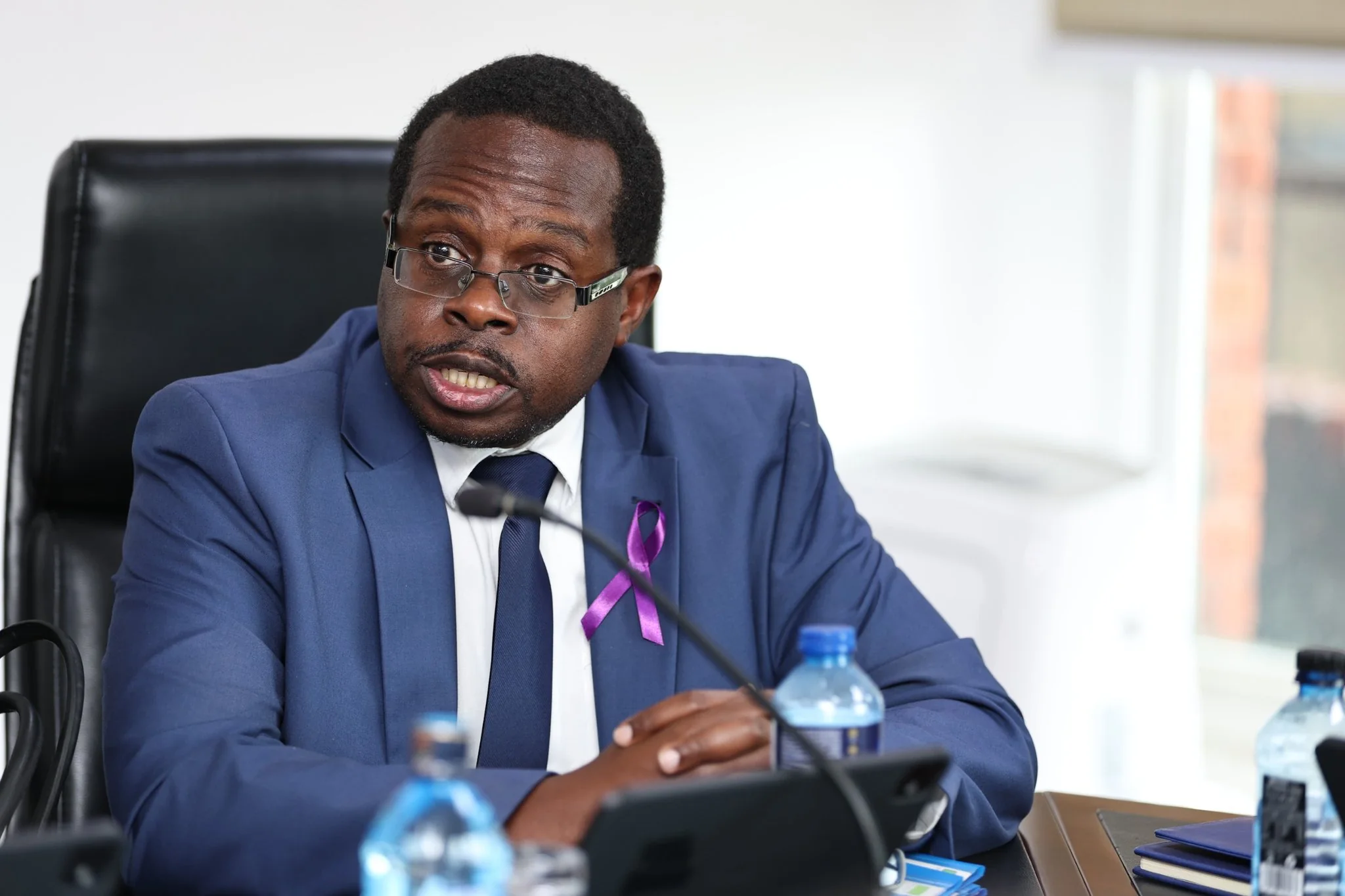
Law Society of Kenya President Charles Kanjama says remarks by Tanzania’s President Samia Suluhu Hassan on coordinated regional action raise constitutional and rule-of-law concerns, arguing peaceful civic expression must remain protected in Kenya and the region.
The Law Society of Kenya President Charles Kanjama, Senior Counsel, has cautioned against emerging ideas of coordinated regional approaches to youth civic activity, warning that such moves could interfere with constitutional protections and weaken democratic practice across East Africa.
He said discussions triggered by remarks attributed to Tanzanian President Samia Suluhu Hassan point to a sensitive debate on how governments in the region respond to growing youth engagement in political and social spaces. According to him, framing civic participation as a security challenge would go against the principles of constitutional democracy.
In a message shared on his X account on Wednesday, Kanjama described the matter as raising “grave constitutional and rule of law concerns” within the East African Community, stressing that peaceful public participation should not be viewed as disruption.
He emphasised that Kenya’s Constitution clearly protects fundamental rights that cannot be adjusted through political agreement or external alignment. He pointed out that these safeguards are central to democratic governance.
“The Constitution of Kenya is unequivocal. It guarantees freedom of expression, association and peaceful assembly under Articles 33, 36 and 37,” he said.
Kanjama added that these protections exist independently of the State and are not privileges that can be withdrawn. He stated that “These are not concessions from the State; they are protected rights that form the foundation of democratic governance,” he said.
He also noted that similar protections are embedded in legal systems across East Africa, both in national constitutions and within regional agreements under the East African Community framework. He warned against any approach that could weaken those shared standards.
The Law Society of Kenya President further said that public calls for accountability and transparency should not be mistaken for unrest or treated as threats to order. He stated, “Demands for accountability, transparency and respect for human rights cannot be characterised as disorder. They are an essential feature of constitutional democracy,” he said.
His remarks come after comments by Tanzanian President Samia Suluhu Hassan suggesting the possibility of coordinated regional action on youth-led civic expression, which has sparked debate on how East African governments handle rising civic mobilisation.
The discussion has taken place against the backdrop of political tension in Tanzania following the disputed 2025 general election, where opposition groups raised concerns over exclusion of candidates, alleged irregularities, and limits on civic space during the electoral process.
The October 2025 vote was followed by protests in several cities, including Dar es Salaam, where security agencies enforced curfews and used tear gas and live ammunition to disperse demonstrators.
Reports from opposition and rights organisations placed casualty figures at varying levels, with some estimates indicating hundreds of deaths while others suggested higher numbers due to verification challenges in the aftermath of the unrest.
The situation also had regional effects, with movement reported along border points such as Namanga in Kenya, where cross-border flows increased through informal routes and trade corridors during the protests.
Earlier incidents in 2024 involving arrests of opposition figures and clashes during demonstrations had already raised concerns over shrinking space for civic activity in Tanzania, adding to the current debate on governance and public participation.
Kanjama warned that any attempt to restrict peaceful civic engagement through force or coercion would contradict constitutional protections. He said, “Kenya’s legal framework does not permit the use of force, coercion or punitive measures against citizens for the peaceful exercise of their rights,” he said.
He cited Articles 27, 28 and 29 of the Constitution, which guarantee equality before the law, human dignity, and protection from cruel or degrading treatment, saying these provisions must remain fully respected in all circumstances.
The Law Society of Kenya President also rejected any attempt to limit rights through executive instruction or political coordination between states. He stated, “The Law Society of Kenya rejects any proposition that fundamental freedoms may be curtailed through executive direction, political convenience or regional alignment,” he said.
He warned that constitutional protections cannot be suspended in the name of order or stability, adding that “Constitutional rights are not negotiable, and they are not subject to suppression in the name of order,” he said.
Kanjama further noted that any efforts to undermine civic space would face legal scrutiny through established accountability systems. He also reflected on Kenya’s democratic journey, saying freedoms enjoyed today were achieved through sustained reform efforts and resistance to abuse of power. “Kenya’s democratic gains were secured through sustained struggle, institutional reform and principled resistance to arbitrary power,” he said.
He urged that these gains be protected by maintaining respect for constitutional governance and allowing open civic engagement. “The appropriate response to citizen engagement is dialogue, not deterrence,” he said.
Kanjama called on governments across East Africa to uphold constitutional standards and engage constructively with citizens, especially young people who are increasingly active in public debate and digital activism.
“The Law Society of Kenya calls on governments within the region to uphold constitutional norms, respect the rights of all persons and engage constructively with citizens,” he said.
He reaffirmed that the Law Society remains committed to defending constitutional freedoms and promoting rule of law across the region as debates continue on governance, civic space, and youth participation.




Comments
Sign in with Google to comment, reply, and like comments.
Continue with Google