Kenya heads into warmer, drier mid-year season as El Niño influence builds
The forecast indicates that while dry conditions will dominate, isolated pockets may still receive improved rainfall performance. “weakly enhanced chances for above-normal rainfall (probabilities of 40-50 per cent) are indicated over localised areas of northern Sudan, southern coastal Somalia and Kenya, as well as in a narrow strip from central Ethiopia to northern Somalia.”
Kenya is heading into an unusually warm and dry mid-year period, with weather experts warning that the coming June to August months are likely to miss the typical cold season while rainfall drops below normal in many parts of the country.
The latest seasonal outlook also signals that shifting climate patterns linked to developing El Niño conditions could reshape weather trends across East Africa, affecting farming, water supply, and energy production.
According to the IGAD Climate Prediction and Applications Centre (ICPAC), the June, July, August and September season is expected to be dominated by reduced rainfall in most regions where this period normally supports agriculture and pasture growth. Western Kenya and parts of the Rift Valley are among areas expected to be affected, raising concern over food production during the key mid-year planting and harvesting cycle.
The forecast indicates that while dry conditions will dominate, isolated pockets may still receive improved rainfall performance. “weakly enhanced chances for above-normal rainfall (probabilities of 40-50 per cent) are indicated over localised areas of northern Sudan, southern coastal Somalia and Kenya, as well as in a narrow strip from central Ethiopia to northern Somalia.”
Despite these small pockets, the general outlook points to a dry season across much of the region, with coastal Kenya expected to perform slightly better compared to inland areas.
Temperature patterns are also expected to shift upward, with most parts of Kenya likely to experience warmer-than-usual conditions. This could reduce the intensity of the cold season that normally peaks in June and July, especially in Nairobi, Central Highlands, and Rift Valley zones.
The report notes, “the highest probabilities of warmer-than-normal temperatures are concentrated over northern Sudan, most parts of South Sudan and Ethiopia, and extend southward through Somalia and Kenya into Tanzania, the report said.
It further links the warming trend to strengthening El Niño conditions that are developing across the region, suggesting a strong influence on seasonal weather outcomes.
“consistent with the projected strong El Ni event, the probability of normal-to-below-normal temperatures is very low across the entire region, indicating a strongly dominant warm signal for the season.”
El Niño events are often associated with higher temperatures and, later in the year, increased rainfall that can trigger flooding in parts of Kenya and neighbouring countries.
Meteorologists say the current pattern bears similarities to previous strong El Niño seasons, especially 1 7 and 2023, which were marked by extreme and disruptive weather conditions in East Africa.
“These years can help guide preparation,” the report notes, adding that “1 7 and 2023 most closely resemble the evolution expected for 202 which is characterised by development of a strong El Niño.”
In those years, several regions, including parts of Ethiopia, South Sudan, Uganda and Western Kenya recorded below-average rainfall, while others experienced severe flooding later in the cycle. The 2023 season in particular led to widespread flooding, displacement of communities, and destruction of infrastructure in multiple counties.
“Observed rainfall in both 1 7 and 2023 was below normal over substantial parts of Ethiopia, South Sudan, Uganda and western Kenya. As expected, the spatial patterns vary and 2023 was also dry over southern Somalia.”
The report warns that the expected dry mid-year conditions could strain food production systems, reduce water availability and affect hydropower generation across the region.
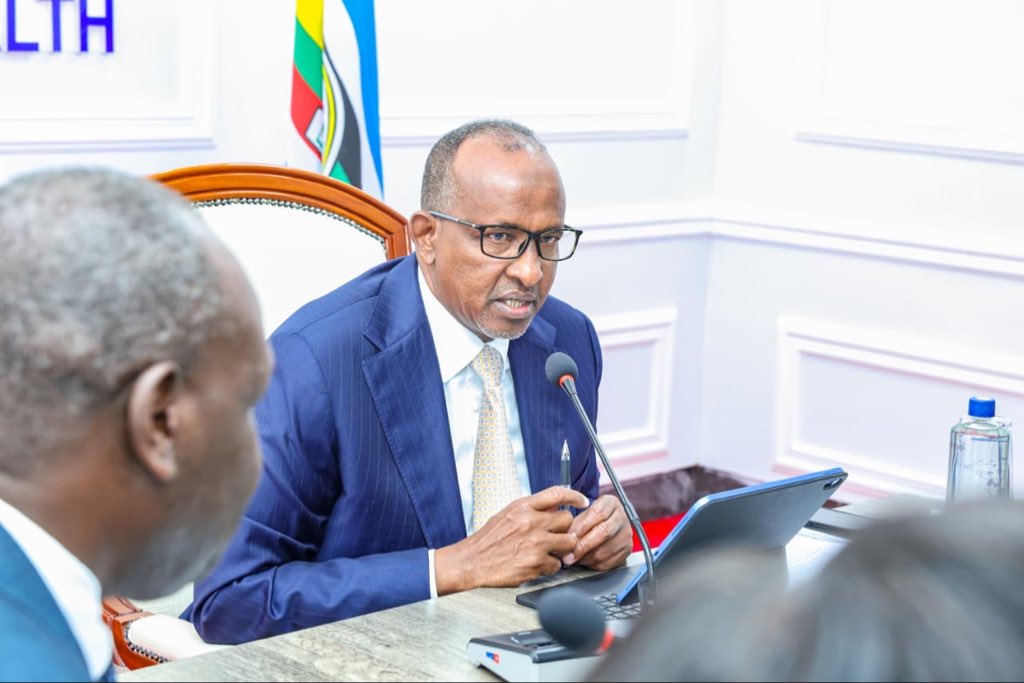
IGAD deputy executive secretary Mohamed Ware has urged governments and institutions across East Africa to take early preparedness measures to reduce possible impacts linked to the changing weather patterns.



Comments
Sign in with Google to comment, reply, and like comments.
Continue with Google