Ebola response delayed as WHO says vaccine rollout will take up to nine months
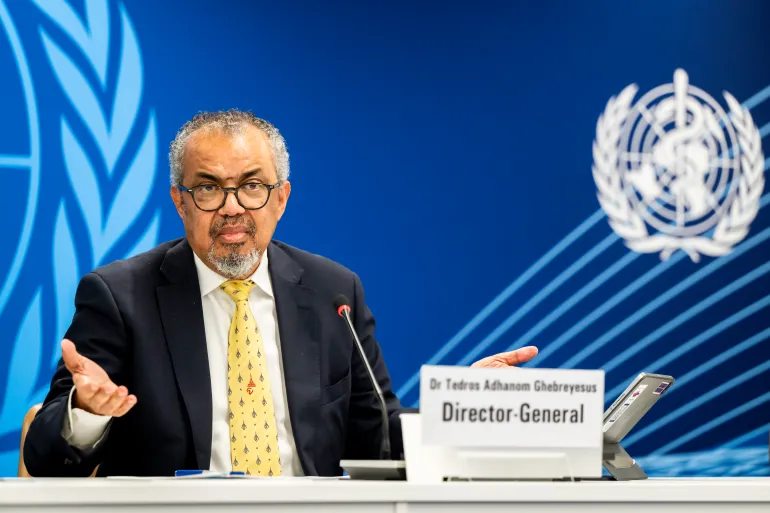
World Health Organization Director-General Dr Tedros Adhanom Ghebreyesus said during a briefing that the outbreak may have started spreading a few months ago and could have been accelerated by a “super-spreader event”, possibly a funeral held in early May.
A growing Ebola outbreak in central Africa is straining health response efforts, with the World Health Organization warning that the most promising vaccine will not be ready for use for several months even as suspected cases continue to rise sharply.
The World Health Organization said on Wednesday that doses of the leading potential vaccine against the Bundibugyo virus, which is driving the outbreak in the Democratic Republic of the Congo and Uganda, are unlikely to be available for between six and nine months. The announcement comes as suspected infections climb to about 600 cases, with 139 deaths already recorded, and officials warning that the numbers could continue to rise.
World Health Organization Director-General Dr Tedros Adhanom Ghebreyesus said during a briefing that the outbreak may have started spreading a few months ago and could have been accelerated by a “super-spreader event”, possibly a funeral held in early May.
Health teams believe this early spread went undetected for some time before being fully identified.
Officials also noted that the security situation in Ituri province has made response work more difficult. More than 100,000 people have been displaced in recent months due to armed conflict, limiting access for health workers. This, according to the World Health Organization, has slowed disease detection and reduced the ability of health facilities to carry out surveillance and provide care.
Dr Tedros said ongoing insecurity is directly affecting outbreak control efforts, especially where health workers are unable to remain in affected areas. He also pointed out that other common illnesses such as malaria and typhoid are making early diagnosis more difficult because they share similar early symptoms with Ebola.
The outbreak has also drawn political attention, including criticism from US secretary of state Marco Rubio, who said the World Health Organization responded late. Dr Tedros rejected the criticism, saying, “Maybe on what the secretary said, it could be from a lack of understanding of how IHR [international health regulations] works, and the responsibilities of WHO and other entities. We don’t replace the country’s work, we only support them,” said Tedros.
He added that the global risk remains lower compared to the national and regional threat levels, saying, “WHO assesses the risk of the epidemic as high at the national and regional levels, and low at the global level.”
Research teams working with the World Health Organization said modelling suggests the outbreak may already be larger than reported, with estimates from Imperial College London indicating there could be more than 1,000 cases in the affected region.
Efforts to control the spread are also being slowed by logistical challenges, including disrupted transport and repeated flight cancellations, which are delaying the delivery of testing kits and medical supplies to Ituri province.
WHO emergencies lead Chikwe Ihekweazu said tracing infection chains remains the top priority as response teams try to understand the full scale of the outbreak. “Our absolute priority now is to identify all the existing chains of transmission,” he said. “That will then enable us to really define the scale of the outbreak and be able to provide care.”



Comments
Sign in with Google to comment, reply, and like comments.
Continue with Google