
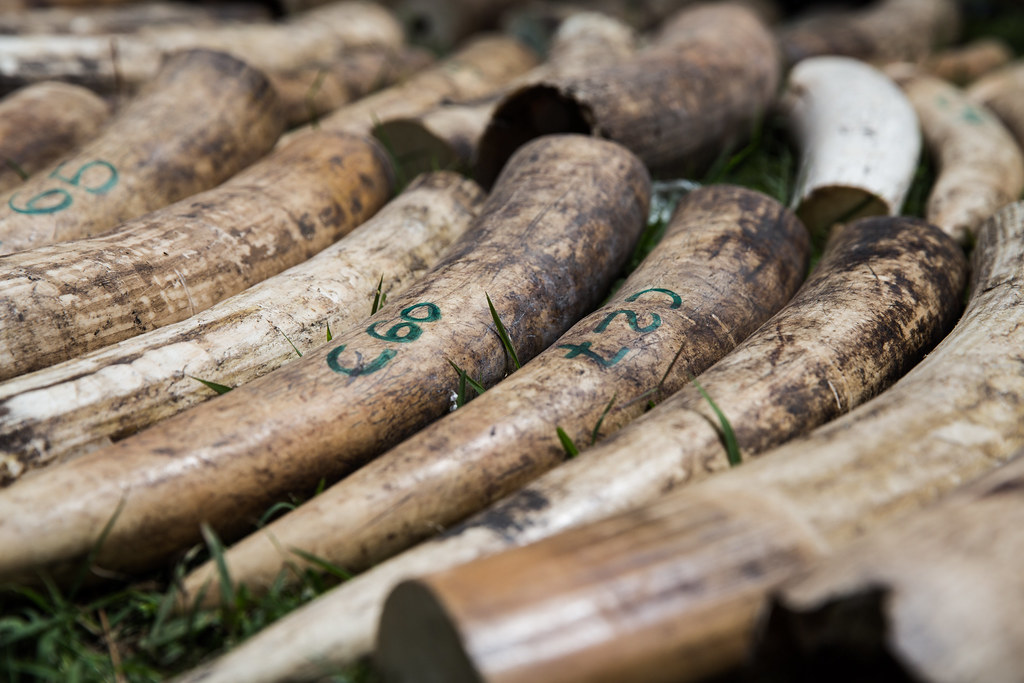
Three individuals suspected of poaching were apprehended over the weekend in Nkubu, Meru County, while allegedly transporting two elephant tusks weighing a total of 60 kilograms.
Authorities from the Kenya Wildlife Service (KWS), working in coordination with police, estimated the value of the seized ivory at Sh6 million.
The arrests came as a result of a coordinated security operation carried out in the Kigene area within Nkubu Township.
The Star reports that the suspects were found transporting the tusks in a salon car, with the ivory hidden inside a sack to avoid detection.
According to police, the nighttime operation took place on April 11, 2025. Authorities say investigations are ongoing, with more suspects believed to be part of the smuggling network.
Efforts are also underway to determine the origin of the tusks, with suspicions that an elephant may have been killed in nearby Meru National Park.
The three suspects are expected to be charged in court with Possession of Wildlife Trophies from an Endangered Species, in violation of Section 92(4) of the Wildlife Conservation and Management Act, 2013.
This bust comes despite ongoing anti-poaching initiatives and heightened enforcement across the country.
Ivory continues to fetch high prices on the black market, with strong demand in parts of Asia fueling the illegal trade and putting Africa’s elephant population at continued risk.
The illicit ivory trade continues to thrive, largely driven by demand in Asia and the Middle East, where elephant tusks and rhino horns are sought after for decorative items and traditional medicine.
Despite a global ban on ivory trade, authorities report that African elephants are still being targeted at alarming rates.
In response, Kenya has stepped up its anti-poaching efforts by deploying advanced surveillance technology, including drones, to monitor both poachers and vulnerable wildlife such as elephants and rhinos.
The Kenya Wildlife Service (KWS), in collaboration with various stakeholders, has intensified efforts to combat all forms of wildlife crime, with a strong focus on eliminating poaching.
The anti-poaching strategies also involve strengthened community outreach programs, improved collaboration among security and conservation agencies, and intelligence-driven operations.
These combined efforts have yielded significant results, including the historic milestone of zero rhino poaching in Kenya in 2020—the first time this was achieved in nearly 20 years.