Kenya eyes ethanol revolution to boost sugar farmers, reduce oil dependence

Presentations at the conference showed that Brazil has replaced more than four billion barrels of gasoline with ethanol, with ethanol-based fuel remaining cheaper than conventional petrol. Deputy President Kithure Kindiki, who also attended the seminar, said the government will review the Sugar Act and related regulations to formally support ethanol production within Kenya’s legal and economic framework. He added that the government will work with the Energy and Petroleum Regulatory Authority to develop fuel blending regulations. Kagwe defended ongoing reforms under the Sugar Act 2024, saying leasing state-owned sugar factories to private investors has already improved efficiency and increased farmer earnings. “We have discovered that the private sector is a much stronger player, a much more efficient player in the sugar sector than the government sector,” he said. He added that the government has already seen “immediate benefits” within the last year after some public mills were leased to private operators. At the same time, Kagwe stressed that farmers remain central to the reforms, noting that more than six million Kenyans directly or indirectly depend on the sugar industry for their livelihoods. “The farmer is the most important person in the sugar sector, and I say this without any fear of contradiction,” Kagwe said. The government says expanding ethanol production will help reduce Kenya’s dependence on imported fuel, strengthen energy security and create more stable income opportunities for farmers amid volatile global oil prices.
Kenya is planning a major transformation in its sugar industry as the government moves away from heavy reliance on table sugar and shifts focus toward ethanol production, in a reform agenda aimed at lowering fuel costs, improving farmer incomes and reviving the sector.
Speaking during the opening of the 68th International Sugar Organization Seminar in Diani on Tuesday, Agriculture Cabinet Secretary Mutahi Kagwe said Kenya is now studying Brazil’s sugarcane-to-fuel model as it seeks to reposition sugarcane as a key industrial and energy crop.
Kagwe said the country can no longer depend only on table sugar while ignoring other products that can be derived from sugarcane, including ethanol, electricity cogeneration and industrial alcohol.
“We are now thinking about ethanol seriously from sugar especially with the global disruption of fuel prices,” Kagwe said.
In remarks that signaled a clear shift in policy direction, the CS said sugar itself could eventually take a secondary role within the value chain.
“We want sugar to become a by-product in Kenya, not the only product,” he said.
The seminar heard that Brazil has used ethanol-blended fuel for more than five decades to stabilize fuel prices, reduce dependence on imported oil and strengthen its sugar industry.
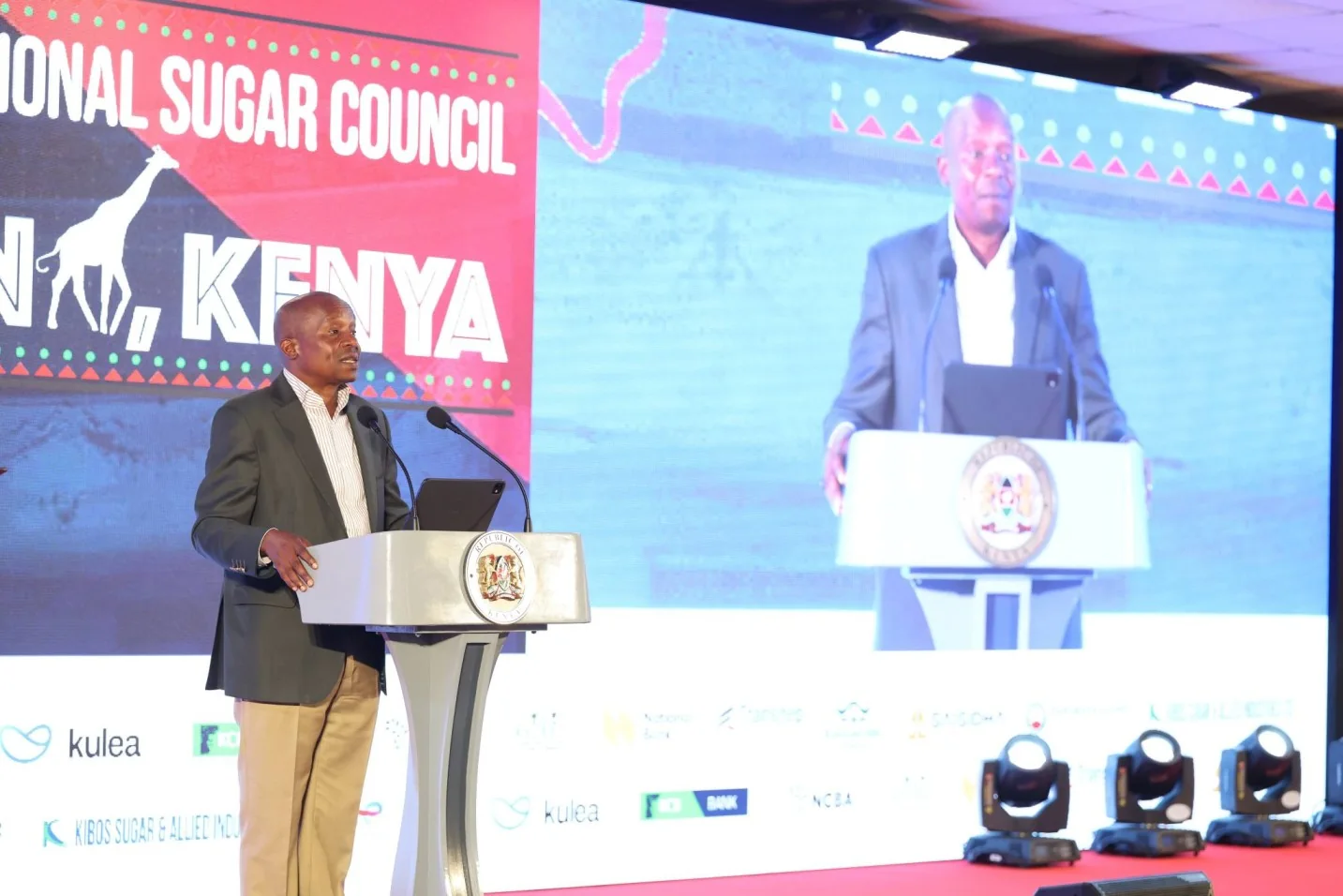 Deputy President Kithure Kindiki speaking during the opening of the 68th International Sugar Organization Seminar in Diani on May 26,2026.PHOTO/Kagwe
Presentations at the conference showed that Brazil has replaced more than four billion barrels of gasoline with ethanol, with ethanol-based fuel remaining cheaper than conventional petrol.
Deputy President Kithure Kindiki, who also attended the seminar, said the government will review the Sugar Act and related regulations to formally support ethanol production within Kenya’s legal and economic framework.
He added that the government will work with the Energy and Petroleum Regulatory Authority to develop fuel blending regulations.
Kagwe defended ongoing reforms under the Sugar Act 2024, saying leasing state-owned sugar factories to private investors has already improved efficiency and increased farmer earnings.
“We have discovered that the private sector is a much stronger player, a much more efficient player in the sugar sector than the government sector,” he said.
He added that the government has already seen “immediate benefits” within the last year after some public mills were leased to private operators.
At the same time, Kagwe stressed that farmers remain central to the reforms, noting that more than six million Kenyans directly or indirectly depend on the sugar industry for their livelihoods.
“The farmer is the most important person in the sugar sector, and I say this without any fear of contradiction,” Kagwe said.
The government says expanding ethanol production will help reduce Kenya’s dependence on imported fuel, strengthen energy security and create more stable income opportunities for farmers amid volatile global oil prices.




Comments
Sign in with Google to comment, reply, and like comments.
Continue with Google