Court gives Ruto four months to correct Cabinet gender imbalance
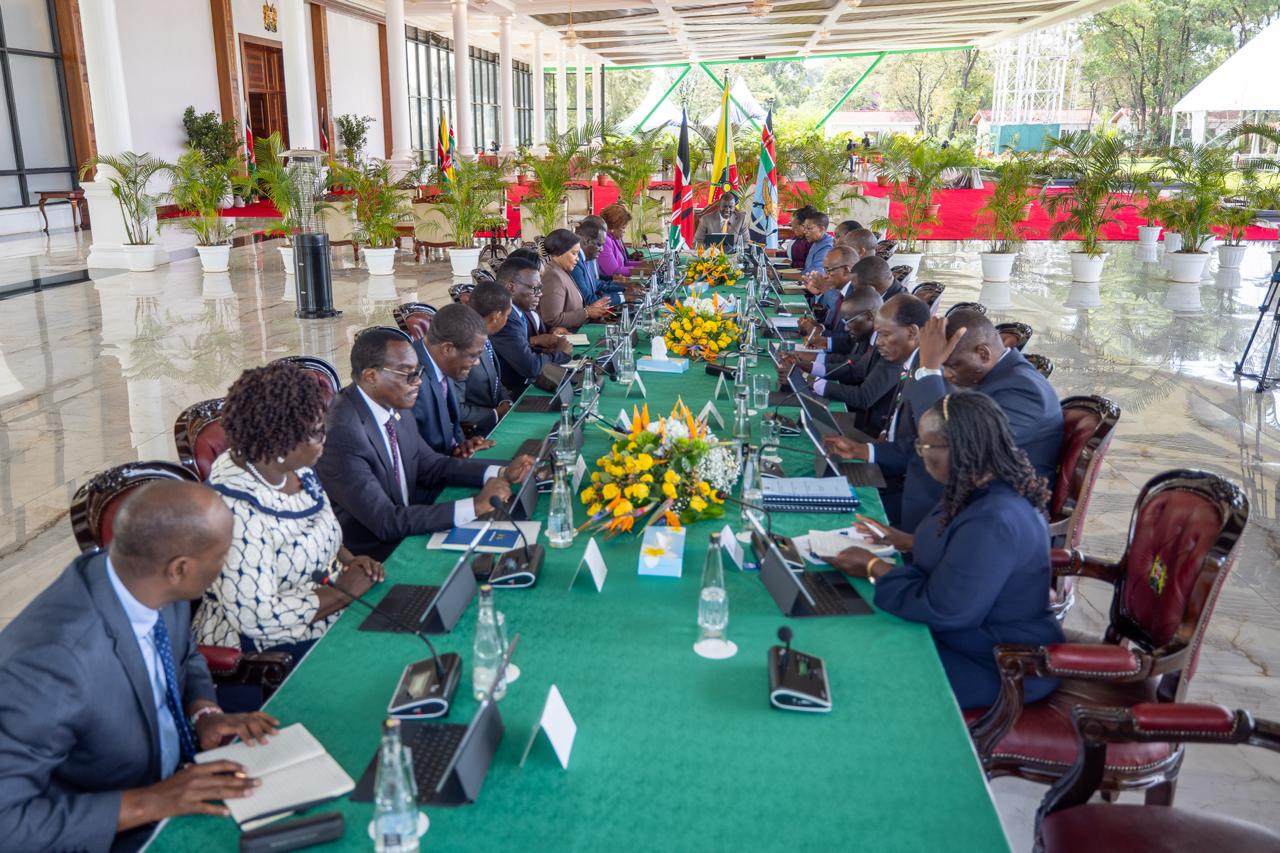
A key issue before the court was how Cabinet membership should be calculated when assessing compliance with the two-thirds gender rule. The bench held that only offices specifically provided for under Article 152(1) of the Constitution should be counted.
President William Ruto has been handed a four-month deadline to overhaul the Cabinet after the High Court found that the country's top executive team does not satisfy the Constitution's gender balance requirements.
In a ruling delivered on Tuesday, a three-judge bench declared that the Cabinet's current makeup falls below the standard set by Article 27(8) of the Constitution, which requires that no more than two-thirds of members of an appointive body be drawn from the same gender. The court directed the President to rectify the situation within 120 days.
"The appointing authority, being the President, is hereby directed to make appointments for Cabinet Secretaries in conformity with Article 27(8) within 120 days from the date of this judgement," Justice Eric Ogola ruled on behalf of the bench.
The judges concluded that the Cabinet, as presently constituted, does not comply with constitutional requirements on equality and representation.
A key issue before the court was how Cabinet membership should be calculated when assessing compliance with the two-thirds gender rule. The bench held that only offices specifically provided for under Article 152(1) of the Constitution should be counted.
These include the President, Deputy President, Attorney General and Cabinet Secretaries.
The judges excluded the Secretary to the Cabinet from the tally and based their assessment on the Cabinet's composition at the time the judgement was delivered.
Court records showed that the Cabinet currently has 25 members, comprising 18 men and seven women. According to the bench, this leaves female representation at about 28 per cent, below the constitutional threshold.
The judges noted that in a Cabinet consisting of 25 members, at least nine positions should be occupied by the gender that is less represented.
Consequently, the court found that the current Cabinet structure does not meet the standards required under Articles 27 and 10 of the Constitution.
Even as it faulted the Cabinet's composition, the court declined to invalidate the appointment of Cabinet Secretaries who returned to government after the Cabinet was dissolved in July 2024.
The petition had questioned President Ruto's decision to disband the Cabinet following widespread anti-government protests before later bringing back some of the same individuals.
According to the petitioners, the dissolution had been presented as a response to concerns over governance, accountability, integrity and public confidence, making the subsequent reappointments inconsistent with the reasons given for the exercise.
They further argued that returning some of the former Cabinet Secretaries to office violated constitutional principles relating to leadership, integrity and accountability.
However, the judges disagreed, holding that removal from Cabinet does not automatically lock a person out of future appointments.
"The text does not prescribe that dismissal under that article creates a permanent or temporary disqualification from future appointments," the judges held while interpreting Article 152.
The bench said there is a clear distinction between a political decision to reorganise government and removal arising from constitutional wrongdoing.
"A general dismissal under Article 152(5)(b) is not the same thing as removal for contravention of Chapter Six," Justice Ogola stated.
The judges added that constitutional barriers to holding office only arise where an individual has been removed on grounds linked to specific constitutional violations.
The court also dismissed arguments that the President was required to publicly explain the reasons for reappointing former Cabinet members.
Even so, the judges acknowledged concerns surrounding the decision to dismiss ministers and later restore some of them to their positions.
They observed that where a Cabinet dissolution is publicly linked to governance failures, inefficiency or dissatisfaction among citizens, reinstating some of the same office holders may naturally attract scrutiny.
The bench, however, stressed that such concerns do not automatically translate into a constitutional breach.
"The court is not called upon to determine whether the decision to return some former Cabinet Secretaries was politically persuasive or administratively wise. Rather, the court is called upon to determine whether the Constitution prohibited their nomination and appointment," the judges held.
The ruling also addressed objections to the inclusion of opposition-linked politicians in the broad-based government arrangement.
According to the court, the Constitution does not prevent the appointment of individuals associated with parties outside the governing side, provided the appointments follow the law and satisfy all constitutional requirements.
The judges nevertheless cautioned that efforts aimed at promoting political inclusivity cannot be used to sidestep constitutional obligations, particularly those touching on representation and accountability.




Comments
Sign in with Google to comment, reply, and like comments.
Continue with Google