KESSHA proposes Sh87,781 fees for national schools in first review in 11 years
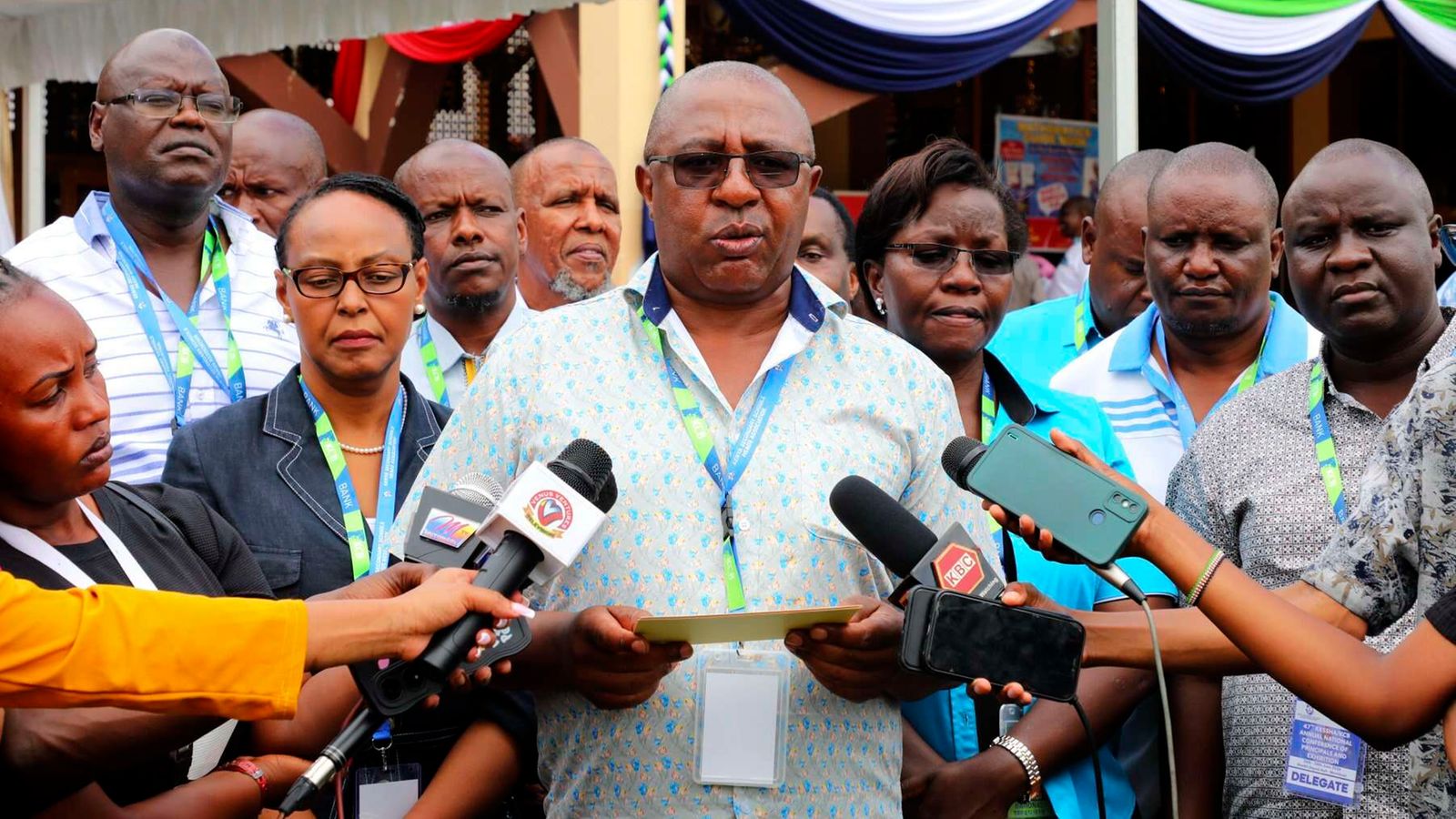
Under the plan, day secondary school learners would pay Sh7,675 per year. These learners are currently under the Free Day Secondary Education programme, but principals say the funding has steadily declined while operational costs continue to rise
Parents may soon face higher secondary school education costs after principals called for the first review of school fees in 11 years, arguing that inflation, funding shortfalls and the expanding demands of Competency-Based Education have placed schools under mounting financial pressure.
The proposal was presented to Basic Education Principal Secretary John Ololtuaa during the 49th KCB/KESSHA Annual Conference in Mombasa, where school heads urged the government to review both school fees and capitation funding to match the current cost of running institutions.
Under the proposal by the Kenya Secondary School Heads Association (KESSHA), learners in national schools would pay Sh87,781 annually after government capitation, while those in extra-county and county boarding schools would pay Sh83,622. Learners in day schools, which are currently under the Free Day Secondary Education programme, would pay Sh7,675 annually after government support.
School heads said the existing fee structure was introduced in 2015 and has remained unchanged despite a steady rise in the cost of goods and services required to run schools.
According to KESSHA, the current capitation allocation of Sh22,244 per learner, last reviewed in 2018, no longer reflects the actual cost of educating a student. The association said schools received an average of Sh10,636.92 per learner for operations between 2020 and 2025, a figure that is nearly similar to the Sh10,625 allocated in 2008.
The principals also raised concerns over delayed and incomplete disbursement of government funds. KESSHA said schools were owed Sh22.5 billion in 2025 after receiving only Sh15,383 per learner instead of the expected Sh22,244.
In 2026, schools received only 35 per cent of the first-term allocation and 21.8 per cent of the second-term allocation, creating a funding gap that has strained school operations.
KESSHA National Chairman Willy Kuria said schools can no longer sustain operations under the current financing model.
“The current fees charged in secondary schools were set in 2015, about 11 years ago. It is, therefore, no longer possible to sustainably run our institutions under the existing framework,” Kuria said.
He noted that the fees structure has remained unchanged despite sharp increases in the cost of essential goods and services.
“The movement in the price index of goods and services between 2015 and 2026 reflects a substantial increase in the general cost of living and, by extension, the cost of running educational institutions,” he said.
According to the association, prices of commonly used school goods and services have increased by an average of 65.3 per cent between 2015 and 2026.
KESSHA cited photocopy paper as an example, noting that the price of a ream has risen from Sh420 in 2015 to about Sh800 in 2026. The association added that food, fuel, electricity, salaries and construction materials have also recorded notable increases over the same period.
School heads further pointed to the depreciation of the Kenyan shilling against the US dollar, which moved from Sh90.5 in 2015 to Sh130.29 in 2026, representing a 43 per cent increase.
The association also noted that Kenya’s national budget has grown from Sh2.246 trillion in the 2015/2016 financial year to Sh4.82 trillion in the 2026/2027 financial year, an increase of 115 per cent.
“These perspectives provide a rational and evidence-based framework to support a comprehensive review and upward adjustment of the current school fees structure,” Kuria said.
To justify the proposed changes, KESSHA developed a unit-cost model that calculates the actual annual cost of educating a learner by factoring in tuition, accommodation, meals, learning materials and operational expenses.
Using the model, the association estimated that the annual cost of educating a learner in a national school has risen to Sh110,025. After deducting government capitation, parents would pay Sh87,781.
For learners in extra-county and county boarding schools, the annual cost was estimated at Sh105,866, leaving parents to contribute Sh83,622 after government support.
For day schools, the annual cost of educating a learner was projected at Sh29,919, resulting in a proposed parent contribution of Sh7,675.
Food was identified as the largest expenditure item in boarding schools. KESSHA estimated that it now costs about Sh242.10 per learner per day to provide breakfast, 10 o’clock tea, lunch and supper.
The association said the annual boarding cost per learner has risen to Sh61,009 compared to the current allocation of Sh30,385.
According to KESSHA, boarding expenditure includes foodstuffs, boarding equipment, kitchen equipment, cutlery, cooking gas, firewood, cleaning materials and disinfectants.
The memorandum also highlighted increased spending on repairs and maintenance, transport, administration, electricity, water, conservancy services, co-curricular activities, medical services and salaries for non-teaching staff.
School heads said many institutions continue to face staffing shortages, forcing them to employ Board of Management teachers and casual workers using their own resources.
They also cited rising costs associated with gratuity payments, annual salary increments, NSSF contributions, affordable housing levy deductions and other employee benefits.
KESSHA further argued that the implementation of Competency-Based Education has increased the cost of delivering education due to the expansion of specialised learning areas.
The association noted that schools are now expected to offer additional examinable subjects including music and dance, French, fine art, sports and recreation, electricity, aviation, home science, building and construction, theatre and film, marine and fisheries, and media technology.
“For schools to sustain and effectively teach these subjects, additional resources are required,” Kuria said.
He added that many schools lack the facilities and equipment required to effectively offer technical and applied subjects.
“Old-model computers are no longer suitable for current learning requirements,” Kuria said.
KESSHA also raised concerns over inadequate allocations for laboratory equipment and chemicals required for practical lessons and national examinations.
Although the government continues to fund classroom and laboratory construction through Transition Infrastructure Grants, the association said schools receive no funding to equip those facilities.
“No grants are provided for desks, chairs, laboratory stools, equipment, chemicals and other essential furniture needed to make these facilities operational,” Kuria said.
The association maintained that school levies and capitation funding must be reviewed to align with current economic realities and ensure the sustainability of secondary education while supporting effective implementation of CBE.
The Kenya Union of Post Primary Education Teachers also expressed concern over delays in capitation disbursement, saying schools continue to operate under financial uncertainty.
Deputy Secretary-General Moses Nthurima said delayed release of funds is disrupting normal operations in schools across the country.
In response, PS Ololtuaa assured school heads that the government would consider the concerns raised on education financing, while acknowledging that budget constraints continue to affect the full implementation of funding commitments.


Comments
Sign in with Google to comment, reply, and like comments.
Continue with Google