PPB warns over falsified cancer drug circulating in Kenya
In a statement issued on Thursday, the board said the falsified product had been identified during routine post-marketing surveillance activities conducted to monitor health products and technologies in circulation across the country.
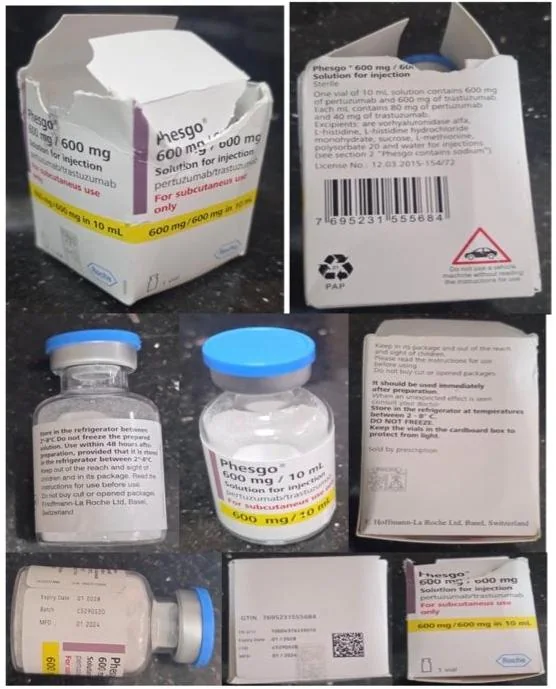
The Pharmacy and Poisons Board (PPB) has issued a public alert over a falsified batch of the cancer medicine Phesgo (Pertuzumab/Trastuzumab) circulating in the Kenyan market, warning that Batch Number C5290S20 is not genuine and contains a white powder instead of the approved liquid formulation, posing a serious risk to patients.
In a statement issued on Thursday, the board said the falsified product had been identified during routine post-marketing surveillance activities conducted to monitor health products and technologies in circulation across the country.
The PPB, which is mandated under the Pharmacy and Poisons Act to regulate the pharmacy profession and ensure access to safe and effective medicines, said the counterfeit batch showed clear discrepancies when compared to authentic Phesgo manufactured by Roche.
“Batch Number C5290S20 does not correspond to any authentic Roche batch number,” the board said.
It further noted that the vial in circulation contained “a white powder”, whereas genuine Phesgo is supplied as “a ready-to-use, clear to opalescent, colorless to slightly brownish liquid solution intended for subcutaneous administration”.
“Phesgo is never supplied as a powder and does not require reconstitution,” the statement added.
According to the board, the falsified batch may contain “incorrect, insufficient, or harmful ingredients”, meaning its “quality, safety, and efficacy cannot be guaranteed”.
The PPB warned that use of the product poses “a serious risk to patient safety and public health”.
The board has directed procurement agencies, distributors, wholesalers, retailers, pharmacists, pharmaceutical technologists and all healthcare professionals to immediately stop the distribution and use of the affected batch.
Members of the public have also been urged to report any encounter with the falsified medicine to the PPB through its official reporting channels.
In the advisory, the regulator warned stakeholders within the pharmaceutical supply chain to procure medicines only from licensed manufacturers, importers, distributors and retailers.
“Procuring from unlicensed sources endangers patients and constitutes a violation of the Pharmacy and Poisons Act,” the board said.
The PPB added that it would work with investigative agencies to take “firm action against any individual or entity involved in the distribution of this and any other falsified batches” of health products.
Suspected falsified or substandard medicines can be reported through the PPB online portal, the *271# USSD code, the mPvERS mobile application, email or telephone hotline.
“The Pharmacy and Poisons Board remains committed to protecting and safeguarding public health,” said acting Chief Executive Officer Dr Ahmed I Mohamed.




Comments
Sign in with Google to comment, reply, and like comments.
Continue with Google