34 counties sign education funding pacts amid legal questions
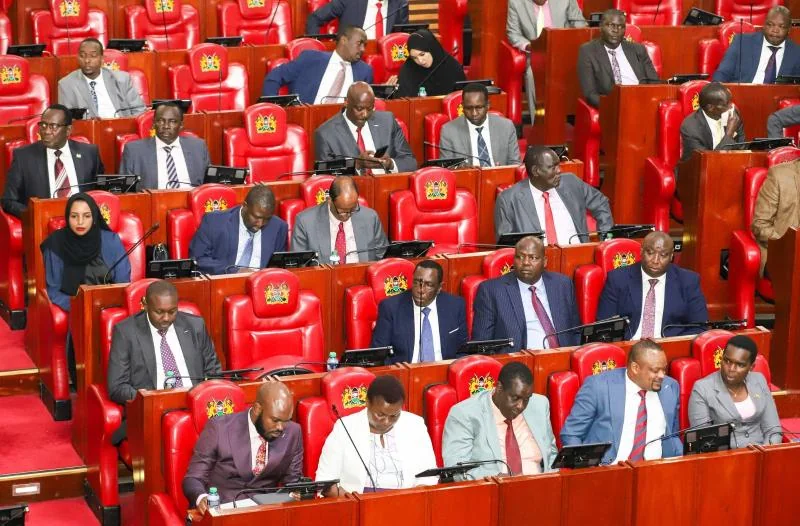
Thirty-four county governments have signed intergovernmental agreements with the Ministry of Education to keep funding bursary and scholarship programmes. MPs in the National Assembly questioned the constitutional and legal framework and whether counties may spend public funds without direct legislation.
Thirty-four county governments have signed agreements with the Ministry of Education allowing them to continue funding bursary and scholarship programmes, but lawmakers are now questioning whether the arrangements are backed by a clear legal and constitutional framework.
The concerns emerged during a session of the National Assembly Departmental Committee on Regional Development, where officials from the Intergovernmental Relations Technical Committee (IGRTC) appeared to explain the implementation of the Intergovernmental Partnership Agreements (IPAs).
The agreements were introduced after a January 2025 directive from the Office of the Controller of Budget requiring county governments to formalise education support programmes through structured intergovernmental arrangements.
Appearing before the committee chaired by Sigor MP Peter Lokachapong, IGRTC Chairman CPA Kithinji Kiragu, Director of Legal Services Sophie Amutavy and Deputy Director of Legal Services Joy Bigambo outlined the progress made so far.
The officials told the committee that agreements had been prepared for 36 counties, with 34 already signed and operational. They further revealed that the Controller of Budget had received funding requisitions from 31 counties and approved disbursements for 30 of them.
IGRTC also informed lawmakers that the 12th Intergovernmental Summit had directed the committee to conclude all outstanding agreements within two weeks.
Members were told that counties including Nairobi, Mombasa, Nakuru, Kisumu, Mandera, Kwale and Kilifi had already signed the agreements.
The committee was also informed that references in earlier agreements to the “limited transfer” of functions had since been removed. IGRTC explained that the current arrangements are based on Article 189 of the Constitution, which encourages cooperation between the national and county governments, and not Article 187, which deals with the transfer of functions.
Despite the progress reported, MPs raised concerns over whether counties were being permitted to spend public funds on responsibilities that are not specifically assigned to them under the Constitution.
Lokachapong challenged IGRTC to clearly explain the nature of education support, arguing that bursaries and scholarships have traditionally been treated as social protection programmes rather than devolved functions.
"If education support is a function, then resources must follow that function. Counties were allocated funds for devolved functions, and education support for secondary schools and universities is not among them. Are we therefore legitimising the use of county resources for functions that are not constitutionally assigned to counties?" he posed.
The committee chairperson also questioned whether the agreements could be considered constitutional in the absence of a specific law governing them, noting that IGRTC's legal team had acknowledged there was no direct legislation establishing the framework.
Emurua Dikirr MP David Kipsang Keter called for measures to ensure every county participates in the programme, warning that many learners could miss bursary support if some counties choose not to sign the agreements.
"We may need legislation compelling every county government to sign these agreements because bursaries are critical to our children's education," he said.
Other legislators sought clarification on the voluntary nature of the agreements and the differences in the number of participating counties.
Embu MP Pamela Njoki Njeru questioned how participation was being determined and asked whether counties that fail to sign before the end of the financial year risk losing access to funding.
Kabuchai MP Majimbo Kalasinga asked IGRTC to provide a complete list of counties that have signed the agreements and challenged the continued reliance on Article 189 as the main legal basis for the programme.
He also raised concerns about national government projects carried out within county jurisdictions, including market construction, and questioned whether similar agreements should be compulsory in such cases.
Matungu MP Oscar Nabulindo cautioned against bypassing constitutional safeguards, arguing that the Office of the Controller of Budget had already classified education support as a national government function.
"The Controller of Budget is a constitutional office mandated to guide public expenditure. If that office has pronounced itself on this matter, are we right to use agreements to create an alternative interpretation?" he asked.
Banisa MP Hassan Adan Ali highlighted challenges faced by counties such as Mandera, which has allocated large amounts of money to bursary programmes over the years.
He said while the programme had helped many families, it had also reduced resources available for development priorities such as roads, water and infrastructure.
"We spend about Sh370 million annually on bursaries. That money comes from resources originally intended for development projects. The question is whether there is a sustainable and lawful funding model under these agreements," he said.
Responding to the concerns, IGRTC Chairman CPA Kithinji Kiragu acknowledged that policy and legal gaps still exist, particularly due to the lack of a comprehensive framework to implement Article 189.
He told the committee that a Legal Sector Working Group comprising Parliament, the Office of the Attorney General, the National Treasury, the Office of the Controller of Budget and the Kenya Law Reform Commission had been formed to develop a more structured framework for cooperation between the two levels of government.
Kithinji maintained that although there is no law specifically dedicated to Article 189 agreements, the Constitution and the Intergovernmental Relations Act provide sufficient legal backing for collaboration between national and county governments.
Lawmakers, however, remained unconvinced and continued to push for clearer legal direction and a sustainable financing model.
At the end of the session, Lokachapong directed IGRTC to submit a full list of counties that have signed the agreements and provide additional details on the legal and financial obligations of both levels of government.
The discussions highlighted the growing debate over the role of county governments in financing education, even as thousands of learners across the country continue to depend on bursaries and scholarships to access schooling.


Comments
Sign in with Google to comment, reply, and like comments.
Continue with Google