DRC reports 71 new Ebola cases in 24 hours as total rises to 452
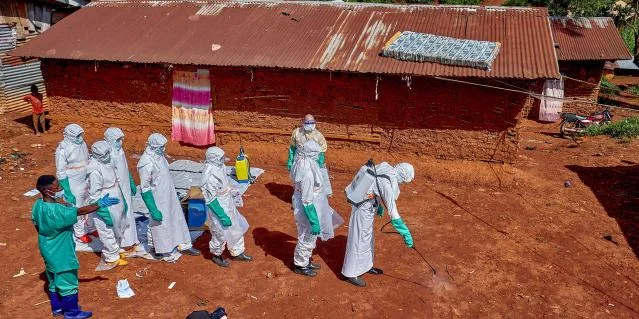
DR Congo’s Health Ministry says 71 new Ebola cases were confirmed within 24 hours, raising the total to 452. Most new cases are in Ituri and North Kivu, amid ongoing insecurity and weak health systems.
Health authorities in the Democratic Republic of Congo have raised alarm over a sharp rise in Ebola infections after confirming dozens of new cases within a single day, warning that the virus is spreading quickly in communities already struggling with weak health systems and insecurity.
The Health Ministry on June 5, 2026 said 71 new Ebola cases were recorded within a 24-hour period, pushing the total confirmed infections to 452 since the outbreak linked to the rare Bundibugyo strain was declared on May 15. The country has also confirmed 82 deaths so far.
According to the ministry’s daily situation report, the latest surge includes 65 cases in Ituri province and six in North Kivu province. Health officials warned that the figures point to fast and ongoing community transmission of the disease.
“The number of confirmed cases recorded in the two provinces demonstrates rapid and continuous community transmission,” the situation report said.
The outbreak remains largely concentrated in Ituri province in the northeast, a remote area with limited health facilities and ongoing insecurity linked to armed group activity. Cases have been detected in 17 of Ituri’s 36 health zones, while North Kivu has reported infections in seven health zones. One health zone in South Kivu has also recorded cases, and infections have additionally been reported in neighbouring Uganda.
The ministry noted that the 71 new cases recorded in a single day is among the highest daily totals since the outbreak began and is the 17th Ebola outbreak recorded in the country’s history.
Earlier, World Health Organization Director-General Tedros Adhanom Ghebreyesus announced a $518 million six-month response plan aimed at controlling the outbreak across DR Congo and Uganda. The plan, developed with the Africa Centres for Disease Control and Prevention, will run from June to November.
“The objective is straightforward: we need to stop the outbreak where it is, support countries that are responding today, and ensure that neighbouring countries are ready to detect and act quickly if cases appear,” said Tedros.
He added, “This is a practical plan,” he continued. “It sets out what we need to do now, together, to contain the current outbreak and reduce the risk of further spread.”
Health agencies say the strategy will focus on emergency coordination, surveillance, testing, infection prevention, treatment, and community engagement as authorities race to contain the virus.
Officials have warned that without stronger intervention, the outbreak could grow further, noting that it is already one of the largest recorded for the Bundibugyo strain, which had previous outbreaks in 2007 and 2012.



Comments
Sign in with Google to comment, reply, and like comments.
Continue with Google