Western bloc backs Ruto re-election in exchange for 2032 political payback
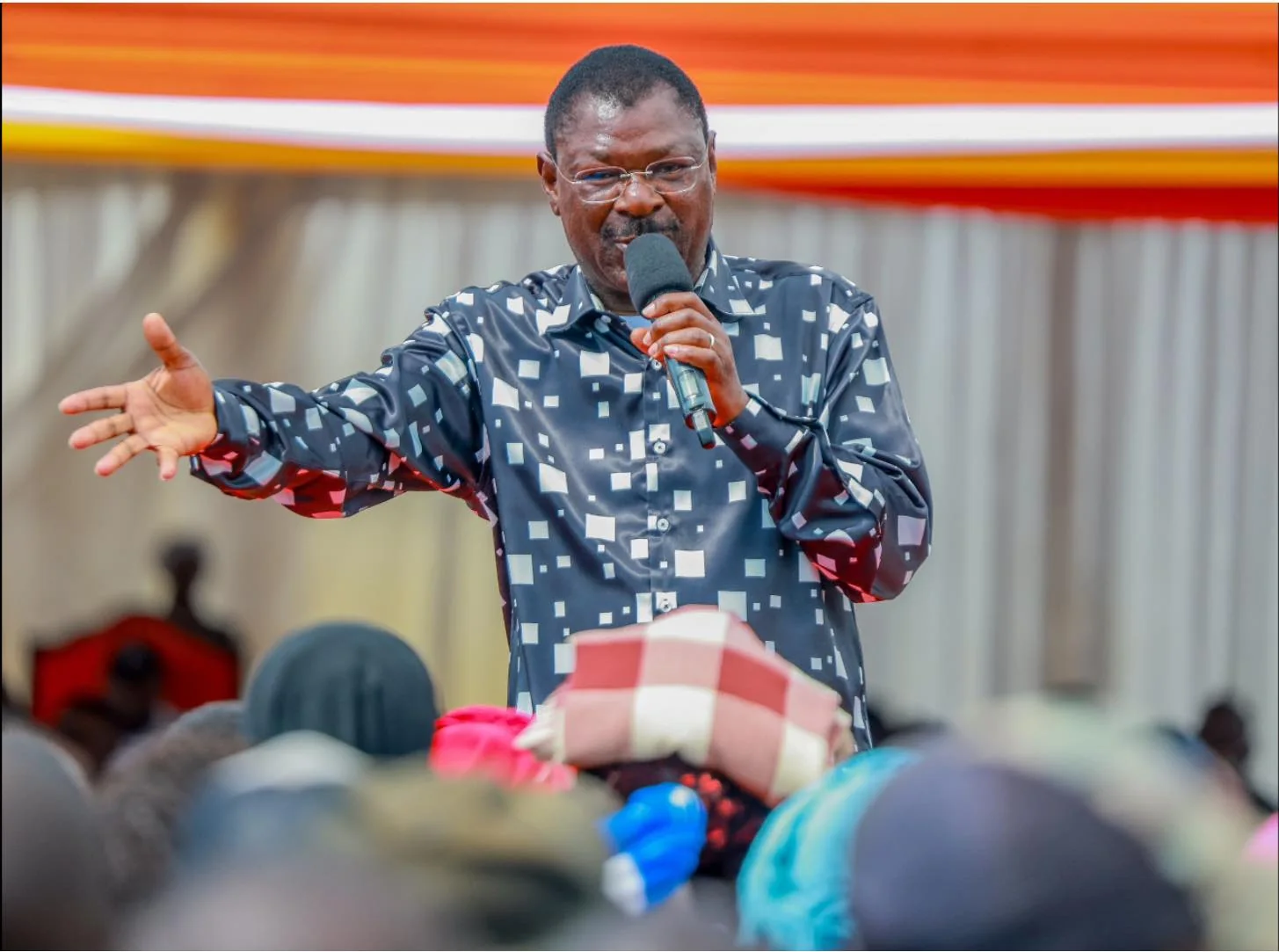
Speaker Wetang’ula further defended the Western region’s position within the Kenya Kwanza administration, arguing that the community had gained more representation compared to previous governments.
Leaders from Kenya’s Western region allied to President William Ruto have intensified their political mobilisation in support of his re-election, while simultaneously positioning themselves for a potential presidential bid in 2032.
The leaders argue that the region’s numerical strength in national politics presents a strategic opportunity to consolidate influence within the Kenya Kwanza administration and negotiate for higher political stakes in the future.
Led by National Assembly Speaker Moses Wetang'ula, the leaders made their remarks during a women empowerment event held in Khwisero, Khwisero, where they urged the Luhya community to rally behind President Ruto in the next general election, with an understanding that the region would later push for the presidency in 2032.
“We supported Raila when he eyed the presidency, we supported Kibaki others supported Kenyatta, this last election we supported President Ruto, now it is our turn to use this allies to rise to the Presidency,” Wetang’ula said.
He emphasised the need for unity within Western Kenya, warning against internal divisions and what he termed selfish political interests among leaders eyeing national positions.
According to him, cohesion would strengthen the region’s bargaining power in future political negotiations.
“We have always supported other leaders from other regions, we also deserve a chance but we must be united as a community, We will become attractive to others if we unite and have the numbers,” he added.
The sentiments were echoed by President Ruto’s aide Farouk Kibet, who backed Wetang’ula as the region’s most viable contender for future leadership.
“Those saying it is not time for western are dreaming, come 2032 a leader from Western Kenya will be President and that person is Speaker Wetang’ula,” he said.
Kenneth Lusaka also weighed in, urging the community to consolidate behind Wetang’ula as their preferred presidential project. He argued that supporting President Ruto in 2027 would create a clearer path for Western Kenya to ascend to the presidency thereafter.
“The Luhyia community stands a better chance of ascending to power by supporting President Ruto because he will be doing his last five years...if we rally behind another leader we will have to wait for 10 years,” Lusaka said.
He added: “The senior most politician we have to from for presidency is Speaker Wetang’ula.”
Khwisero Member of Parliament Christopher Aseka also supported the push, calling for unity in backing Wetang’ula’s future political ambitions. He noted that the deputy president position was already attracting interest from several leaders allied to the Kenya Kwanza administration.
He mentioned figures such as Deputy President Kithure Kindiki and Gladys Wanga as part of the wider political contest shaping succession dynamics.
“We will support President Ruto’s re-election bid then we will ask him to return the favour in 2032,” Aseka said.
Speaker Wetang’ula further defended the Western region’s position within the Kenya Kwanza administration, arguing that the community had gained more representation compared to previous governments.
He contrasted the current arrangement with the Uhuru Kenyatta administration, stating:
“In retired president Uhuru Kenyatta government we had one cabinet minister, but this time we have several of our people in cabinet, PSs and I as the Speaker among others, but to make ourselves more attractive and build allies, we must unite,” he said.
The leaders also praised the Kenya Kwanza administration for ongoing infrastructure projects, including the dualling of the Rironi–Mau Summit highway and plans to extend the Standard Gauge Railway from Naivasha to Kisumu and further into Western Kenya.
Wetang’ula further highlighted reductions in fertilizer prices from Ksh. 7,500 to Ksh. 2,500, saying the move had boosted agricultural productivity and strengthened national food security.
As political alignments continue to take shape ahead of the 2027 general election, Western Kenya leaders appear increasingly focused on balancing immediate support for President Ruto with long-term succession ambitions beyond 2032.




Comments
Sign in with Google to comment, reply, and like comments.
Continue with Google