Governor Ahmed cites major service delivery gains under Ruto as Wajir hosts Madaraka day
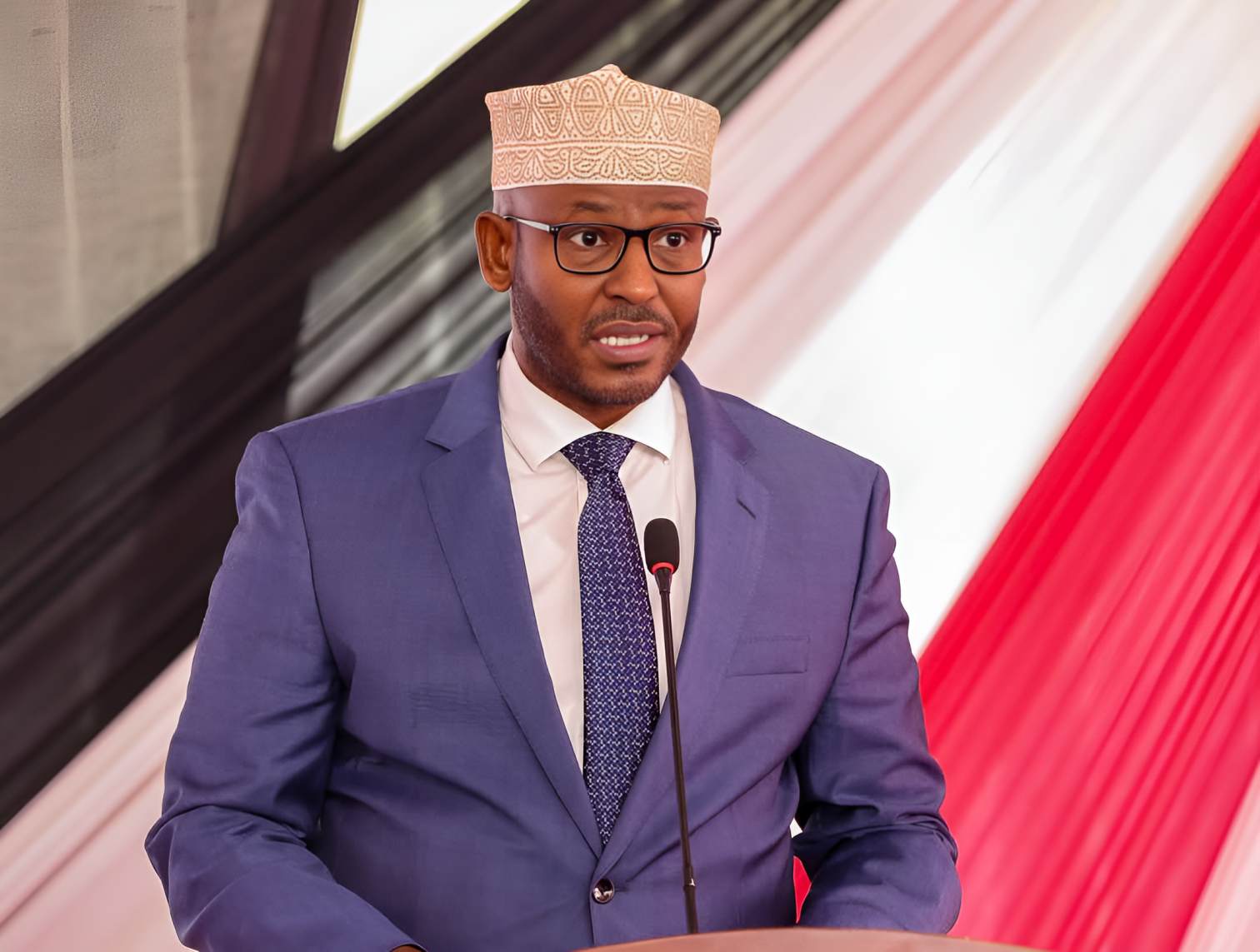
Wajir Governor also proposed that the newly built Wajir Stadium be named after the late Ahmed Khalif, whom he described as a respected community leader and humanitarian.
Wajir Governor Ahmed Abdullahi has hailed President William Ruto’s decision to take the 63rd Madaraka Day celebrations to Wajir, describing it as a landmark moment that reflects growing national inclusion and renewed government attention to Northern Kenya.
Speaking during the national celebrations on Monday, Abdullahi said the county had witnessed major progress in healthcare, infrastructure, housing and youth empowerment, adding that hosting the national event marked a new chapter for a region that had for decades been viewed as marginalised.
His remarks came as Wajir County made history by becoming the first county in Northern Kenya and the wider arid and semi-arid region to host a national holiday celebration since Kenya gained independence in 1963.
The governor said the decision by the national government carried deep meaning for residents of the region and demonstrated a commitment to national unity and equal treatment of all Kenyans.
“Allow me first to express our profound gratitude to His Excellency the President of Kenya, President William Samoi Ruto, for according Wajir County and the wider North Eastern region the honor to host this year’s Madaraka Day.”
Abdullahi said Wajir has long played an important role as a centre of trade and cultural exchange in the region, noting that the county’s strategic position had helped connect communities across borders for many years.
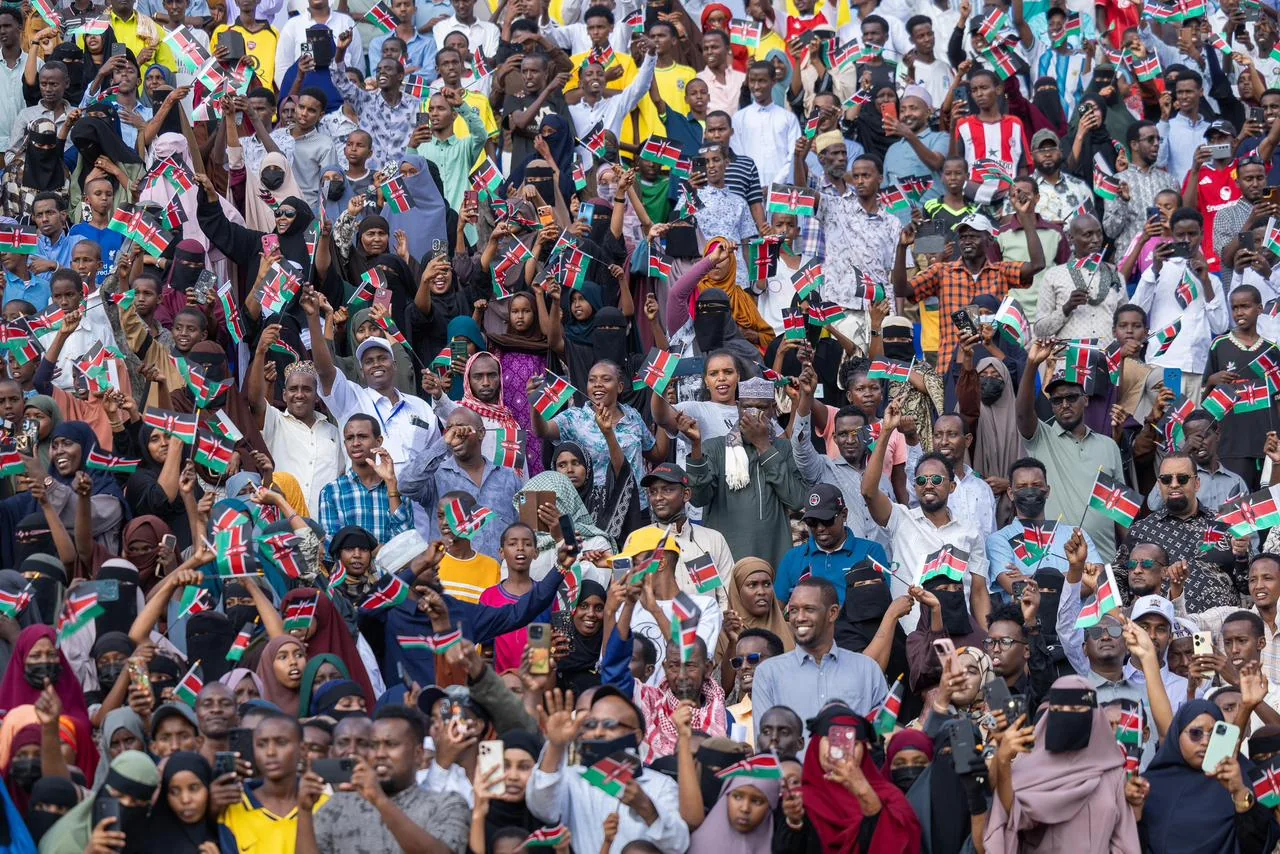 Wajir County residents embrace the 63rd Madaraka Day celebrations at Wajir Stadium on June 1, 2026. PHOTO/PCS
While acknowledging the challenges the region had faced in the past, he said recent reforms and investments had improved access to services and expanded development opportunities for residents.
The governor pointed to major changes in the health sector since the introduction of devolution, saying the county had moved from severe shortages of medical personnel to a stronger healthcare system.
“In 2013, before devolution, there was a single doctor in Wajir serving 700,000 people; today, Wajir reports 76 medical officers, more than 1,100 healthcare professionals, 174 health facilities,” he stressed.
He added that the President would officially commission a new Level 5 referral hospital during his visit, describing the facility as a major step forward in improving healthcare services in the county and the wider region.
Abdullahi also highlighted ongoing infrastructure projects, including road construction, drainage improvements, upgrades to the airport runway, and the development of Wajir Stadium.
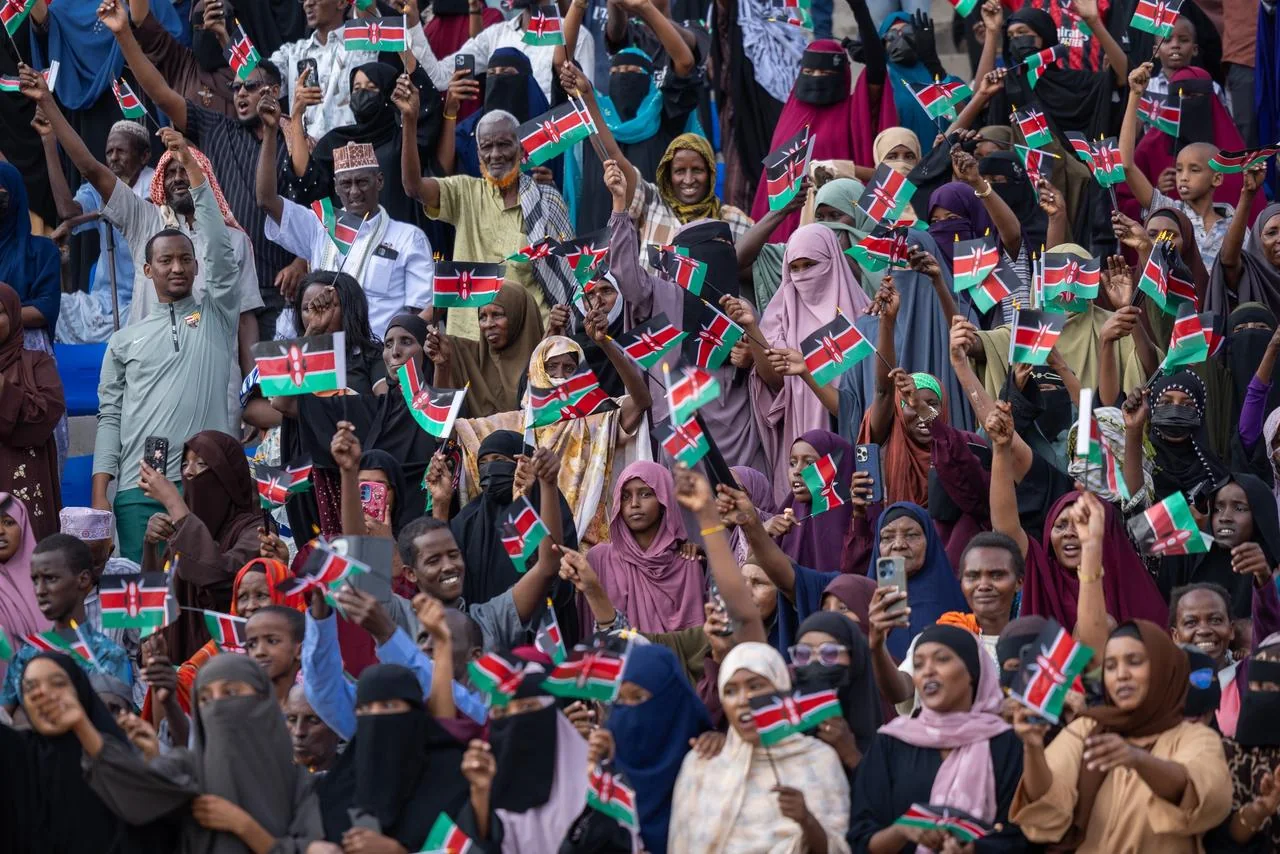 Wajir County residents embrace the 63rd Madaraka Day celebrations at Wajir Stadium on June 1, 2026 hosted by President William Ruto on June 1, 2026. PHOTO/PCS
According to the governor, the projects have improved movement within the county, stimulated economic activity and created thousands of temporary employment opportunities for local residents.
On housing and economic development, he praised the Affordable Housing Programme, saying it had generated jobs while attracting investment into the county.
He also commended the NYOTA Fund initiative for supporting young people and small businesses, while calling for continued expansion of programmes aimed at boosting livelihoods and enterprise development.
The governor further reported progress on commitments previously made by President Ruto, including plans to open Wajir Airport to civilian operations.
“Kenya Airports Authority is actively on the ground and working on this,” he cited.
Abdullahi also praised the President’s efforts to address long-standing concerns surrounding the issuance of national identity cards in border communities.
“You did more than issue identity cards to deserving Kenyans. You restored our dignity, and you gave us a sense of belonging.”
For decades, residents of North Eastern Kenya faced extra vetting requirements and ethnic profiling when applying for national identity cards, a system that critics argued limited access to essential services and opportunities.
In February 2025, President Ruto abolished the vetting process, describing it as discriminatory and inconsistent with the constitutional principle of equality.
“We want the people of Northern Kenya to feel equal to the rest of the country,” he said during a proclamation made in Wajir.
The move was widely viewed as a major policy change aimed at addressing historical exclusion and improving access to registration services across counties in the region.
As he concluded his address, Abdullahi thanked the national government for selecting Wajir as the venue for the celebrations and called for sustained investment in livestock production, value addition and cooperative development to strengthen the local economy.
He also proposed that the newly built Wajir Stadium be named after the late Ahmed Khalif, whom he described as a respected community leader and humanitarian.




Comments
Sign in with Google to comment, reply, and like comments.
Continue with Google