Ruto apologises for historical exclusion of Northern Kenya during Madaraka Day in Wajir
The President pointed to early national planning approaches, including Sessional Paper No. 10 of 1965, noting that development had been directed mainly to areas considered high potential, while vast parts of Northern Kenya were left behind.
President William Ruto has issued a public apology acknowledging long-standing state neglect and exclusion of Northern Kenya, saying past policies contributed to deep inequalities in development, access to services, and citizenship recognition.
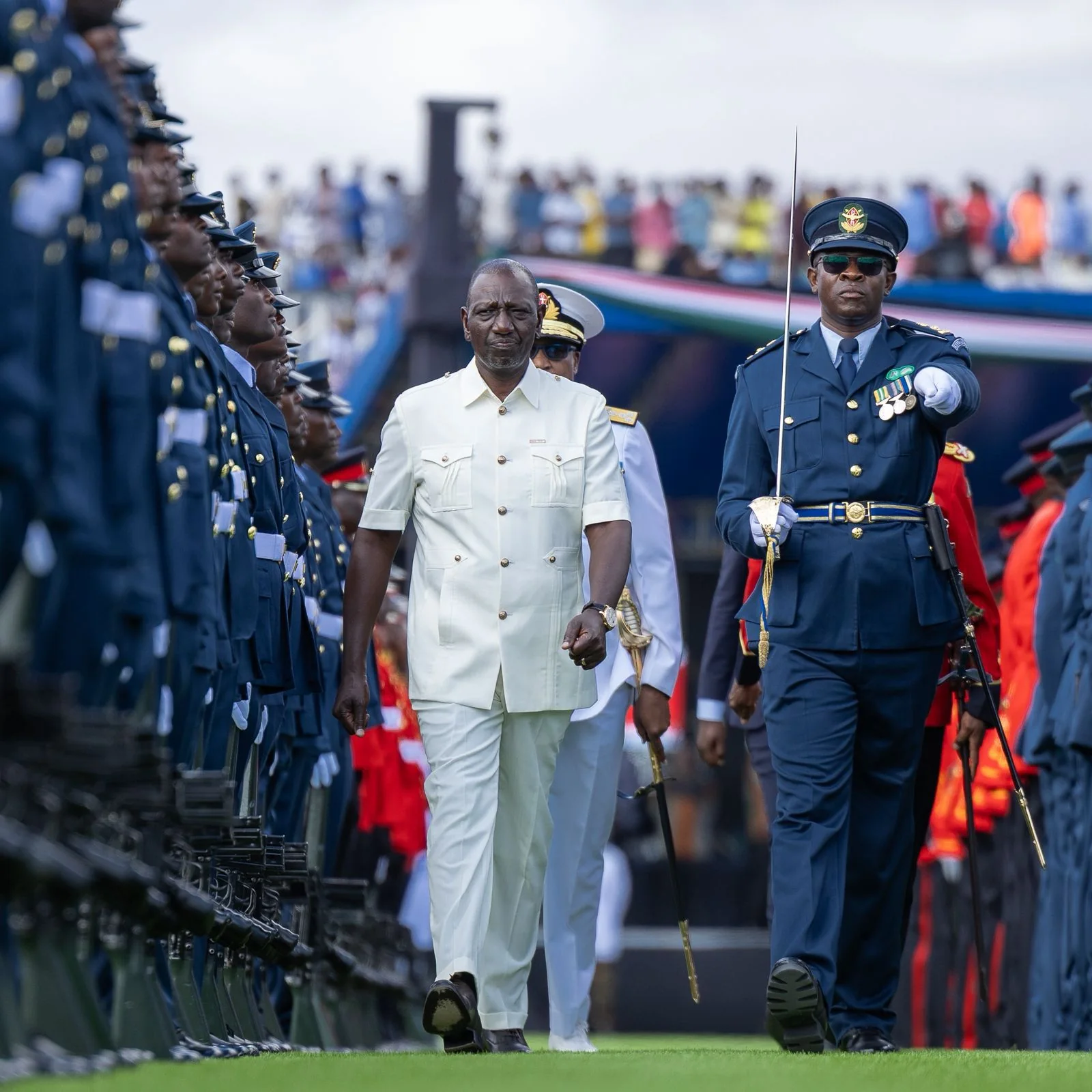
Speaking during the 63rd Madaraka Day celebrations held in Wajir County—the first time the national event has been hosted in Northern Kenya—the President said the region had for years been pushed to the margins through policy choices that shaped unequal development across the country.
He said independence was meant to guarantee equal citizenship, but that promise had been weakened over time by decisions that favoured some regions over others.
“This is Wajir County, and this is Kenya. This is what we meant when we say we would leave no one behind,” Ruto said, framing the event as a message of inclusion rather than a symbolic ceremony.
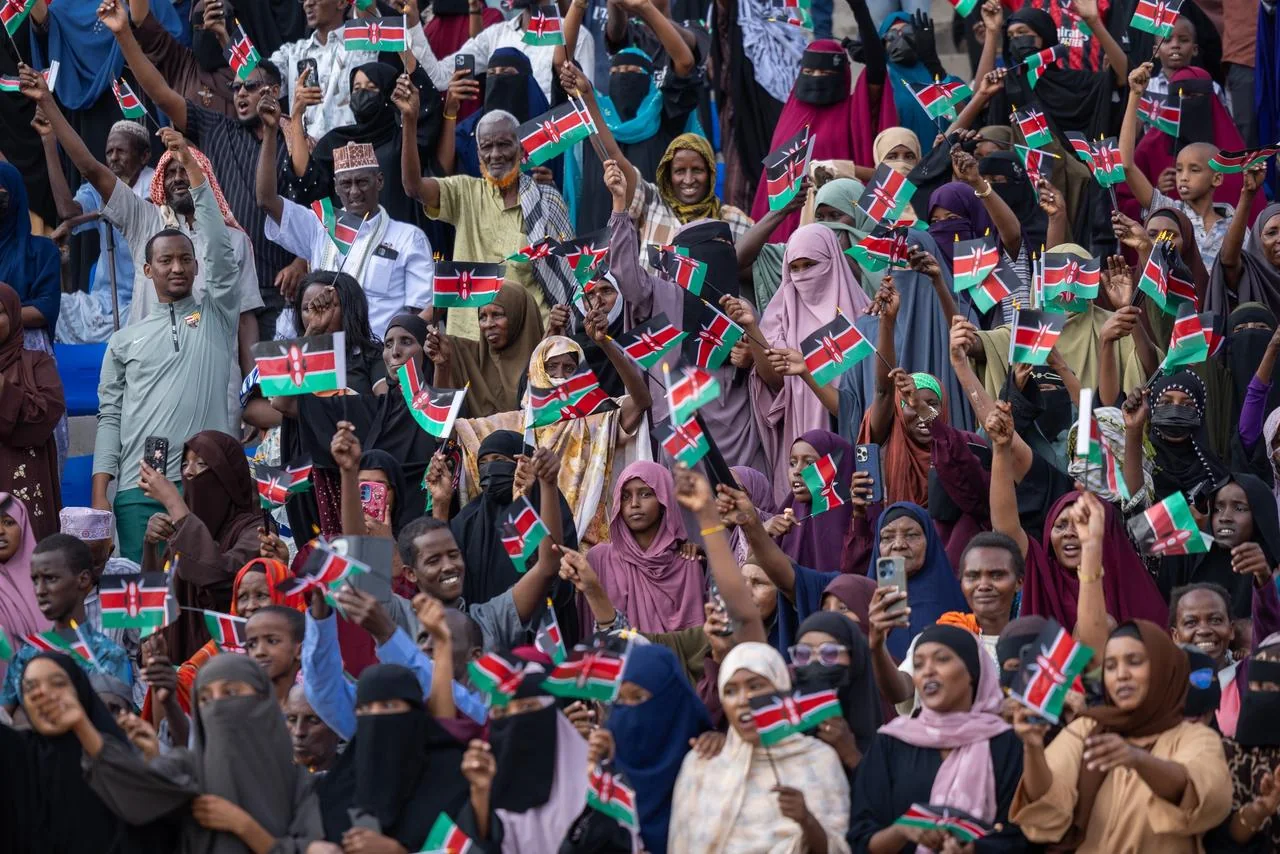 Wajir County residents embrace the 63rd Madaraka Day celebrations at Wajir Stadium on June 1, 2026 hosted by President William Ruto on June 1, 2026. PHOTO/PCS
He added that historical governance frameworks had played a role in deepening regional disparities.
“Decades after independence, this region was left behind through neglect, marginalization, discrimination, and policy failures,” he said.
The President pointed to early national planning approaches, including Sessional Paper No. 10 of 1965, noting that development had been directed mainly to areas considered high potential, while vast parts of Northern Kenya were left behind.
He said the effects of those decisions were still visible today, citing years of poor infrastructure and limited access to essential services.
“Decades without adequate roads, without water, health, or schools, communities pushed to the fringes their own republic,” he said.
In a rare public admission, Ruto offered an apology to residents of Northern Kenya on behalf of the state.
“On behalf of the people of Kenya today, as I stand here as president and leader of our great nation, to the people of Kenya in northern Kenya, for this marginalization, I want to apologize on behalf of the nation of Kenya,” he said.
The President also addressed challenges faced by residents when seeking national identity documents, saying many had been subjected to unfair scrutiny despite being citizens.
He cited the case of Makaja Ibrahim Osman, describing it as part of a wider pattern of exclusion in access to documentation.
“For years, every time Osman went to apply to identity card… he was treated not as a Kenyan but as a suspect, an illegal alien,” he said.
Ruto said the Constitution guarantees equal treatment for all citizens and noted that reforms were already underway to correct past injustices, including a 2025 presidential directive aimed at easing issuance of identity cards and birth certificates in Northern Kenya.
He said the changes were already producing results, with more young people now able to access documentation without the barriers that existed before.
“The results, ladies and gentlemen, are already being felt,” he said.
The President further pledged continued investment in the region, saying the government was working to reverse historical exclusion through infrastructure, health, education, and other development projects.
He said this would be done steadily and across all sectors.
He also added that the government’s approach would focus on practical delivery, saying it would be achieved “one road, one health facility, one school, one project, and one opportunity at a time,”
Ruto concluded by reaffirming that national unity must be reflected in how citizens experience the state, saying Madaraka Day represents equal belonging for all Kenyans.
He said Madaraka “belonged, still belongs, and will forever belong equally to every single Kenyan.”

Comments
Sign in with Google to comment, reply, and like comments.
Continue with Google