Sifuna's rising star puts Western Kenya's veterans on the defensive
The slogan "Mimi ndiye Sifuna" has become particularly popular among young people, especially Gen Z voters, helping boost his profile beyond his traditional support base.
A fast-growing political movement around ODM Secretary-General Edwin Sifuna is reshaping power dynamics in Western Kenya, placing some of the region's most experienced leaders under mounting pressure as the race to influence the community's political future gathers momentum.
Across funerals, public meetings and community events, Sifuna's name has become a major talking point, with leaders increasingly expected to declare whether they support him or not. Those who openly associate themselves with the Nairobi senator often win over crowds, while critics risk facing hostile reactions from audiences that appear to be embracing his message.
The trend has created fresh political headaches for long-serving leaders who have for years enjoyed considerable influence in the region. It has also sparked a growing debate about who should lead the Luhya community into the next phase of national politics.
For more than two decades, Prime Cabinet Secretary Musalia Mudavadi and National Assembly Speaker Moses Wetang'ula have remained among the most influential political figures in Western Kenya following the death of former Vice-President Kijana Wamalwa in 2003.
Mudavadi comes from the Maragoli sub-tribe, the second-largest within the Luhya community, while Wetang'ula and Sifuna belong to the Bukusu sub-tribe, which remains the largest and one of the most politically influential groups in the region.
But Sifuna's growing popularity is increasingly changing the conversation, both in Western Kenya and at the national level. His rise has not only unsettled established leaders in the region but has also elevated him within opposition politics, where many leaders now find themselves competing for attention with the outspoken senator.
The slogan "Mimi ndiye Sifuna" has become particularly popular among young people, especially Gen Z voters, helping boost his profile beyond his traditional support base. His ability to deliver sharp and engaging speeches has further strengthened his standing in the country's political arena.
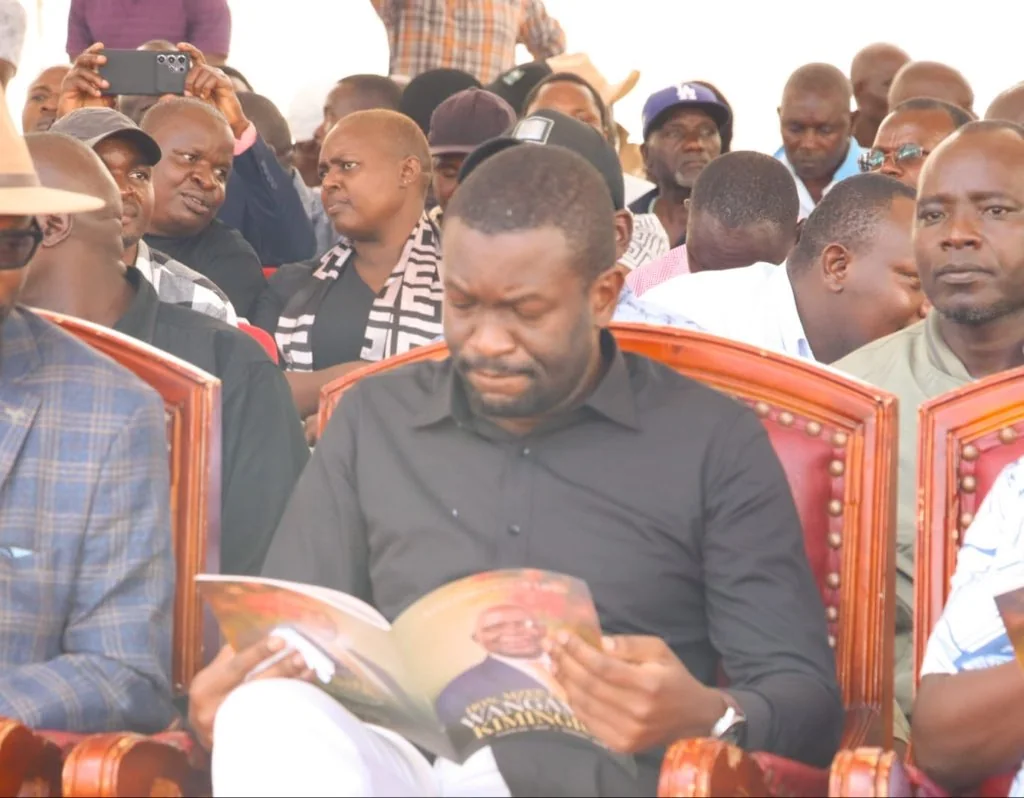
The strength of that support was visible during the burial of former nominated MP and chairman of the Luhya Council of Elders, Mzee Patrick Wangamati, in Kabuchai Constituency, Bungoma County.
During the ceremony, opposition leaders joined veteran politician Noah Wekesa in openly backing Sifuna as the region's emerging political figure while questioning the leadership offered by Mudavadi and Wetang'ula over the years.
Despite the growing excitement around his political future, Sifuna has not publicly stated whether he intends to seek the presidency or defend his Nairobi Senate seat.
His political journey has been relatively recent. Before his election to the Senate in 2022, he had unsuccessfully contested both the Kanduyi parliamentary seat and the Nairobi Senate seat in the 2017 elections.
However, not everyone is convinced that the senator is ready for the next political step.
Bungoma Governor Kenneth Lusaka has questioned the push to market Sifuna as a potential presidential candidate, arguing that he still lacks the experience and resources required for such a contest.
The governor warned that some of those encouraging the senator could eventually abandon him.
"We have no hate. As Luhya we want to produce a president and that is the truth, but we have to plan. If you are given money for a campaign, which day will you become president?" asked Lusaka during a public event in Bungoma County.
Lusaka, a close ally of Wetang'ula and President William Ruto's point man in Western Kenya ahead of the 2027 election, urged patience and careful planning.
"We are telling our son, Sifuna, to take it slowly. When the time comes, we will support you. Yes, you have the calling, but timing is important. They are pushing you to use you and then discard you, leaving you in political oblivion," said Lusaka.
According to the governor, the community should first focus on supporting President Ruto before turning its attention to producing a presidential candidate.
"When the time comes we will support you. I have been in politics for a long time. Let them (opposition) first announce their presidential candidate so that we can see what they are offering the Luhya community. For now, let us support President Ruto as we plan for our time in 2032," he said.
The political rivalry was evident during Wangamati's burial, where opposition leaders spent hours criticising the Kenya Kwanza administration before Lusaka and Wetang'ula later joined the event.
Vihiga Senator Godfrey Osotsi defended Sifuna against claims that he lacks the experience required to lead the community politically.
"Sifuna will not be lured into playing the retrogressive politics of Luhya supremacy because this is the cancer that has denied our community opportunities for far too long," said Osotsi.
The senator argued that while Mudavadi and Wetang'ula remain respected leaders, their current political direction could distance them from the people they seek to represent.
As Wetang'ula continues to maintain his political presence through government engagements and Ford Kenya activities, Mudavadi has largely concentrated on his duties in government and his frequent international engagements alongside President Ruto.
Some political observers believe the decision to dissolve ANC weakened Mudavadi's influence and reduced his negotiating power within national politics.
Veteran politician Noah Wekesa said Sifuna's growing support cannot be ignored, while Kakamega Senator Boni Khalwale declared that the future leadership of the Mulembe Nation rests with the Nairobi senator.
Khalwale accused Mudavadi and Wetang'ula of failing to provide the direction expected by the community.
“Luhyas are no longer fools and we shall not be taken for granted,” Khalwale said during a rally in Bungoma.
Trans Nzoia Governor George Natembeya also challenged leaders urging residents to wait until 2032, saying Western Kenya continues to lag behind despite years of political promises.
Bumula MP Wanami Wamboka, meanwhile, accused Wetang'ula of frustrating upcoming leaders, including Sifuna, as competition for influence in the region continues to intensify.




Comments
Sign in with Google to comment, reply, and like comments.
Continue with Google