Wanjigi links Kenya’s economic crisis to debt, taxes, fuel prices and rising statutory deductions
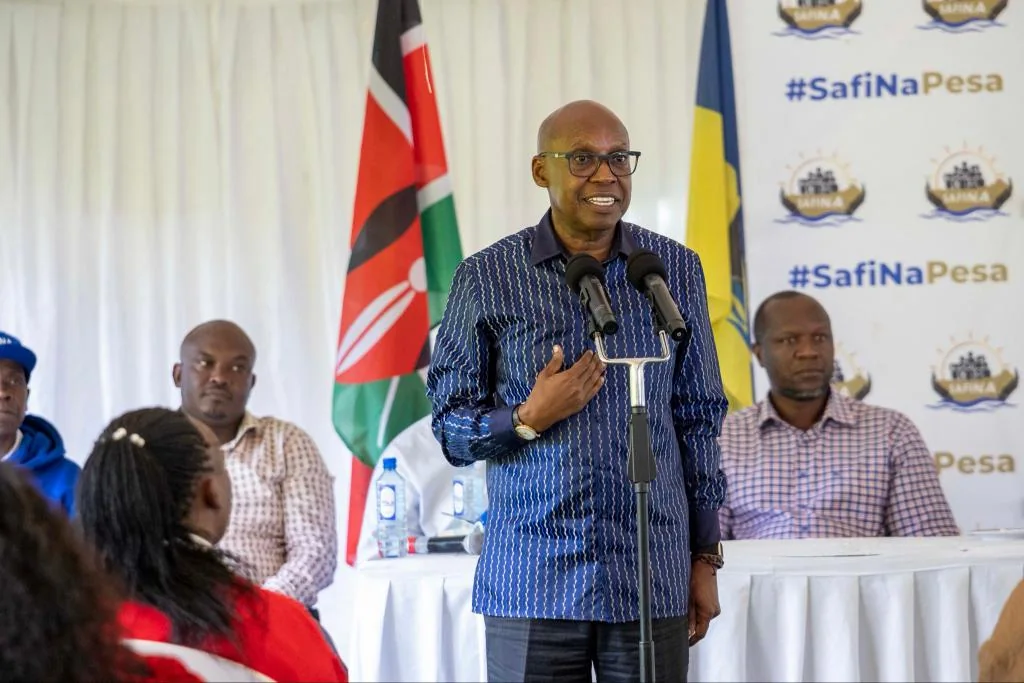
Speaking during a TV interview on Sunday, Wanjigi said the country was nearing economic collapse, warning that rising debt repayments were consuming nearly all government revenue and deepening poverty nationwide.
Safina Party Leader Jimi Wanjigi has called for the cancellation of “illegal” public debt, arguing that Kenya’s economic crisis is driven by unsustainable borrowing and excessive taxation.
Speaking during a TV interview on Sunday, Wanjigi said the country was nearing economic collapse, warning that rising debt repayments were consuming nearly all government revenue and deepening poverty nationwide.
Wanjigi highlighted that Kenya’s political and economic challenges were now inseparable from the country’s debt burden, arguing that successive governments had failed to confront the root cause of the crisis.
“We are at a momentous time in our history, with an opportunity to transform our lives, and we must not lose it to mere rhetoric and sloganeering; instead, we should seize the moment by cancelling the debt burden, removing it from our lives, and paving the way for an amazing future,” he reaffirmed.
Safina's boss argued that debt repayment was consuming nearly all government revenue, leaving little room for development or social services.
“Our issue is the economy,” he stressed, insisting that the country’s fiscal problems were at the centre of rising taxes, high fuel prices and declining living standards.
He claimed the government faced mounting repayment obligations in the final months of the financial year.
“Between now and the end of June, they’ve got to find Sh800 billion to pay debt,” he noted. “Their revenue is showing that they can’t collect more than Sh500 billion. There’s a possible default of Sh300 billion.”
The discussion revolves around Kenya's debt which has increasingly drawn criticism from activists and economists who describe part of it as “odious debt”, loans allegedly acquired unlawfully, without public benefit, or through opaque processes.
Petitioners such as Busia Senator, Okiya Omtatah, claim that up to Sh6.95 trillion borrowed between 2014 and 2025 was unauthorized and failed to follow constitutional and parliamentary approval procedures.
The disputed debt includes Eurobond borrowings and major infrastructure loans linked to projects such as the Standard Gauge Railway.
Kenya’s total public debt now stands at over Sh11 trillion, with critics arguing that taxpayers are burdened by repayments despite allegations of corruption, mismanagement and missing funds in some borrowing programmes.
Wanjigi also linked the crisis to recent increases in fuel prices and transport costs, saying Kenyans were carrying the burden of excessive taxation.
The leader stressed that protests and planned nationwide strikes by public service vehicle operators reflected growing frustration among ordinary citizens.
“I support strikes. I support everything,” he stated. “But what they should be striking about is why government is unable to cushion them from these international factors.”
Wanjigi also criticised deductions imposed on workers through taxes and statutory contributions, arguing that citizens were paying more while public services continued to deteriorate.
His criticisms come amid Kenyan workers facing mounting statutory deductions from their salaries as the government expands collections through taxes and mandatory contributions.
Under the Affordable Housing Levy, employees contribute 1.5 percent of their gross pay, matched by a similar 1.5 percent from employers, bringing the total levy to 3 percent.
Workers are also required to remit 2.75 percent of their gross salary to the Social Health Authority (SHA) under the Social Health Insurance Fund, while NSSF deductions now stand at 6 percent of pensionable earnings from employees, matched equally by employers.
Combined, the deductions significantly reduce take-home pay for formally employed Kenyans, sparking debate over the growing tax burden amid rising living costs and concerns over accountability in the management of public funds.
Wanjigi also described Kenya’s debt as “bad debt” and “illegal debt”, pledging that a Safina administration would suspend repayments immediately after taking office.
The Safina Party boss dismissed concerns that suspending debt repayments could damage Kenya’s international credit standing or trigger sanctions from lenders.
He also argued that domestic borrowing had not been properly approved by Parliament, claiming that much of the debt had been accumulated outside constitutional processes.
“There’s no domestic borrowing that is approved by Parliament,” he said. “None of this money has entered the consolidated account which we’re accountable for.”
Beyond debt, Wanjigi framed the economic crisis as part of a broader struggle for what he called “economic liberation.”
The Safina boss claimed that more than 60 per cent of Kenyans were living below the poverty line and said economic hardship had become a unifying national issue beyond ethnicity and political divisions.
He also criticised political leaders whom he accused of supporting punitive taxation measures, including the controversial Finance Bill 2024.
The businessman-turned-politician compared himself to US President Donald Trump, describing himself as “an outsider who has insider knowledge.”
Wanjigi concluded that his Safina Party was focused on building a national political movement centred on economic reform rather than ethnic alliances.



Comments
Sign in with Google to comment, reply, and like comments.
Continue with Google