IEBC secures Sh74 billion budget for election technology and operations
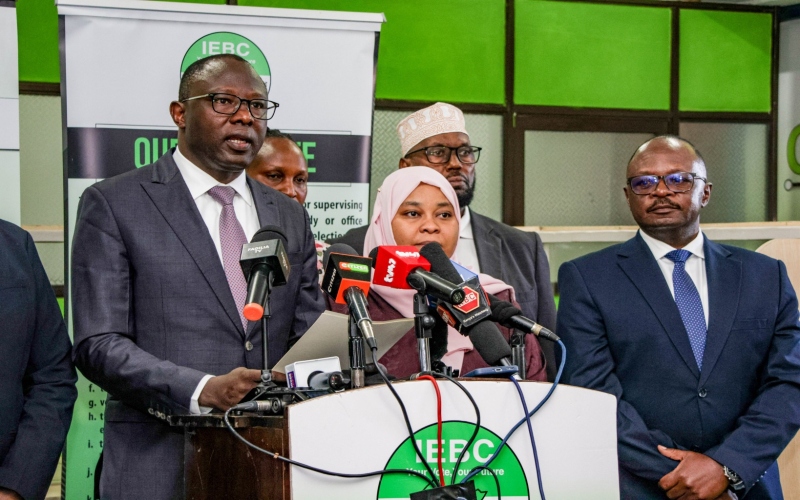
At the heart of the spending plan is the acquisition of new Kenya Integrated Election Management System (KIEMS) kits, a move that will push the election technology budget beyond Sh7 billion.
Kenya's next General Election is set to become the most expensive in the country's history after lawmakers approved a Sh74 billion budget for the Independent Electoral and Boundaries Commission (IEBC), including billions of shillings for the replacement of election technology that has been at the centre of heated scrutiny.
The approval by the National Assembly's Justice and Legal Affairs Committee gives the electoral body the funds it had been seeking to bridge a major financing gap and move ahead with preparations for the 2027 polls.
At the heart of the spending plan is the acquisition of new Kenya Integrated Election Management System (KIEMS) kits, a move that will push the election technology budget beyond Sh7 billion.
The additional funding comes after the Treasury allocated Sh40.5 billion to the commission, leaving it with a shortfall of more than Sh33 billion against its projected requirement of Sh74.5 billion.
The committee, chaired by Tharaka MP George Murugara, approved the entire additional request submitted by the electoral agency. The funding will be spread across two financial years beginning in July.
“Increase the allocation for the Programme of Management of Electoral Processes by Sh23.5 billion,” the Justice and Legal Affairs Committee report reads in part.
The committee's decision removes one of the biggest obstacles that had threatened the commission's preparations for the next election and clears the path for a large-scale upgrade of election equipment.
The IEBC has told lawmakers that it requires 55,000 KIEMS kits, including 50,000 designated for polling stations and another 5,000 for training purposes.
Under its plan, the commission intends to replace 45,352 kits purchased in 2017 while retaining the 9,000 devices acquired in 2022 for use during the next General Election.
The electoral agency argues that the older kits will no longer be reliable by 2027 because of wear and tear, ageing batteries, expired manufacturer support and software limitations.
The handheld devices play a critical role during elections as they are used to identify voters and electronically transmit results from polling stations.
The latest budget approval continues a trend of growing election expenditure in Kenya as authorities increasingly rely on technology to strengthen the credibility of the electoral process.
The 2013 General Election cost about Sh25 billion following the rollout of biometric voter registration and election systems under the Constitution of Kenya 2010.
By 2017, election expenditure had risen to approximately Sh40.8 billion as the country expanded the use of biometric identification and electronic results transmission systems. Despite the investment, the presidential election was later nullified.
In 2022, election costs stood at about Sh44.6 billion after the commission reused part of its existing election infrastructure and technology.
However, the projected Sh74.5 billion budget for the 2027 election now places the upcoming poll on track to become the most costly electoral exercise Kenya has ever undertaken.
The approval is particularly notable because it comes only days after lawmakers openly questioned the commission's continued requests for new election technology.
Members of Parliament had demanded answers on why billions of shillings were being spent on KIEMS replacements when the commission had previously stated that thousands of devices remained operational.
Before the 2022 election, the IEBC spent about Sh4 billion on election technology, including 14,100 new KIEMS kits supplied by election technology company Smartmatic. At the time, the commission maintained that more than 41,000 older devices were still functional.
The commission now says that up to 45,352 kits need to be replaced before Kenyans vote in the next General Election.
During appearances before the Justice and Legal Affairs Committee, IEBC commissioner Francis Aduol defended the proposal and cautioned against relying on ageing equipment during a highly contested national election.
“Any single failure can cause problems,” Aduol told the Justice and Legal Affairs Committee during budget hearings.
He said the commission was concerned about the challenges of combining old and new election systems, especially if a different supplier wins the next technology tender.
“We are not sure we are going to use Smartmatic. We are going to open this for tender, and we foresee a challenge of integrating the new and old systems,” Aduol said.
“If we find we cannot use them with the new vendor, we can use them for voter registration. The challenge is how we integrate the two. Hence, we want a full new set.”
The approval now gives the commission the financial backing it sought for a complete review of its election technology infrastructure as preparations for the 2027 General Election gather pace.



Comments
Sign in with Google to comment, reply, and like comments.
Continue with Google