Ruto defends US-funded Ebola facility, says rejecting it would be inhumane
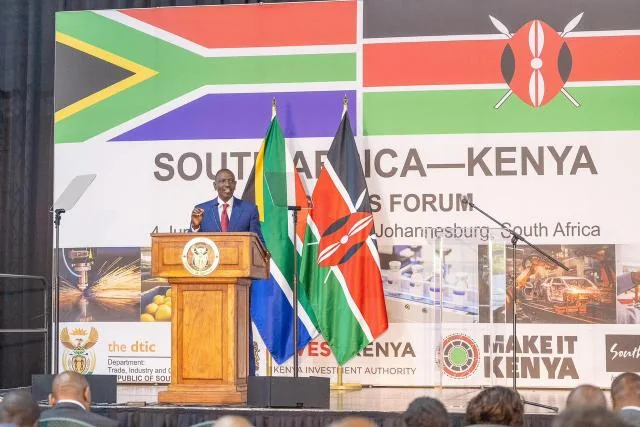
The President maintained that the real issue should be whether the government is taking adequate steps to protect the public rather than focusing on the facility itself.
President William Ruto has defended Kenya’s decision to host a United States-funded Ebola isolation facility, saying turning down support from a long-standing health partner would have been irresponsible as the country prepares for any possible outbreak of the deadly disease.
Speaking during a press conference in Pretoria, South Africa, on Thursday, the President said the facility is only one part of a broader national plan aimed at strengthening Kenya’s readiness against Ebola, even though the country has not recorded any confirmed cases.
Ruto said public discussion around the facility had shifted attention away from the government’s main goal of safeguarding citizens from a disease that remains a concern within the region.
"It would be most unfortunate if on one request by the Americans to set up a facility at their cost, we would refuse. We would look very inhuman," Ruto said.
The President maintained that the real issue should be whether the government is taking adequate steps to protect the public rather than focusing on the facility itself.
"So, the debate here is not about where and how to better set it up or not. The debate is, are we doing the right thing? Are we not? And I can tell you, without fear of any contradiction, and I can look at everybody in the eye and tell you we are doing the right thing," he said.
Ruto noted that Ebola remains a threat to countries in the region because of the movement of people across borders. He pointed out that thousands of Kenyans live and work in eastern Democratic Republic of Congo, making preparedness necessary.
"The most responsible thing to do when there are reports of such a high-level infectious outbreak in a region where we have thousands of Kenyan citizens is to prepare for an eventuality, and that is what Kenya has done," he said.
The President said Kenya has stepped up surveillance measures at all entry points into the country, with authorities screening between 2,000 and 3,000 people every day arriving from areas considered vulnerable to Ebola.
He added that the government has increased testing capacity, secured the necessary reagents and deployed health personnel while also training thousands of healthcare workers to handle any potential outbreak.
According to Ruto, the country has established 23 isolation facilities as part of its preparedness strategy. One of the centres, located at a military airbase, has attracted public attention because it was developed in partnership with the United States.
He revealed that the US government has invested Sh1.8 billion in Kenya’s Ebola preparedness infrastructure and requested that one of the facilities be set aside for use by American personnel if necessary.
Ruto said the arrangement was reasonable given the large American military presence in Kenya and stressed that it was part of wider efforts to improve emergency response capacity.
The President also dismissed suggestions that the facility would offer treatment unavailable to others, saying Kenya would provide care to foreign nationals regardless of where they came from.
"For context again, even if the Americans had not set up that facility at the military base, if there was any American in Kenya, we would take them to a Kenyan facility," he said.
Ruto further highlighted the long-standing cooperation between Kenya and the United States in the health sector, pointing to support provided through programmes such as PEPFAR and investments made over the years in health infrastructure.
He said all Ebola preparedness measures currently being implemented, including isolation centres and enhanced border screening, are intended to ensure Kenya can respond quickly and effectively to any potential outbreak while protecting public health.

Comments
Sign in with Google to comment, reply, and like comments.
Continue with Google