CS Mugaa pushes technology-driven reforms as non-revenue water stands at 48%
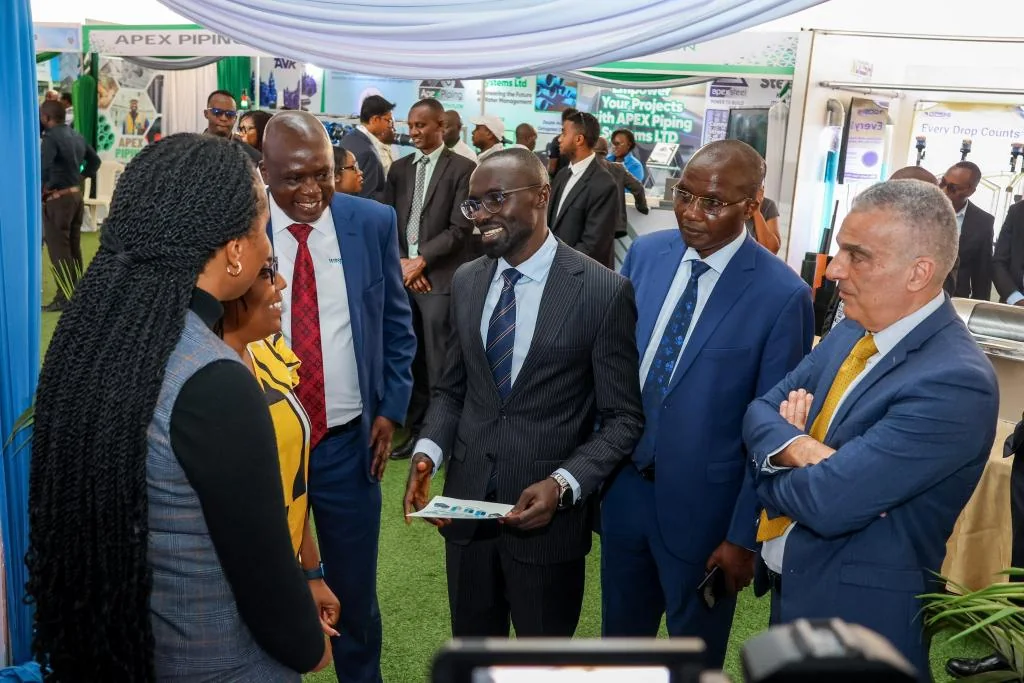
Speaking on Thursday while officially opening the Non-Revenue Water Management Conference 2026, Mugaa says innovations, smart infrastructure and strong leadership are critical to reducing water losses, expanding access to clean water and improving the performance of water utilities
Water Cabinet Secretary Eng. Eric Mugaa has urged water service providers across the country to adopt modern technology, improve leadership, and make better use of skilled staff in a bid to curb high water losses that continue to strain service delivery and sustainability in the sector.
Speaking on Thursday during the official opening of the Non-Revenue Water Management Conference 2026 in Nakuru, Mugaa said the sector must move with speed to embrace innovation, smart systems, and stronger institutional management if Kenya is to reduce water wastage and expand access to safe and reliable water.
The conference, held under the theme “Improving Non-Revenue Water (NRW) Management by Leveraging Technology & Innovations,” brought together national and county government officials, water utilities, development partners, and sector experts to explore practical solutions to water losses affecting service delivery.
Mugaa noted that while progress has been made in reducing non-revenue water, the current levels remain too high and continue to limit efficiency in water supply systems. He cited the latest Water Services Regulatory Board Impact Report, which shows non-revenue water has dropped to 48%, but stressed that more work is still needed to strengthen performance across utilities.
He called on water companies to fully integrate technology into daily operations, saying tools that are already common in everyday life can be applied to improve efficiency in the water sector.
Mugaa pointed out that technologies such as GPS-enabled systems could support meter readers in their work, improve monitoring, and help reduce water losses in distribution networks.
He also observed that many water utilities already have qualified personnel capable of driving innovation but said their potential has not been fully tapped due to weak leadership structures and limited empowerment.
According to the CS, strong governance and clear leadership direction remain key in addressing non-revenue water challenges, noting that even skilled technical teams cannot perform effectively without proper institutional support.
"If the managing director, the vision carrier of that water company, has no idea how to run that water company, no matter how good your technical manager is, it will not work. "
Mugaa further questioned whether water service providers are retaining enough of the revenue they collect to reinvest in critical infrastructure, saying better financial management would allow utilities to upgrade ageing systems and adopt modern metering solutions.
He said utilities that are able to retain and reinvest their earnings would be better placed to replace old volumetric meters with smart systems, rehabilitate leaking pipelines, and modernise key infrastructure to improve efficiency.
The CS warned that when funds are diverted away from operational needs, water providers struggle to address challenges, leaving technical teams under pressure and slowing down service improvements.
He also called on managers and technical staff to deepen their understanding of non-revenue water, stressing that lasting solutions depend on accurately identifying the sources of water losses and addressing them effectively.
Mugaa dismissed claims that difficult terrain should be used as an excuse for poor water service delivery, saying modern technology, hybrid energy solutions, and proper financial planning make it possible to overcome such challenges.
He added that although government support is helping utilities reduce operational costs, tackling non-revenue water must remain the top priority because continued losses weaken efficiency and financial stability in the sector.
The CS concluded that reducing non-revenue water will require strong leadership, sound governance, strategic investment in technology, prudent financial management, and full empowerment of technical professionals to ensure reliable and sustainable water services across the country.



Comments
Sign in with Google to comment, reply, and like comments.
Continue with Google