High Court dismisses Gachagua bid to overturn impeachment ruling
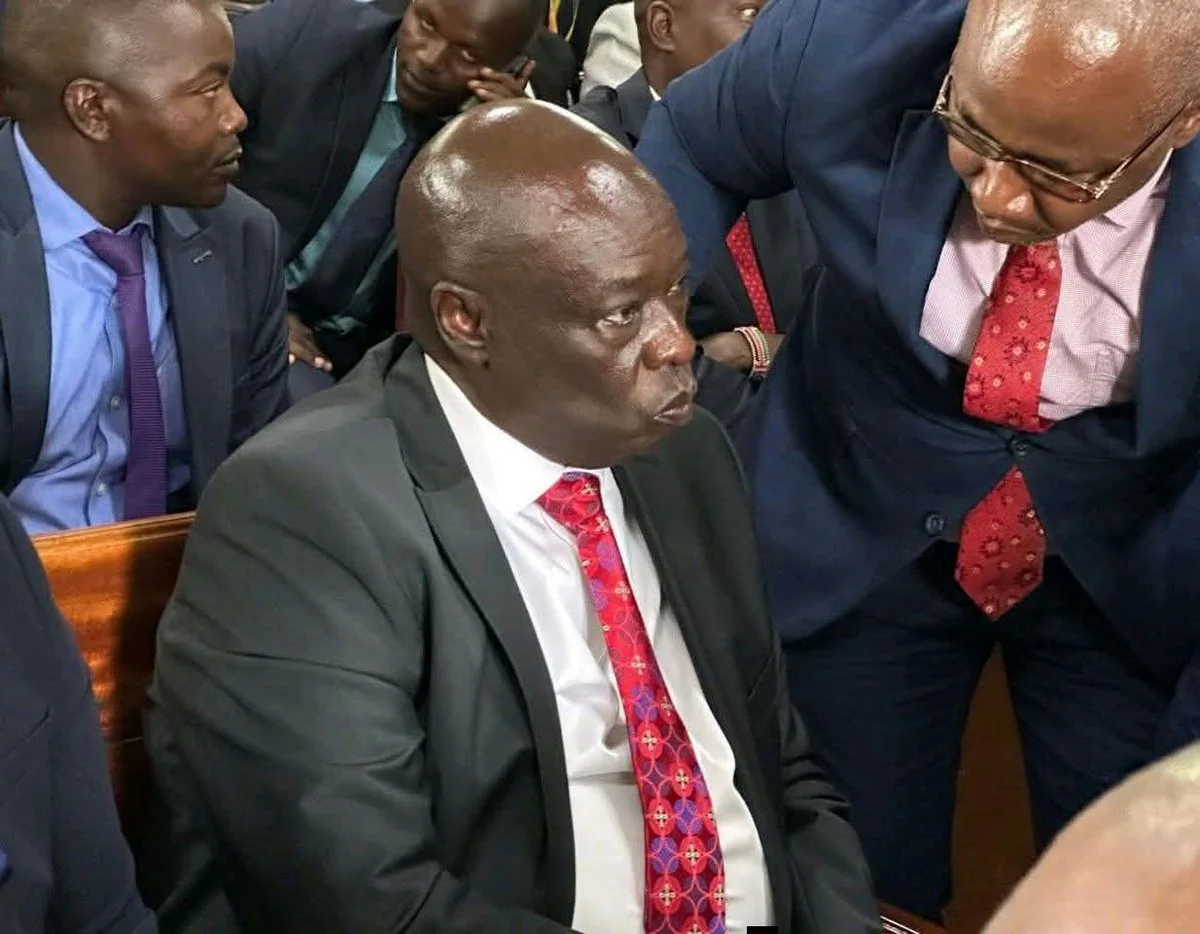
The decision effectively brings closure to a high-profile political and legal battle surrounding Gachagua’s removal from office and confirms the validity of the impeachment process.
Former Deputy President Rigathi Gachagua has failed in his attempt to overturn his impeachment after the High Court ruled that Parliament acted within the Constitution in removing him from office.
In a judgment delivered on Monday, a three-judge bench dismissed consolidated petitions challenging the October 2024 impeachment, finding that both the National Assembly and the Senate followed the required legal procedures and accorded him a fair opportunity to defend himself.
The court said the process met constitutional standards and could not be faulted on claims raised by the former Deputy President.
The judges also upheld the public participation process carried out before the impeachment, stating that it met the constitutional threshold despite minor logistical challenges. Parliament, the court said, was acting within its oversight mandate over state officers throughout the process.
The ruling also addressed the nomination and approval of Kithure Kindiki as Deputy President, finding that his appointment was carried out in a transparent and constitutionally compliant manner by Parliament.
The decision effectively brings closure to a high-profile political and legal battle surrounding Gachagua’s removal from office and confirms the validity of the impeachment process.
Court rejects claims of bias and unfair process
The High Court bench comprising Justices Eric Ogola, Anthony Mrima, and Freda Mugambi dismissed allegations that lawmakers were biased or had predetermined the outcome of the impeachment.
“On allegations of bias, predetermination, predetermination and conflict of interest advanced against the speakers, MPs and senators are unsubstantiated. They rest on political inference and suspicion rather than objective evidence capable of satisfying the required threshold.”
Justice Eric Ogola said political positions taken by lawmakers during impeachment cannot, by themselves, amount to bias.
“The mere fact that members supported or opposed the impeachment of His Excellency Gachagua cannot, standing alone, establish constitutional bias,” the court stated.
He noted that impeachment is a political-constitutional process where legislators are expected to have prior opinions.
“Legislators are not expected to approach impeachment as blank slates, devoid of political opinion or prior knowledge,” Ogola noted.
What is required, the court said, is good faith engagement with evidence.
“What the Constitution requires is that they remain genuinely open to considering the evidence, listening to argument, and discharging their constitutional responsibilities in good faith and within constitutional limits,” the judge said.
The court dismissed claims of bias and conflict of interest, saying they were not supported by evidence.
“We therefore find that the allegations of bias, predetermination and conflict of interest advanced by the petitioners against the Speakers, Members of Parliament and Senators are, on the material before this Court, no more than bare and unsubstantiated assertions grounded in political inference and suspicion rather than in objective evidence,” Justice Ogola ruled.
The judges further confirmed that impeachment proceedings are subject to court review where constitutional violations are alleged.
“We find that the impeachment proceedings challenged in these petitions are justiciable and that this Court possesses jurisdiction under Articles 23, 22 and 165 of the Constitution to determine whether the National Assembly and the Senate acted within constitutional bounds,” Ogola stated.
However, the court emphasized that it cannot take over Parliament’s role.
“We reiterate that the court is not a political arbiter but a constitutional one,” the judge said.
Justice Ogola added that courts cannot decide whether the charges were serious enough to justify removal.
“We agree in principle with the submission that it is not the function of this Court to determine whether the charges against His Excellency Gachagua were of sufficient gravity to warrant his removal from office,” he observed.
He concluded that separation of powers must operate within constitutional limits.
“The separation of powers does not mean separation from the Constitution,” Ogola concluded.
Court upholds public participation process
The court also found that public participation before the impeachment was properly conducted and met constitutional requirements.
“It is to be expected, even accepting, as we do, that logistical and operational challenges may have a reason in certain isolated cases, which is not an uncommon occurrence in any large-scale, nationally coordinated exercise conducted under time pressure; such localised deficiencies would not invalidate the entire process,” the court held.
The judges said the process was open and conducted in good faith.
“The evidence before this court shows that the door was opened widely, accessibly, and in good faith,” the bench stated.
They also dismissed claims that the process was flawed because Gachagua’s response was not publicly shared.
“The fact that His Excellency Gachagua’s response to the charges was not available to the public during the window does not render the exercise deficient,” the judgement read.
“The purpose of public participation in the impeachment process is substantively and functionally distinct from the adversarial hearing to which the respondent is entitled. It was not and was never intended to be a mini trial of the charges.”
The court added that the final decision rested with Parliament.
“The Constitution vests the final decision-making authority in the National Assembly and the Senate, both of which are representative bodies exercising a delegated mandate from the people,” the court stated.
Court upholds Kindiki nomination
On the appointment of Kithure Kindiki as Deputy President, the court ruled that the process was constitutional and did not require public participation.
“Public participation, the purpose of which is to inform the narrative and policy of citizen-orientated public decision-making, would add nothing of constitutional value to a binary vote of this character,” the court stated.
Justice Freda Mugambi said the process was open and transparent.
“We do find that the proceedings of the National Assembly on the nomination of His Excellency Kindiki were conducted in a fully open and transparent manner,” she said.
The court noted that proceedings were publicly broadcast and recorded.
“The debate was televised, the proceedings were recorded in Hansard, the press was free to report, and members of Parliament were directly accountable to their constituents for the manner in which they exercised their votes,” the judgement noted.
It further said constitutional requirements on openness were fully met.
“We are therefore satisfied that this openness and transparency… was amply satisfied,” Justice Mugambi stated.
The judges ruled that no further public participation was required.
“For the foregoing reasons, we hold that public participation was not constitutionally required for the nomination and approval of His Excellency Kindiki as Deputy President under Article 149(1),” the court ruled.
Background of the case
In his petition, Rigathi Gachagua argued that his impeachment was unconstitutional and that he was denied a fair hearing. He asked the court to nullify the decisions of both Houses of Parliament and declare the process invalid.
He initially sought reinstatement but later withdrew that request and instead pursued compensation for lost salary, benefits, and other financial damages, along with general and special damages.
He maintained that the process violated his constitutional rights and that the charges against him were politically motivated.
Gachagua was impeached in October 2024 after both the National Assembly and the Senate approved the charges against him. The Senate later upheld the decision after a two-day hearing, making him the first Deputy President in Kenya to be removed through impeachment.
The charges included gross violation of the Constitution, abuse of office, undermining authority of the President and Cabinet, promoting ethnic divisions, and allegations of unexplained wealth. He denied all the accusations.
Following his removal, Kithure Kindiki was nominated and approved as Deputy President.


Comments
Sign in with Google to comment, reply, and like comments.
Continue with Google