Gachagua seeks post-office privileges as High Court rules on impeachment
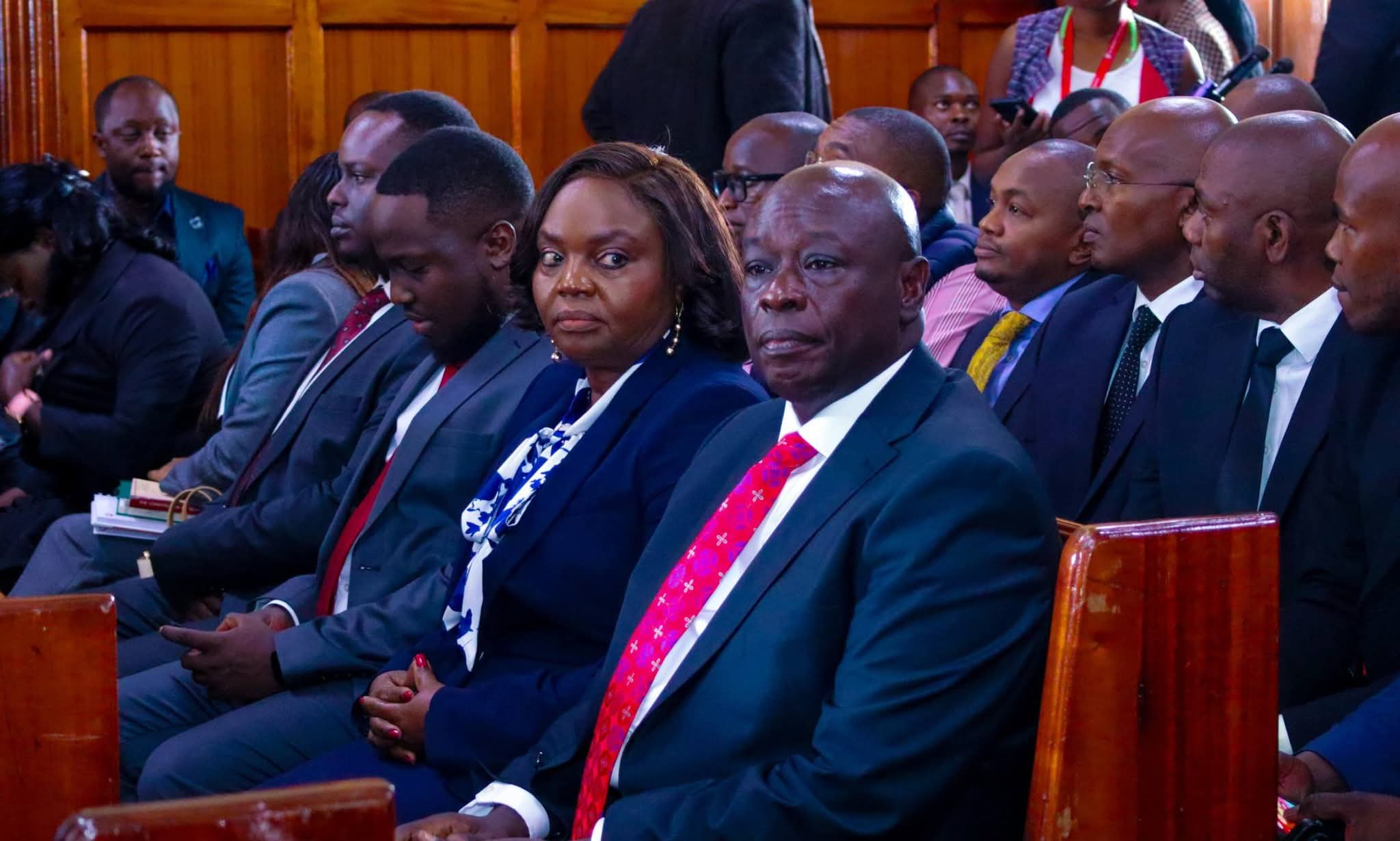
The demands cover a broad range of state-provided services, including transport, security, medical care, administrative staff, travel facilitation, and financial benefits
Former Deputy President Rigathi Gachagua has asked the High Court in Nairobi to grant him extensive post-office privileges and benefits as part of his ongoing legal challenge to his 2024 impeachment, with judges set to deliver a ruling that could reshape Kenya’s constitutional interpretation of executive removals.
The case arises from Gachagua’s impeachment on October 17, 2024, after the Senate upheld charges that followed a motion introduced in the National Assembly by Kibwezi West MP Mwengi Mutuse.
Lawmakers accused him of gross misconduct, abuse of office, ethnic incitement, and undermining constitutional authority, allegations he has consistently denied.
Following his removal, President William Ruto nominated then Interior Cabinet Secretary Prof. Kithure Kindiki as Deputy President, who later assumed office after the political transition was implemented.
A three-judge High Court bench comprising Justices Eric Ogolla, Anthony Mrima, and Frida Mugambi is now set to deliver judgment on Monday, June 8, 2026, in consolidated petitions challenging both the legality and constitutionality of the impeachment process.
In filings before the court, Gachagua is seeking a wide range of privileges and benefits, which he links to his status as a former holder of the Deputy President's office and the outcome of his impeachment challenge.
He has listed his demands as: “Access to VIP lounges/dais, armed security officers, two cooks, two secretaries / personal staff, airtime allowance, gratuity, two saloon cars, one 3000cc vehicle, fuel allowance, full medical cover, monthly pension, lump-sum retirement package, two drivers, personal assistant, two cleaners, diplomatic passports for himself and his spouse, pension benefits, fuel allowance, medical cover, drivers, a personal assistant, cleaners, VIP airport access, and security personnel.”
The demands cover a broad range of state-provided services, including transport, security, medical care, administrative staff, travel facilitation, and financial benefits.
At the centre of the case is Gachagua’s argument that his removal from office was unconstitutional.
The former Deputy President and current DCP Party leader is asking the court to nullify the resolutions passed by both the National Assembly and the Senate, arguing that the process leading to his impeachment violated constitutional safeguards and denied him a fair hearing.
The impeachment motion was moved in Parliament by MP Mwengi Mutuse and gained majority support in both Houses before being affirmed by the Senate on October 17, 2024, culminating in his formal removal from office.
After Gachagua’s ouster, Prof. Kithure Kindiki, then serving as Interior Cabinet Secretary, was nominated by President William Ruto to take over the Deputy President position.
He was subsequently sworn in following court clearance of the succession process, bringing closure to the immediate executive transition.
The petition now rests with Justices Eric Ogolla, Anthony Mrima and Frida Mugambi, who have been handling consolidated cases filed by Gachagua and other parties challenging the legality of the impeachment proceedings.
Their judgment is expected to address key constitutional questions, including the threshold for impeaching a Deputy President, procedural fairness in parliamentary proceedings, and the extent of judicial oversight over legislative decisions.
The ruling is expected to have significant implications for Kenya’s constitutional order, particularly in defining the balance of power between Parliament and the judiciary in impeachment cases involving senior executive officials.
Gachagua, who continues to maintain his innocence, has remained active in public life while pursuing legal redress over what he terms an unlawful removal.
As the country awaits the judgment, the case remains one of the most consequential constitutional tests under the 2010 Constitution.


Comments
Sign in with Google to comment, reply, and like comments.
Continue with Google