G7 partners warn of rising global risks from conflict and economic imbalances
In a communiqué issued after the talks, the group highlighted pressures on energy, food and fertiliser supply chains linked to ongoing geopolitical tensions, noting that these risks are “particularly affecting the most vulnerable countries.”
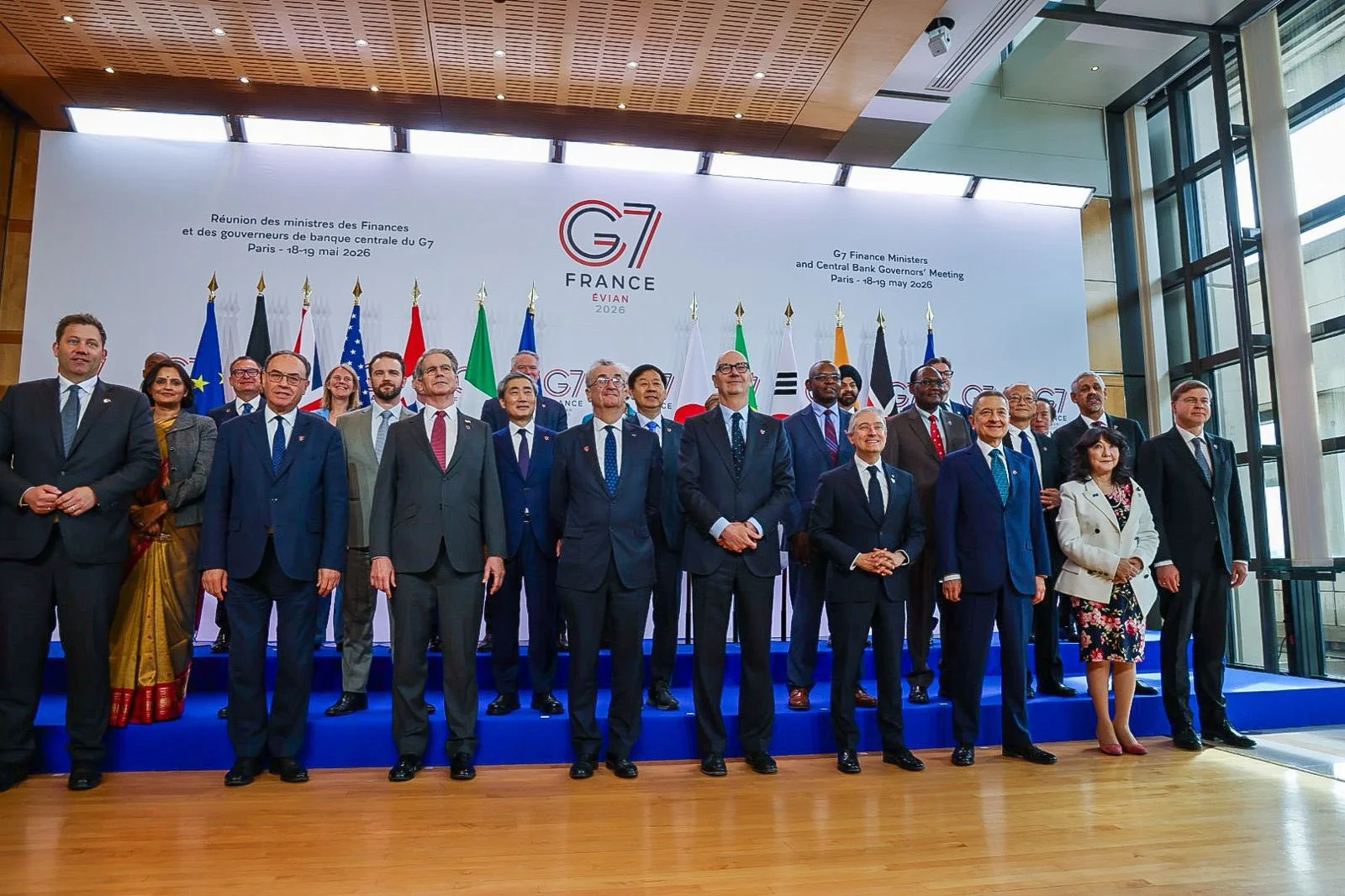
Finance ministers and central bank governors from the G7 and partner economies have raised concern over rising global risks, pointing to growing uncertainty, conflict in the Middle East, and widening economic gaps as major threats to global growth and financial stability.
The officials, meeting in Paris on Tuesday alongside representatives from Brazil, India, Kenya and South Korea, said the world economy is now facing “multiple and complex global challenges requiring coordinated responses,” and reaffirmed their commitment to multilateral cooperation aimed at strengthening resilience and supporting shared growth.
In a communiqué issued after the discussions, the group warned that tensions in global supply chains, especially in energy, food and fertiliser markets, are being worsened by ongoing geopolitical conflicts. They noted that these risks are “particularly affecting the most vulnerable countries.”
They further called for a “swift return to free and safe transit through the Strait of Hormuz” and urged a lasting settlement to the conflict in the Middle East, warning that continued disruption of trade routes could drive up inflation and slow global economic activity.
The officials said policy actions should remain “temporary, targeted and fiscally responsible” as countries seek to protect economic security and stabilise financial markets while managing ongoing shocks.
They also restated their commitment to “well-functioning, stable, and transparent markets for energy and other commodities,” and urged countries to avoid export restrictions that could deepen strain on already fragile supply chains.
Central banks in the discussions maintained that they remain “strongly committed to maintaining price stability” and will continue monitoring how energy and commodity price changes affect inflation and economic activity, with monetary policy staying “data dependent.”
Beyond immediate pressures, the meeting also focused on rising concern over global trade and financial imbalances. Ministers warned that persistent gaps between surplus and deficit economies could weaken long-term stability, noting that “global imbalances have been persistent and have widened in recent years.”
They added that if not addressed, such imbalances could fuel trade tensions and trigger disorderly financial adjustments. Countries with large external deficits were encouraged to strengthen domestic savings and fiscal consolidation, while those with surpluses were urged to boost domestic demand, investment, and productivity.
The communiqué also called for stronger monitoring by international institutions including the International Monetary Fund and the Organisation for Economic Cooperation and Development, with a push for “more emphasis on forward-looking scenarios” to better assess risks across both advanced and developing economies.
Officials welcomed continued coordination by multilateral development banks and stressed that institutions such as the IMF and World Bank should deepen cooperation in supporting countries facing economic pressure.
The meeting brought together senior financial policymakers from major global economies and international institutions, reflecting growing concern that geopolitical tensions and structural imbalances are shaping the global economic outlook and raising risks for both growth and stability.




Comments
Sign in with Google to comment, reply, and like comments.
Continue with Google