Government unveils tea sector reforms to boost farmer earnings by 2027
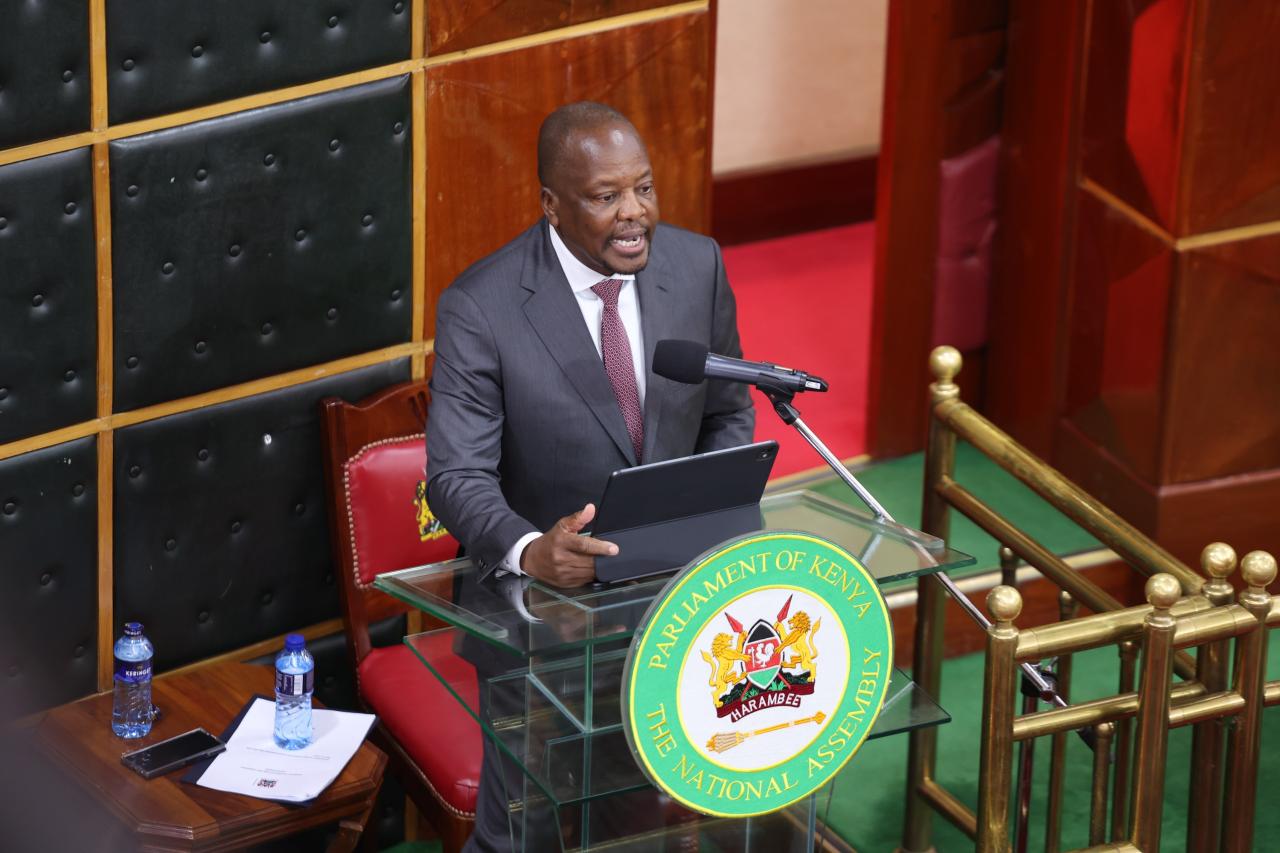
Factories in the East of the Rift recorded an average of USD 2.95 per kilogram, while those in the West averaged only USD 1.78 due to lower-quality teas.
The government has rolled out an extensive reform package targeting the tea industry, with a goal of stabilising prices, improving quality and doubling farmers’ earnings to Sh100 per kilogram of green leaf by 2027, Agriculture Cabinet Secretary Mutahi Kagwe has announced.
Appearing before Parliament to respond to questions on declining tea bonuses, Kagwe said the government is pushing for an overhaul of the current payment structure to ensure farmers receive more predictable and transparent income.
He explained that the sector operates on a two-tier model consisting of a monthly initial payment and an annual bonus, both heavily influenced by auction dynamics and global market conditions.
“Farmers currently receive between Sh23 and Sh25 per kilogram as the initial payment, while the bonus varies depending on auction prices, exchange rates and production costs,” the CS said.
Global market headwinds have exerted downward pressure on Kenyan tea earnings.
During the 2024/25 financial year, average auction prices fell to USD 2.41 per kilogram of made tea, down from USD 2.54, a drop Kagwe attributed to forex shortages in key markets such as Pakistan and Egypt, the conflict in Sudan, and restricted access to Iran.
These four markets collectively absorb about 70 per cent of Kenya’s tea exports.
The CS noted significant regional disparities that mirror variations in quality.
Factories in the East of the Rift recorded an average of USD 2.95 per kilogram, while those in the West averaged only USD 1.78 due to lower-quality teas.
As a result, farmers in the East earned about Sh69 per kilogram of green leaf, compared to Sh38 for producers in the West, against a national average of Sh56.
Production costs have also surged, reaching Sh112.96 per kilogram of made tea.
West of Rift factories reported the highest costs at Sh134.34, a situation Kagwe linked to governance gaps, overstaffing and operational inefficiencies.
To tackle these bottlenecks, the Ministry has launched wide-ranging reforms.
These include mandatory green-leaf quality standards, the establishment of a Tea Quality Laboratory in Mombasa, the Strategic Tea Quality Improvement Programme, and a Sh3.7 billion concessional loan facility to modernise factories.
Other measures are the removal of the reserve price at the auction, crackdowns on green-leaf hawking and theft, governance audits, expansion into digital marketing platforms, aggressive international market diplomacy under AfCFTA, and the introduction of the Tea Levy Regulations, 2024.
Kagwe said the Ministry is also reviewing the bonus payment system to allow quarterly remittances instead of annual disbursements.
“These reforms are meant to ensure fair, transparent and uniform earnings for all tea farmers across the country, regardless of region,” he said.




Comments
Sign in with Google to comment, reply, and like comments.
Continue with Google