Ruto signs law cutting fuel VAT from 16 to 8 per cent after price surge uproar
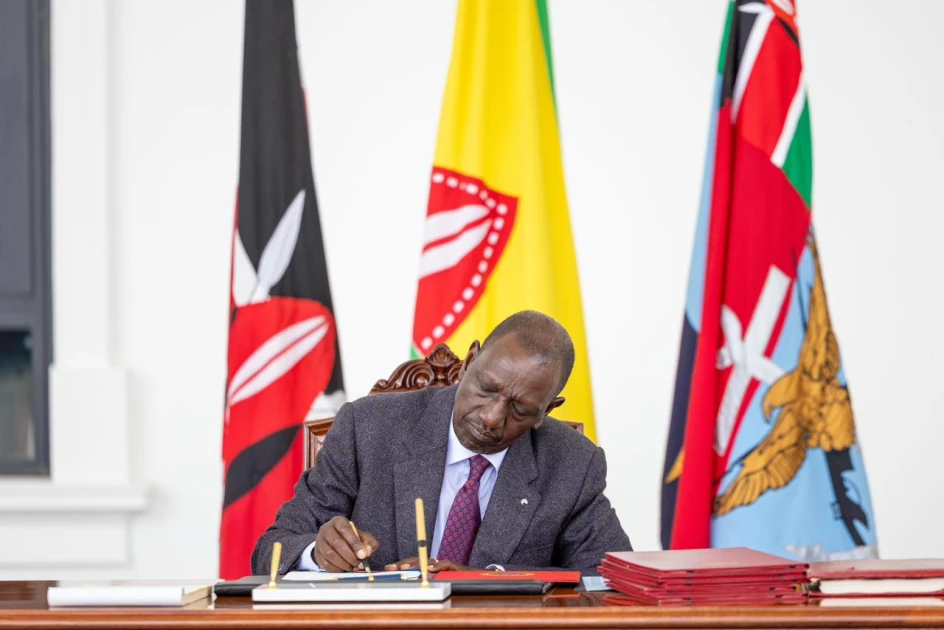
The Bill was sponsored by National Assembly Majority Leader Kimani Ichung’wah, acting on a request from the Executive to ease the burden on consumers. Lawmakers moved it through all stages within a single day, pointing to the urgency of stabilising fuel costs and preventing further economic strain.
President William Ruto has signed into law the Value Added Tax (Amendment) Bill, 2026, lowering VAT on petroleum products from 16 per cent to 8 per cent in response to public concern over rising fuel prices. The move follows recent sharp increases in fuel costs that triggered widespread criticism and pressure on the government to act.
The signing took place at State House, Nairobi, after Parliament fast-tracked the Bill on April 16, 2026, passing it without changes. The law was introduced as an urgent response to disruptions in global oil supply linked to the ongoing conflict in the Middle East, which has pushed up import costs and affected local fuel prices.
The Bill was sponsored by National Assembly Majority Leader Kimani Ichung’wah, acting on a request from the Executive to ease the burden on consumers. Lawmakers moved it through all stages within a single day, pointing to the urgency of stabilising fuel costs and preventing further economic strain.
The amendment cuts VAT on petroleum products by half, moving beyond the usual limit under the VAT Act, which restricts Treasury Cabinet Secretary John Mbadi’s powers to reduce VAT to 25 per cent. The new law also sets a temporary framework, allowing the reduced rate to apply for 90 days, with an option for CS Mbadi to extend the relief for another 90 days if needed.
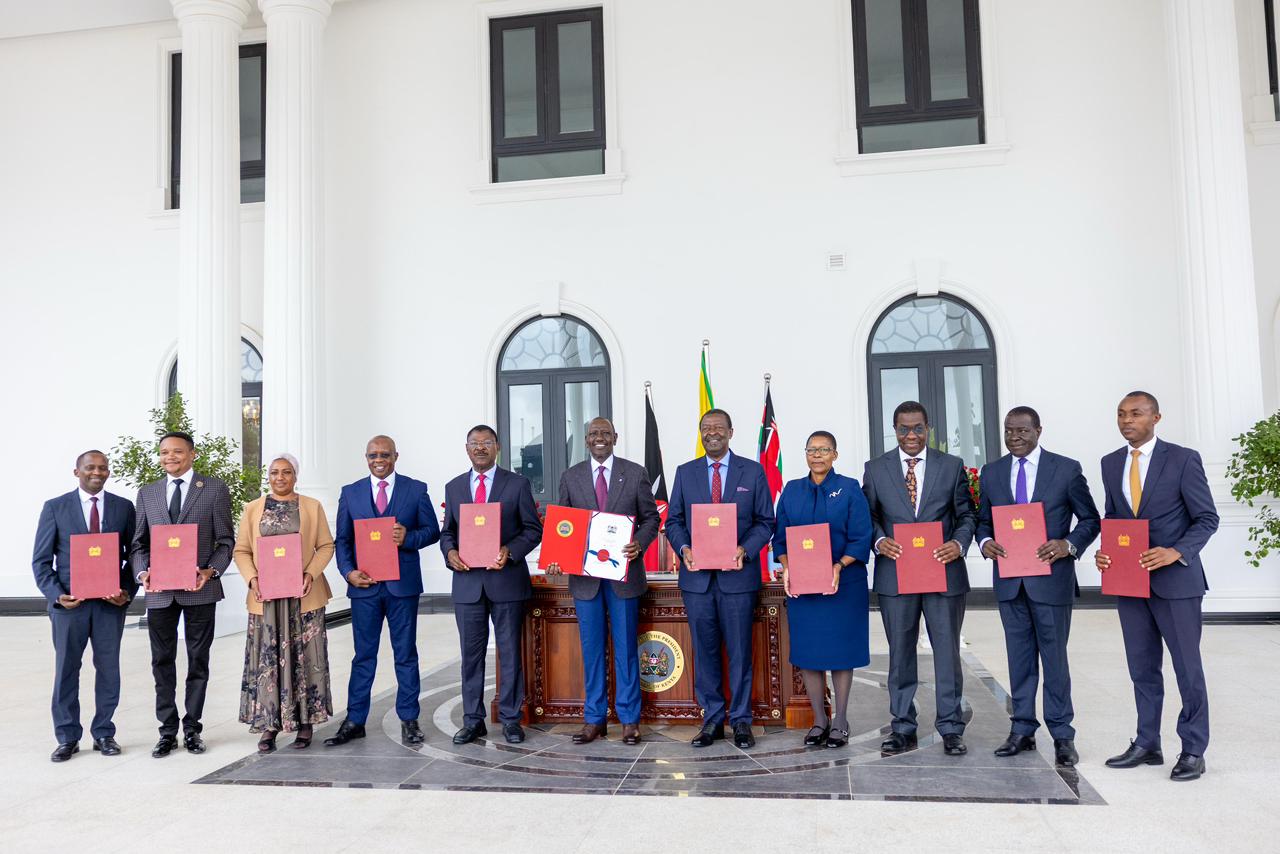 President William Ruto Assents to the Value Added Tax (Amendment) Bill 2026, State House, Nairobi, on April 17, 2026.PHOTO/PCS
The tax cut has been applied retroactively from April 15, 2026, following the President’s request to Parliament to ensure immediate relief is reflected in fuel pricing.
According to updates from the Energy and Petroleum Regulatory Authority, the reduction translates to a drop of Sh9.37 per litre for super petrol and Sh10.21 per litre for diesel. As a result, super petrol now retails at Sh197.60 per litre, diesel at Sh196.63 per litre, while kerosene remains unchanged at Sh152.78 per litre.
Officials have noted that fuel prices affect almost every part of the economy, including transport costs, food prices, and the cost of basic goods and services, making any change in fuel taxation highly impactful on households and businesses.
The decision has, however, faced criticism from some quarters, with critics arguing that the government often allows fuel prices to rise sharply before introducing tax cuts that only partially ease the burden on consumers.




Comments
Sign in with Google to comment, reply, and like comments.
Continue with Google